Analyzing Frame Generation Techniques and Their Impact on Perceived Smoothness During Fast-Paced Action Sequences in Digital Entertainment Software
Eden Lange · Aug 19, 2026

Analyzing Frame Generation Techniques and Their Impact on Perceived Smoothness During Fast-Paced Action Sequences in Digital Entertainment Software
Frame generation techniques have expanded across digital entertainment platforms since their introduction in consumer hardware around 2022, with developers integrating them into titles that feature rapid camera movements and intense combat scenarios. These methods create additional frames between traditionally rendered ones, raising effective frame rates without increasing the base rendering workload on graphics processors. In August 2026, multiple engines continue to deploy updated versions of these systems in new releases across PC, PlayStation 5, and Xbox Series X platforms.
Core Mechanisms Behind Frame Generation
Developers rely on several approaches that differ in hardware requirements and processing steps. NVIDIA's DLSS Frame Generation uses optical flow analysis combined with AI models to predict and insert frames, while AMD's Fluid Motion Frames applies motion vector calculations across a broader range of graphics cards. Intel's XeSS implementation incorporates similar interpolation routines that function on both dedicated and integrated graphics solutions. Each method samples previous frames and motion data to synthesize new images, then displays them in sequence to create the appearance of higher fluidity.
Studies from the University of Waterloo in Canada have examined how these interpolated frames interact with display refresh rates during sequences that involve quick turns and projectile motion. The research tracks latency introduced when the generated frames bypass certain rendering stages, noting that total system delay can increase by several milliseconds compared with native frame rendering.
Performance Patterns in Action Sequences
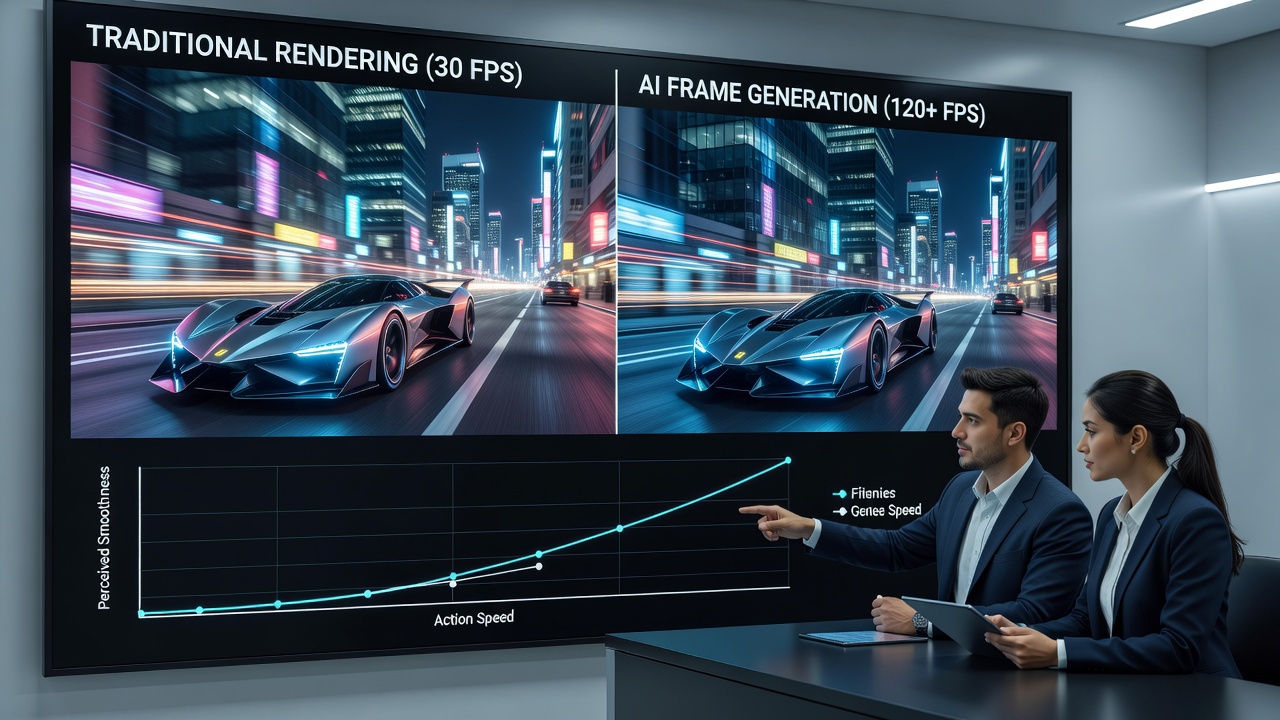
Fast-paced segments in competitive shooters and racing simulations reveal distinct outcomes when frame generation activates. Observers note that perceived smoothness improves at lower base frame rates, yet visual artifacts such as ghosting around moving edges appear more frequently during sudden direction changes. Data from European gaming hardware tests conducted in 2025 indicate that sequences exceeding 120 native frames per second show reduced artifact visibility once frame generation pushes output toward 240 frames.
Engineers adjust motion vector precision and AI model training to minimize these side effects, with recent patches in August 2026 addressing specific cases in multiplayer titles. The adjustments allow generated frames to align more closely with actual object trajectories, which helps maintain clarity when players execute rapid aiming adjustments or navigate tight corridors at high speed.
Latency and Input Response Considerations
Input lag measurements collected by Australian research groups demonstrate that frame generation adds a consistent delay layer because the system must buffer frames for analysis before producing the interpolated result. Players performing precise timing actions, such as dodging attacks or executing combo strings, register these delays through reduced responsiveness even when visual motion appears smoother on screen. Some titles provide toggle options that disable frame generation during competitive modes to preserve the lowest possible input latency.
Hardware vendors have introduced reflex-style technologies that synchronize frame generation with input sampling pipelines, cutting the added delay in half on supported devices. These refinements appear in driver updates released throughout 2026 and integrate directly with both console and PC versions of popular action franchises.
Comparative Data Across Platforms
Benchmarks compiled by industry analysts compare frame generation performance between different console architectures and high-end PC configurations. Results show that systems with higher baseline rendering throughput experience smaller relative gains from generated frames, whereas lower-powered hardware benefits more noticeably in sustained action segments. The differences become measurable when tracking frame time consistency rather than average frame rate alone.
According to reports available through the NVIDIA developer resources, updated frame generation models reduce temporal instability in fast camera pans by refining optical flow accuracy. Parallel documentation from AMD highlights similar gains on Radeon hardware when paired with variable refresh rate displays that match the generated output rate.
Future Refinements and Integration Trends
Engine updates scheduled for late 2026 incorporate hybrid approaches that combine traditional upscaling with selective frame generation, applying the technique only in regions of the frame where motion exceeds a defined threshold. This selective method aims to limit artifact introduction while still delivering higher perceived smoothness where players notice it most. Developers continue to test these refinements against real-world play sessions that feature extended fast-paced encounters.
Conclusion
Frame generation continues to evolve as a tool that alters how smoothness registers during high-intensity digital entertainment sequences. Technical implementations differ by vendor yet share the common goal of increasing effective frame rates through interpolation. Measurements from multiple research bodies confirm both the smoothness gains and the accompanying latency trade-offs, while ongoing driver and engine updates work to narrow those gaps. As platforms advance in August 2026, the balance between visual fluidity and input fidelity remains a central focus for engineers refining these systems across console and PC environments.