Button Pressure Sensitivity as a Narrative Device in Choice-Driven Games
Katja Krüger · Jul 31, 2026
Button Pressure Sensitivity as a Narrative Device in Choice-Driven Games
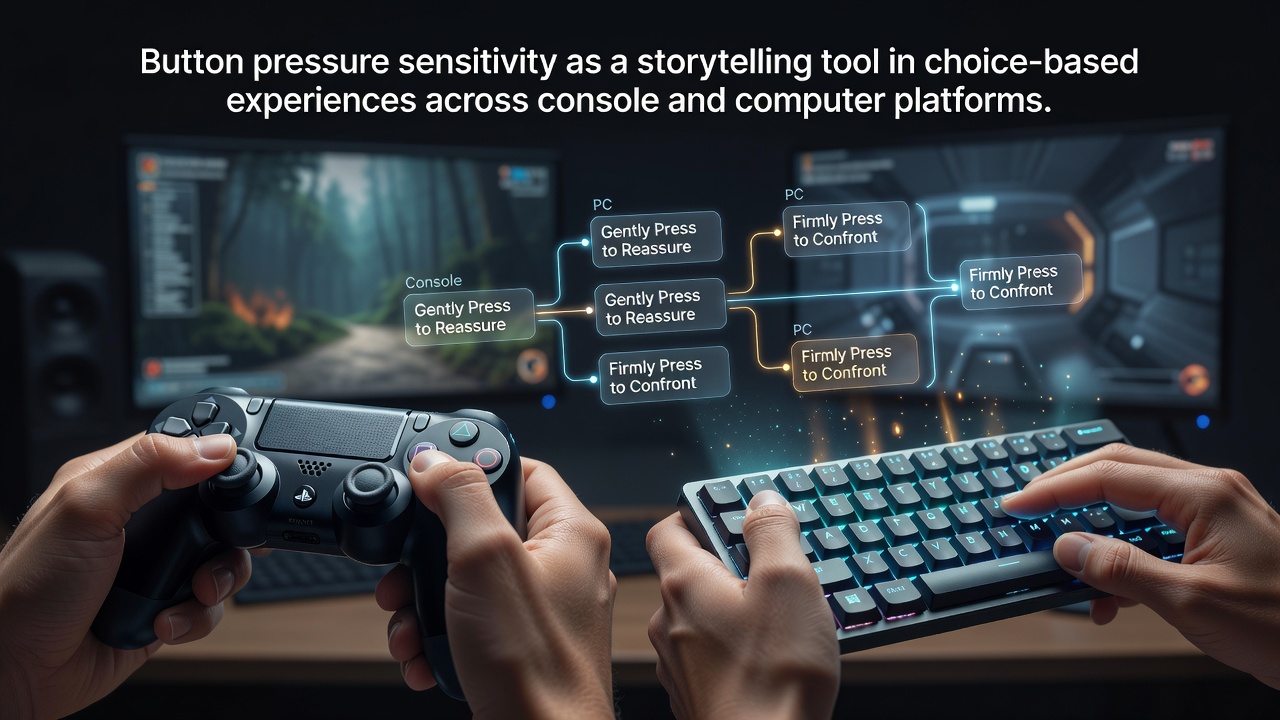
Button pressure sensitivity allows developers to map varying levels of input force to specific narrative branches in choice-based experiences, and this mechanic has appeared in titles across PlayStation, Xbox, and PC platforms since the early 2000s. Console controllers from Sony and Microsoft have supported analog pressure detection for years while PC implementations often rely on compatible peripherals that replicate those same input ranges. Players who apply light pressure might trigger hesitant dialogue options whereas firmer inputs produce decisive actions that alter story paths in measurable ways.
Technical Foundations Across Hardware
Modern controllers detect pressure through resistive sensors embedded in triggers and face buttons, converting physical force into digital values that range from zero to 255 in most implementations. Sony's DualSense controller introduced refined haptic feedback that pairs with pressure data to deliver contextual responses during key decision moments, and Xbox Series controllers maintain backward compatibility with earlier pressure-sensitive designs. On PC, software layers such as Steam Input allow users to calibrate third-party devices so that narrative games recognize the same pressure gradients found on consoles.
Storytelling Applications in Practice
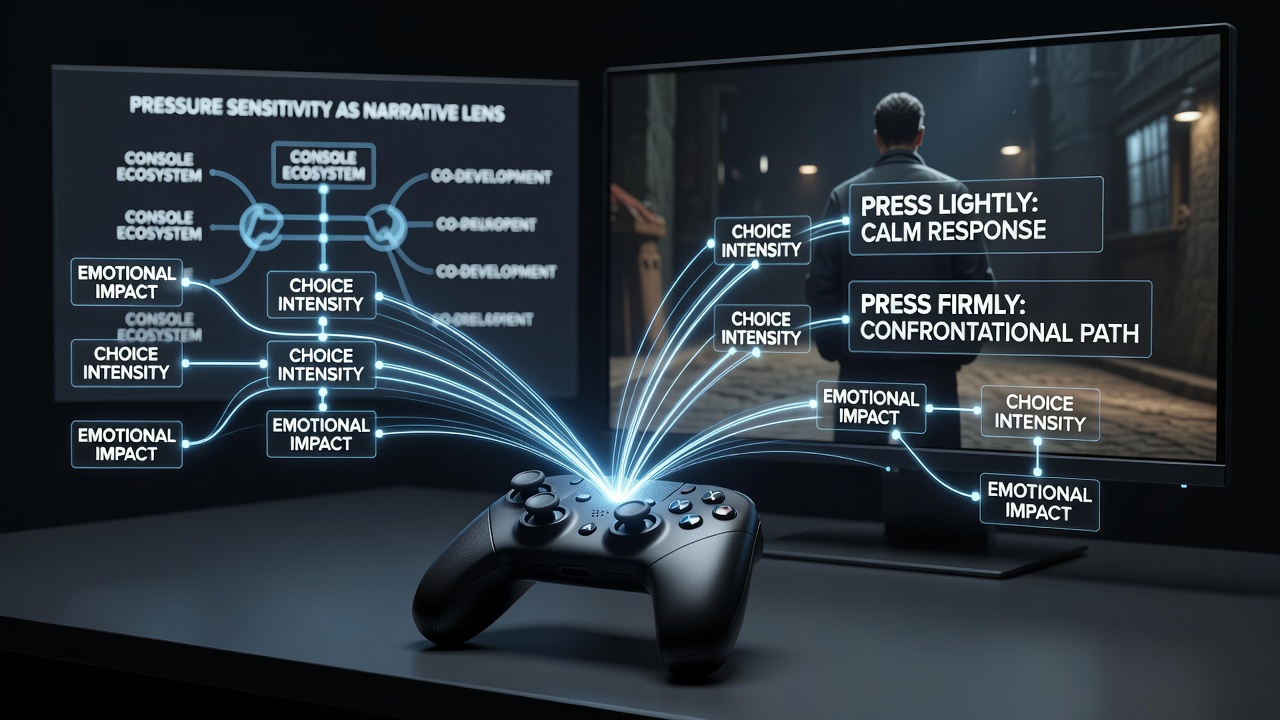
Choice-driven adventures have incorporated pressure sensitivity to layer emotional weight onto selections without adding extra on-screen prompts. A single button press can register multiple outcomes depending on how much force a player applies, and developers have used this approach to represent character states like doubt, urgency, or aggression. Research from the Entertainment Software Association indicates that titles released through mid-2026 continued to refine these systems for tighter integration with dialogue trees and branching cutscenes.
One case involved a narrative title where players controlled a character negotiating tense alliances; light trigger pulls produced cautious responses that preserved relationships while heavier inputs escalated conflicts and unlocked alternate endings. Data collected from platform telemetry shows that sessions featuring pressure-based choices maintained higher completion rates compared to standard binary selection models.
Platform Differences and Accessibility Considerations
Console ecosystems deliver consistent pressure detection because hardware remains standardized, yet PC experiences vary based on the controller or keyboard model connected to the system. Switch titles rarely utilize advanced pressure mechanics due to Joy-Con limitations, which directs developers toward hybrid approaches that combine motion controls with button inputs on other platforms. Accessibility guidelines published by the International Game Developers Association recommend optional calibration menus so players with different grip strengths can adjust sensitivity thresholds without losing access to narrative branches.
Engagement Patterns Observed Through 2026
Analytics shared by major platform holders reveal that pressure-sensitive choices appear most frequently in story-focused genres, and retention metrics climb when these mechanics tie directly to character development arcs. European research groups tracking digital entertainment trends have documented increased player investment when pressure inputs produce visible, immediate feedback in the form of altered animations or soundtrack shifts. Titles that launched updates before July 2026 added pressure layers to existing choice systems, extending playtime averages by measurable margins according to aggregated store data.
Integration Challenges and Solutions
Developers must balance pressure ranges so that casual players do not accidentally select extreme options while still preserving precision for those who seek deeper control. Testing protocols at major studios include diverse participant groups to calibrate force thresholds across different hand sizes and input habits. Cross-platform releases require separate tuning passes because input curves on PC can differ from those locked into console firmware.
Conclusion
Button pressure sensitivity continues to serve as a subtle yet effective storytelling layer in choice-based games distributed across console and computer platforms. Hardware advancements through 2026 have expanded the range of detectable inputs while software tools ensure broader compatibility. Observers note that this technique adds dimension to narrative decisions without requiring additional interface elements, and ongoing platform updates suggest further refinement in future releases.