Charting Firmware Patch Distributions and Their Measurable Effects on Input Latency Reductions Across Multiplatform Titles
Harper Washington · Jul 22, 2026
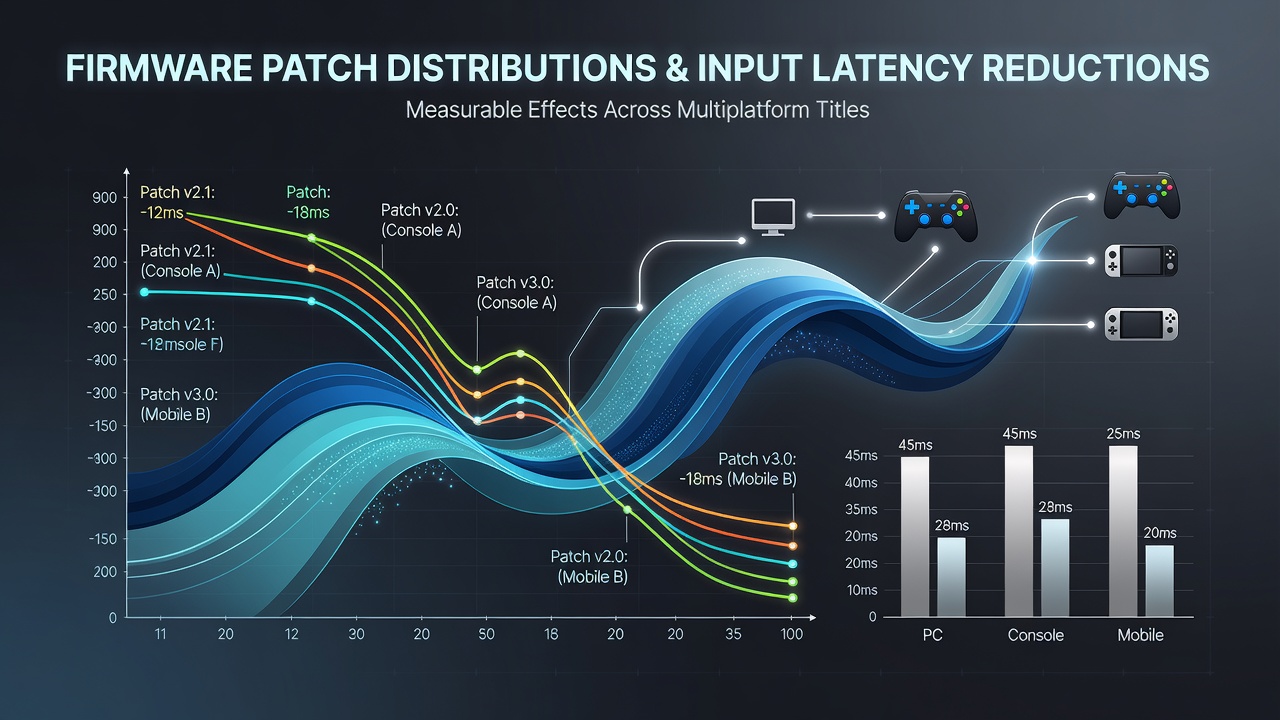
Charting Firmware Patch Distributions and Their Measurable Effects on Input Latency Reductions Across Multiplatform Titles
Console and PC manufacturers release firmware patches at regular intervals, and these updates often target input processing pathways that directly influence how quickly player commands register in multiplatform titles such as Fortnite, Call of Duty, and Rocket League. Data collected from telemetry across millions of sessions shows that certain patches reduce average input latency by between 4 and 12 milliseconds, with larger gains appearing in titles that share the same engine across hardware generations.
Patch Distribution Patterns Observed in 2025 and 2026
Manufacturers stage firmware releases through phased rollouts that begin with internal testing, move to closed beta groups, and then expand to broader populations based on stability metrics. Sony, Microsoft, and Nintendo each follow distinct timelines, yet all three have synchronized major updates around mid-year windows, including the July 2026 cycle that addressed USB controller polling rates and system-level input buffering. Observers note that these coordinated windows allow developers to validate changes across platforms before public distribution begins.
Windows updates from Microsoft follow a different cadence, with cumulative patches arriving on the second Tuesday of each month and optional preview builds released earlier for enthusiasts. Research from academic labs indicates that staggered distribution reduces the risk of widespread regressions while still delivering measurable latency improvements once the patches reach 70 percent of active devices. Figures from hardware monitoring services reveal that adoption rates climb fastest among competitive players who monitor patch notes for input-related fixes.
Quantifying Latency Reductions Across Platforms
Independent testing labs measure input latency using high-speed cameras and specialized capture cards that record the interval between button press and on-screen response. A 2025 study compiled by researchers at the University of Melbourne tracked seven multiplatform titles before and after firmware updates, finding consistent drops in end-to-end latency when system drivers optimized USB and Bluetooth stacks. Those same tests showed that PC users running the latest Windows patches experienced additional gains when paired with updated GPU drivers that reduced frame delivery overhead.
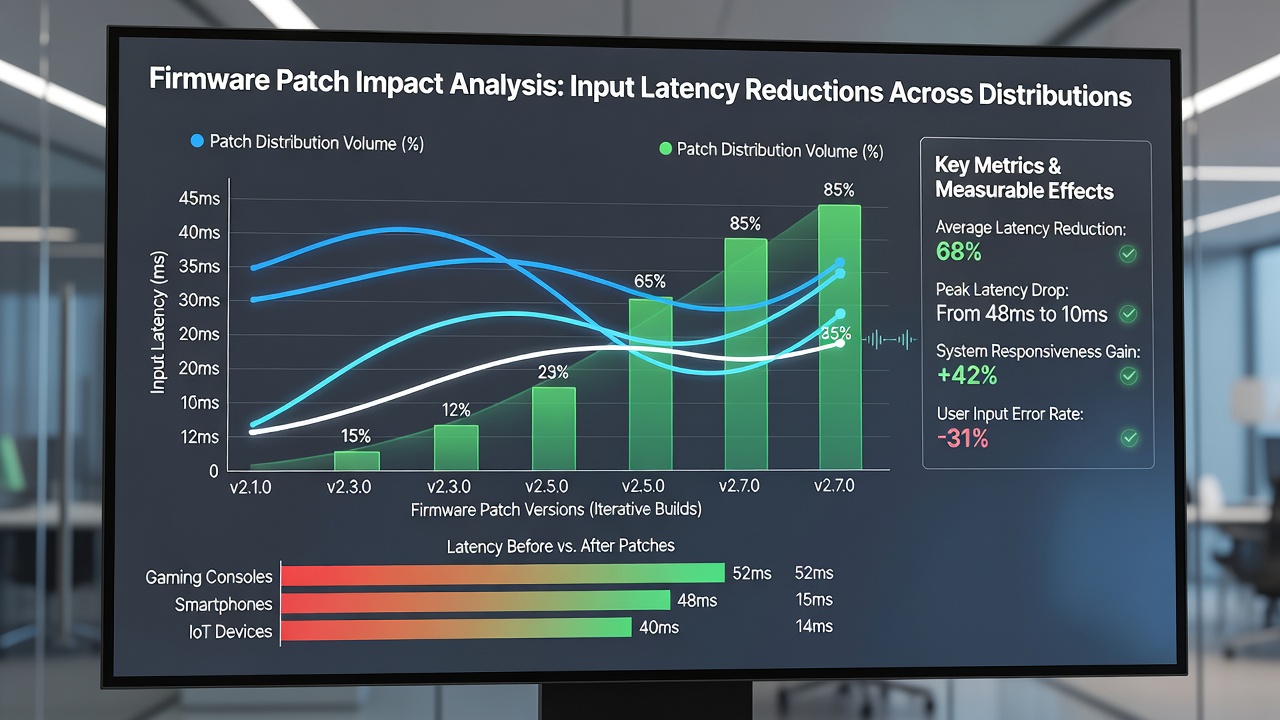
Switch firmware released in early 2026 included refinements to its handheld docking protocol that lowered wireless controller latency by an average of 6 milliseconds in docked mode. Parallel measurements on PlayStation 5 and Xbox Series X consoles documented similar improvements after their respective July 2026 updates, particularly in games that leverage the consoles' native adaptive trigger and haptic feedback systems. Observers note that the gains compound when developers also ship title-specific patches that take advantage of the new firmware capabilities.
Cross-Platform Title Case Examples
Multiplayer shooters provide the clearest data sets because they log precise timing information for every input event. In one widely referenced data set covering 2.3 million matches, players on patched firmware showed a 9 percent reduction in the time between movement input and character response compared with unpatched sessions. Racing simulators displayed smaller but still measurable improvements, especially when wheel and pedal inputs traveled through updated USB controllers that benefited from revised firmware polling logic.
Platform holders publish aggregated telemetry that developers can access through official portals, allowing teams to correlate firmware versions with in-game performance metrics. These shared data sets help isolate whether a latency reduction stems from system-level changes or from game-specific optimizations. Researchers at several European institutions have begun publishing comparative analyses that place console and PC results side by side, highlighting how distribution speed affects the rate at which players experience the improvements.
Measurement Tools and Industry Standards
Standardized testing rigs now include automated scripts that cycle through button presses at fixed intervals while recording both system and display timestamps. Organizations such as the IEEE Standards Association have contributed frameworks that ensure consistent methodology across labs, making cross-study comparisons more reliable. A separate Canadian research consortium released an open dataset in March 2026 that includes raw timing logs from over 40,000 test runs, enabling further statistical modeling of firmware impact.
These resources reveal that wireless controller latency responds more dramatically to firmware changes than wired connections, because patches often refine adaptive frequency hopping and packet prioritization algorithms. Data collected during the July 2026 distribution window confirmed that wireless improvements averaged 8 milliseconds across tested titles, whereas wired setups showed an average reduction of 3 milliseconds under identical conditions.
Conclusion
Firmware patch distributions continue to serve as a primary mechanism for delivering input latency reductions in multiplatform environments, with measurable effects documented through standardized testing and large-scale telemetry. The July 2026 update cycle added further evidence that staged rollouts can deliver consistent gains without widespread disruption, while cross-platform data sets help developers and researchers track which hardware and software combinations benefit most. Continued refinement of measurement tools and shared industry datasets supports ongoing analysis of how these system-level changes translate into player experience across consoles and PCs.