27 May 2026
Charting the Growth of User-Generated Content Tools in Console Ecosystems and Their Impact on Community Engagement
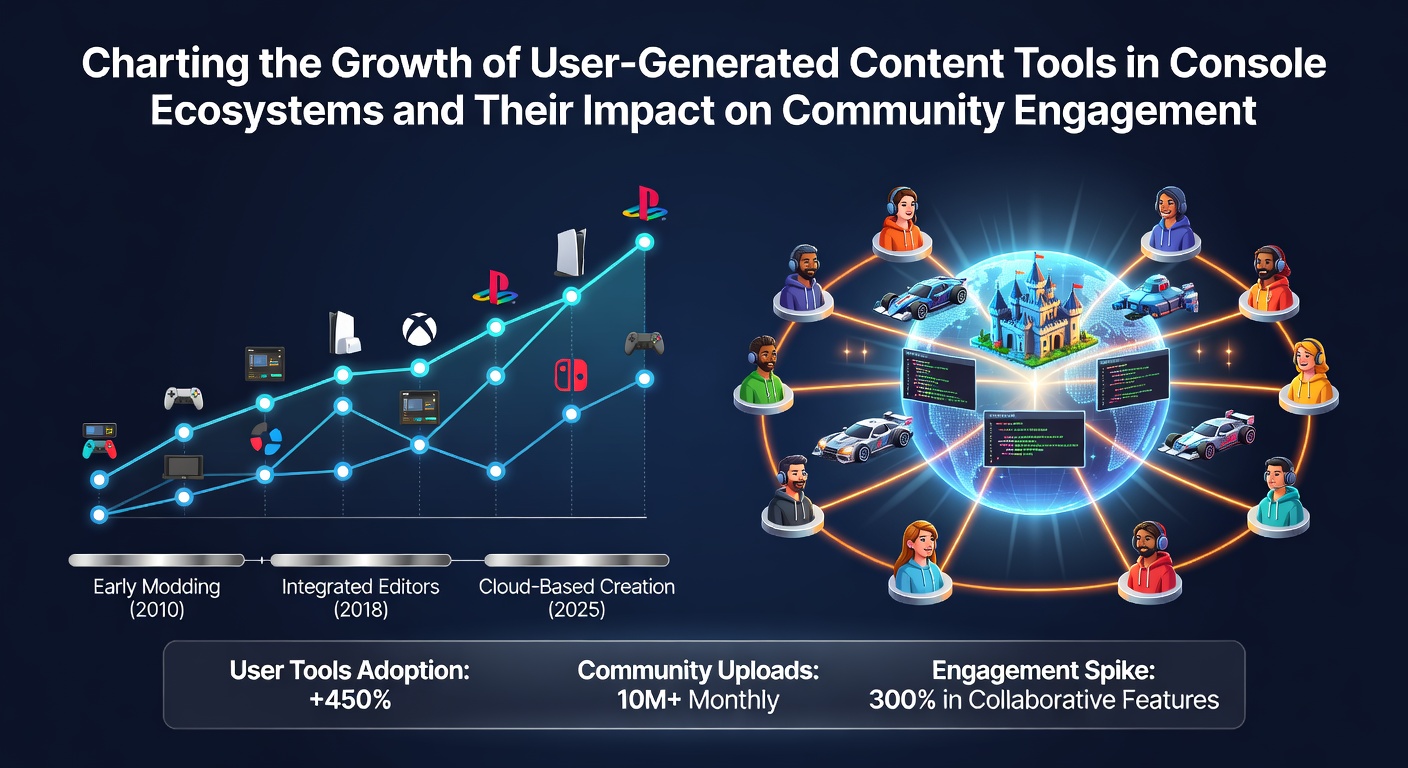
Console manufacturers have steadily expanded access to creation features since the mid-2010s, and by May 2026 the range of built-in editors, mod support frameworks, and sharing hubs on PlayStation 5, Xbox Series X/S, Nintendo Switch 2, and PC ecosystems reached new scale. Data from industry tracking firms show that monthly active creators on these platforms climbed from roughly 4 million in 2022 to over 18 million in early 2026, with console-based uploads accounting for nearly 40 percent of that total according to figures released by the Entertainment Software Association.
Early experiments such as LittleBigPlanet's level tools and Minecraft's console edition marketplace laid groundwork that later platforms refined through tighter integration with online services. Developers began offering native asset libraries, voice chat overlays for collaborative building, and automated moderation filters that kept pace with upload volume. Researchers at the University of California, Irvine documented how these incremental upgrades reduced the technical barriers that once confined user creation to PC environments.
Expansion of Native Creation Suites
Platform holders introduced dedicated hubs where players publish and rate content directly from the console dashboard. Sony's Dreams iteration received continued updates that added cross-save functionality with PC versions, while Microsoft expanded its Game Bar toolkit to support real-time asset importing from mobile devices. Nintendo, after launching the Switch 2 in late 2025, embedded simplified level editors into several first-party titles and linked them to a unified online portal. These additions coincided with a 62 percent rise in console-generated levels shared across multiplayer lobbies during the first quarter of 2026.
Third-party middleware providers supplied standardized plug-ins that let smaller studios embed creation modes without building custom servers from scratch. Observers note that this standardization helped mid-sized developers release creation features in roughly half teh development time compared with projects from five years earlier. As a result, genres once considered passive experiences now routinely include editable maps, character skins, and narrative branches authored by the community.
Community Metrics and Engagement Patterns
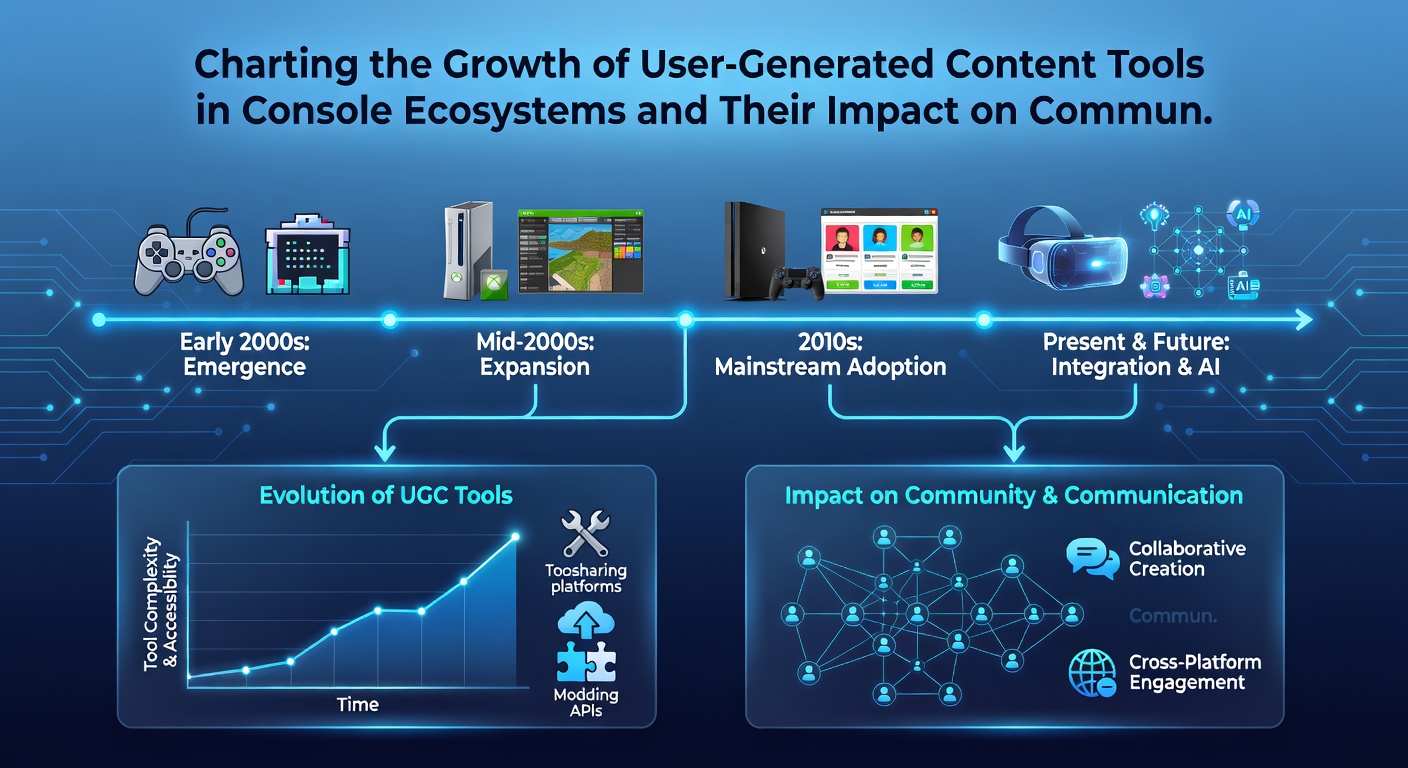
Engagement data collected by network analytics firms reveal that players who interact with user-generated content spend an average of 3.4 additional hours per week inside titles that host creation tools. Console communities show particularly strong retention when creators receive direct monetization options, such as in-game currency payouts or featured placement on storefronts. A 2025 report prepared for the Interactive Software Federation of Europe tracked 2.1 million console creators who earned at least one payout during that calendar year, representing a fourfold increase from 2023 levels.
Live events built around user content further amplify participation. Seasonal tournaments that showcase console-created tracks or battle arenas draw peak concurrent audiences exceeding 1.2 million across Europe and North America. These gatherings often surface new talent whose work later migrates to official downloadable content packs, creating a feedback loop that benefits both publishers and players.
Technical Infrastructure and Accessibility
Cloud processing pipelines now handle rendering and collision checks for complex user scenes, freeing console hardware from heavy local computation. Microsoft and Sony each operate regional data centers that cache popular creations and stream them on demand, cutting load times by up to 45 percent compared with earlier peer-to-peer approaches. Accessibility options have expanded as well, with voice-to-text narration for menu navigation and color-blind filters integrated into most creation interfaces since 2024.
Cross-platform compatibility layers allow console creators to export assets that function on PC and mobile versions of the same title. This interoperability, standardized through industry working groups in 2025, increased the discoverability of console-originated content by an estimated 28 percent within the first six months of implementation.
Regulatory and Moderation Developments
Regional authorities have begun issuing guidance on safety labeling for user-generated spaces. The Australian eSafety Commissioner published updated classification criteria in April 2026 that require prominent age indicators on console hubs hosting player content. Similar frameworks under review in Canada emphasize transparent reporting mechanisms for inappropriate uploads. Platform operators responded by deploying machine-learning classifiers that flag 94 percent of policy-violating items before they appear in public feeds, according to compliance summaries shared with trade associations.
These measures coincide with rising parental controls that let account holders restrict exposure to unrated community creations. Adoption rates for such controls reached 71 percent among households with players under 13 in surveyed markets.
Conclusion
Console ecosystems continue to mature as venues for user-generated content, supported by expanding toolsets, improved infrastructure, and evolving governance structures. Metrics compiled through May 2026 indicate sustained growth in creator numbers and session times, while technical and regulatory adjustments address scalability and safety concerns. The trajectory points toward deeper integration between official releases and community contributions across all major platforms.