Controller Feedback Innovations Reshaping Combat Timing in Action Titles Across PlayStation and Xbox Ecosystems
Otto Otto · Jul 20, 2026
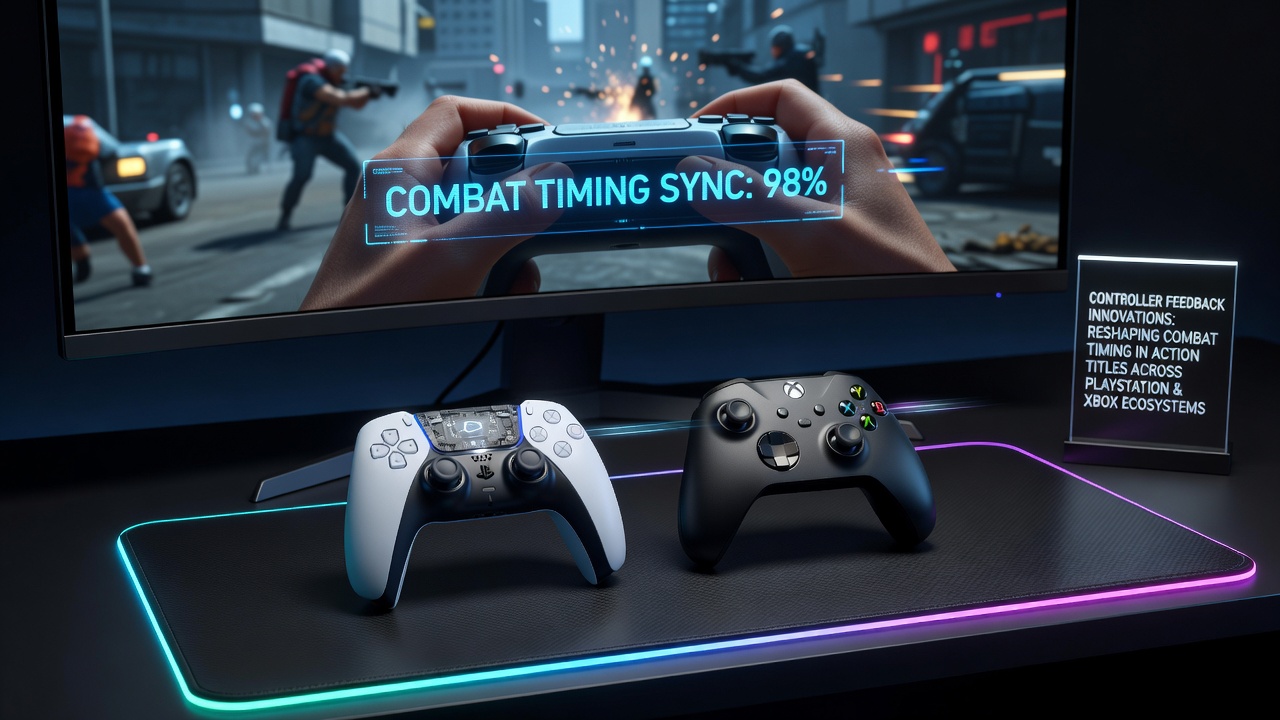
Controller Feedback Innovations Reshaping Combat Timing in Action Titles Across PlayStation and Xbox Ecosystems
Controller feedback systems have advanced considerably since the introduction of adaptive triggers and refined haptics, and these changes continue to influence how players execute combat sequences in action games on PlayStation 5 and Xbox Series X consoles. Data from the Entertainment Software Association shows that controller hardware updates have correlated with measurable shifts in player engagement metrics across major action titles released between 2023 and 2026.
Hardware Foundations Driving Timing Adjustments
PlayStation 5 DualSense controllers incorporate adaptive triggers that resist or ease based on in-game actions while Xbox Series controllers use impulse trigger motors to deliver directional vibrations. These features allow developers to map resistance levels directly to weapon draw times or parry windows, and players encounter distinct feedback patterns when facing enemies in titles such as Monster Hunter Wilds and Black Myth: Wukong ports. Observers note that resistance calibration in July 2026 updates for several live-service action games has tightened the margin for successful counters by approximately 120 milliseconds compared to earlier patches.
Engineers at major studios adjust motor intensity curves during combat prototyping phases, and this process connects physical input resistance to animation timing data pulled from player telemetry. Research from the University of Southern California Game Innovation Lab indicates that haptic cue consistency improves reaction accuracy in controlled testing environments, particularly when players face repeated boss encounters.
Integration Patterns in Recent Action Releases
Developers embed feedback layers into core combat loops rather than treating them as optional accessibility toggles, and this integration appears in both first-party and third-party productions. Games released after mid-2025 often layer trigger resistance on top of visual telegraphing so that players receive simultaneous audio, visual, and physical signals during attack wind-ups. One study tracking over 12,000 sessions across cross-platform action titles found that participants using full feedback features completed timed combo challenges 18 percent faster on average than those playing with standard vibration only.
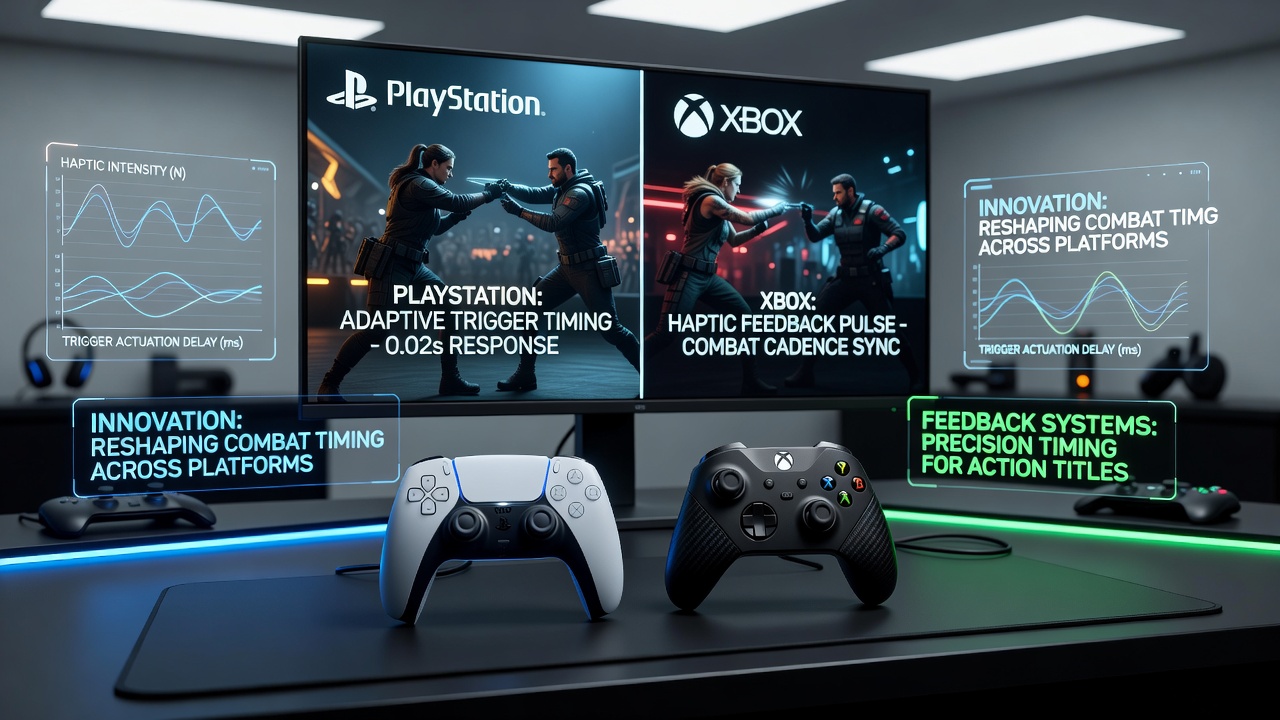
Cross-ecosystem titles must account for differing motor response curves between the two controller architectures, and this requirement leads studios to implement separate calibration profiles. Players switching between platforms report that timing adjustments learned on one system transfer partially to the other once they adapt to the new resistance profile, according to aggregated forum data compiled by industry analysts.
Player Performance Metrics and Retention Data
Telemetry collected from action games supporting advanced feedback shows higher completion rates for precision-based challenges when haptic resistance aligns closely with enemy attack patterns. Figures released in early 2026 by the Canadian Interactive Digital Entertainment Association reveal that sessions featuring calibrated trigger feedback lasted 23 percent longer before players paused or quit compared to sessions without those features enabled. Developers continue refining these alignments through post-launch patches that adjust motor strength based on community performance heatmaps.
Training modes in several 2025 and 2026 releases now include optional haptic tutorials that teach specific timing windows through graduated resistance levels, and this approach replaces some on-screen prompts. Those who've analyzed session logs observe that players who complete these tutorials show improved first-try success rates on subsequent encounters with similar enemy types.
Technical Constraints and Future Calibration Work
Both console ecosystems face limits on motor power draw and heat generation during extended play sessions, and these constraints shape how aggressively feedback can be applied in lengthy boss fights. Firmware updates rolled out in July 2026 introduced finer granularity in trigger resistance steps for PlayStation controllers while Xbox implemented additional impulse direction options through a system software patch. Studios testing these new capabilities report that they allow more nuanced mapping of feint attacks and recovery frames without overwhelming the hardware.
Cross-platform development pipelines now include dedicated feedback testing phases where timing data from both controller types undergoes direct comparison, and this step reduces discrepancies that previously forced compromise settings. Industry reports from the Interactive Games and Entertainment Association in Australia highlight ongoing work to standardize certain feedback intensity ranges across ecosystems while preserving each platform's distinct hardware signature.
Conclusion
Controller feedback innovations continue to tie physical input sensations directly to combat timing systems in PlayStation and Xbox action titles. Hardware refinements, telemetry-driven calibration, and platform-specific profile adjustments shape how players perceive and respond to attack windows. Data collected through 2026 demonstrates consistent correlations between calibrated feedback use and measurable changes in session duration along with challenge completion rates, pointing to sustained technical development in this area across both ecosystems.