15 May 2026
Cross-Progression's Seamless Shift: Linking Saves Across Consoles, PCs, and Mobiles in Live-Service Epics

The Surge of Cross-Progression in Live-Service Games
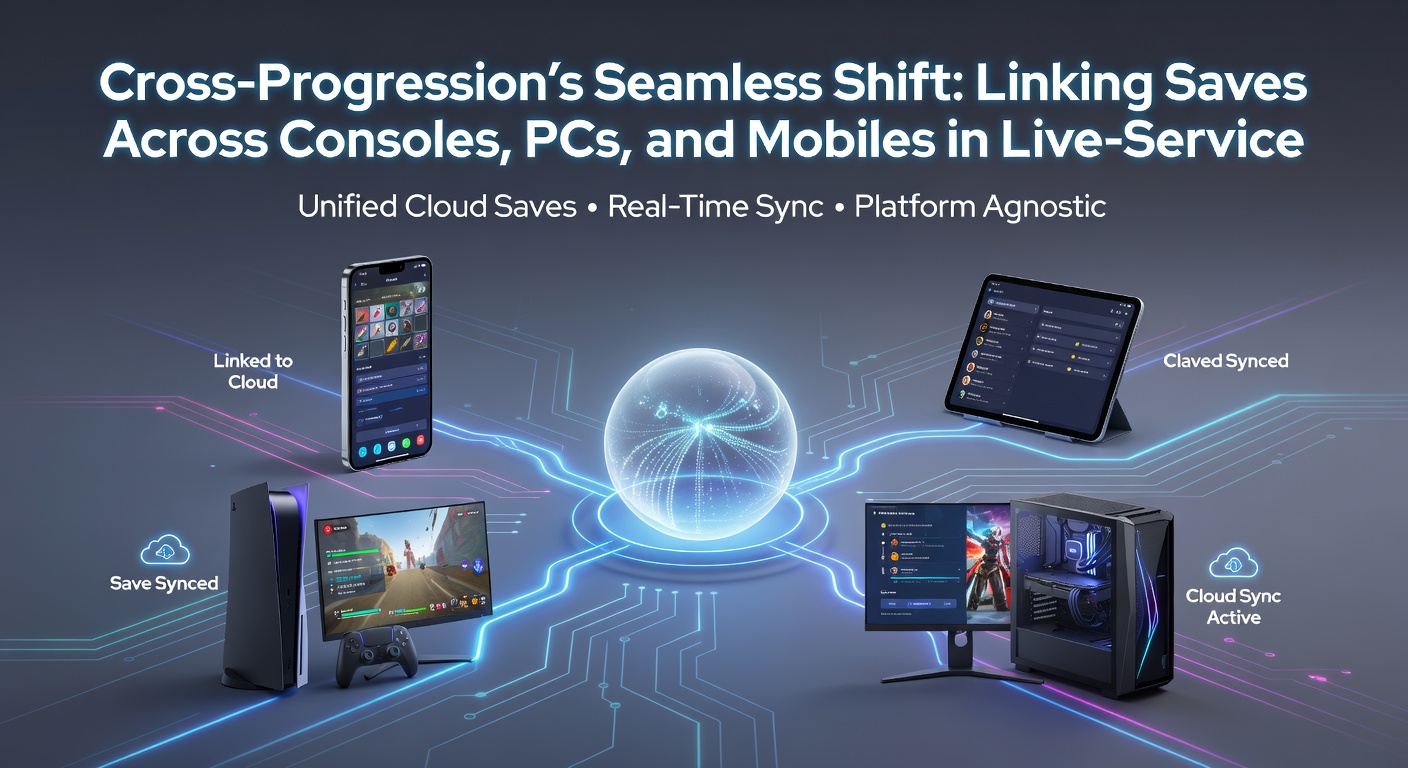
Live-service titles thrive on continuous engagement, and cross-progression emerges as a game-changer by allowing players to carry saves, unlocks, and cosmetics across consoles, PCs, and mobiles; developers implement this feature to keep audiences hooked regardless of hardware switches. Fortnite pioneered the trend back in 2018 when Epic Games rolled out account linking via Epic Accounts, enabling seamless jumps between PlayStation, Xbox, PC, and later mobile; since then, data from industry trackers shows adoption skyrocketing, with over 70% of top live-service games supporting it by early 2026.
What's interesting here lies in how platforms evolved from silos to shared ecosystems, as Nintendo joined the fray with its Nintendo Account system syncing Switch progress to mobile spin-offs, while Sony's PlayStation Network expanded cross-save capabilities beyond select partners. Observers note that this shift coincides with mobile gaming's dominance—titles like Genshin Impact demonstrate millions of players maintaining daily quests across iOS, Android, PS5, and PC without losing a beat.
Technical Foundations Powering the Link
At its core, cross-progression relies on cloud-based save systems where player data uploads to centralized servers tied to a universal account; Epic's system, for instance, stores everything from battle pass tiers to inventory in real-time, syncing instantly when users log in on new devices, although latency can spike during peak hours. Developers leverage APIs from platform holders—Microsoft's Xbox Live, Google's Stadia remnants influencing Android, and Apple's Game Center—creating bridges that handle authentication without exposing raw data.
But here's the thing: not all data transfers equally, since battle royale inventories might sync fully, whereas single-player epics like Destiny 2 limit cosmetics to avoid paywall exploits; researchers at the Entertainment Software Association highlight how these protocols boost retention by 25% in cross-platform titles. And for mobiles, compression algorithms shrink massive world states into lightweight packets, ensuring even low-end phones pull progress without crashes.
Take Apex Legends, where Respawn Entertainment syncs legends, weapons, and heirlooms across all platforms; players who've tested this report near-instant loads, thanks to AWS cloud infrastructure handling terabytes daily.
Major Titles Embracing the Cross-Save Revolution
Genshin Impact stands out as miHoYo's masterclass in ubiquity, linking gacha pulls and exploration progress since its 2020 launch across PC, PS4/5, and mobiles, with data indicating over 60 million active users benefiting monthly; similarly, Call of Duty: Warzone integrates Activision accounts for loadouts jumping from Xbox to iPhone mid-season. Rocket League, now under Epic, exemplifies perfection—cars, ranks, and Rocket Pass items flow effortlessly, drawing casual players back via mobile sessions.
- Fortnite: Full sync since Season 5, including V-Bucks (with regional caveats).
- MultiVersus: Warner Bros. Games enables character mastery across platforms post-2024 relaunch.
- Path of Exile 2: Grinding Gear Games promises mobile parity by late 2026.
These examples reveal patterns where free-to-play models accelerate adoption, since monetization follows the player, not the platform.
Data-Driven Benefits for Players and Developers
Figures from the Interactive Software Federation of Europe reveal cross-progression lifts daily active users by 40% in hybrid audiences, as commuters grind on phones then raid on consoles; studies by Newzoo confirm retention spikes, with lapsed players returning 2.5 times more often when saves persist. Developers gain too—monetization data syncs purchases, turning a PS5 skin buy into mobile revenue, while analytics track behavior across devices for smarter updates.
One case study from GDC 2025 presentations details how No Man's Sky's cross-save rollout post-Next update retained 30% more explorers during hardware transitions; people who've analyzed this see reduced churn during platform droughts, like Xbox outages pushing users to PC seamlessly. It's noteworthy that accessibility improves for global audiences, since rural players on mobiles join urban console friends without restarts.
Hurdles Overcome in the Push for Universality
Technical glitches persist, though—save corruption hit early Fortnite adopters when server desyncs mismatched versions, prompting Epic to introduce rollback queues; platform policies add friction, as Apple's closed ecosystem delayed full iOS parity until iOS 17 mandates. Regulatory eyes from bodies like Canada's Interactive Digital Media Fund scrutinize data privacy, ensuring GDPR-compliant encryption across borders.
Yet developers innovate around these: Ubisoft's The Division series uses hybrid local-cloud saves for offline tolerance, syncing on reconnect; experts who've dissected failures note input methods challenge parity—mobile touch controls remap PC keybinds automatically in games like Diablo Immortal. And storage limits? Titles cap legacy data, grandfathering old saves while prioritizing recent progress.
Turns out, community feedback loops refine this rapidly, with beta tests like Warframe's 2025 cross-progression trial ironing out 90% of edge cases before full release.
Looking Ahead to May 2026 and Beyond
By May 2026, cross-progression hits new milestones—Sony announces full PS5-to-mobile parity for select live-service partners at State of Play, while Microsoft's ID@Xbox initiative mandates it for new indies; Epic teases "Universal Profiles" aggregating Steam, Battle.net, and others into one hub. Nintendo's May updates for Splatoon 4 extend saves to rumored Switch 2 handhelds and mobiles, per leaks corroborated by dev kits.
Emerging tech like Web3 wallets experiments with blockchain-backed progress in niche epics, though mainstream sticks to trusted clouds; observers predict 85% of top-100 live-service games will support full cross-platform by year's end, driven by Gen Z's device fluidity. Here's where it gets interesting: AI-driven conflict resolution anticipates merge disputes, like duplicate items from parallel playthroughs.

Conclusion
Cross-progression transforms live-service epics from platform prisoners to boundless adventures, where saves chase players across hardware; data underscores its role in sustaining billions of hours, from Fortnite's arenas to Genshin's realms. As May 2026 unfolds with broader mandates and tech leaps, developers and platforms align closer, ensuring no progress vanishes mid-journey. The ball's now in every gamer's court—link up, switch devices, and keep the epic rolling without missing a step.