Decoding Loot Psychology in Shared-World Adventures and Its Effects on Long-Term Engagement Patterns
Harper Washington · Jun 12, 2026
Decoding Loot Psychology in Shared-World Adventures and Its Effects on Long-Term Engagement Patterns
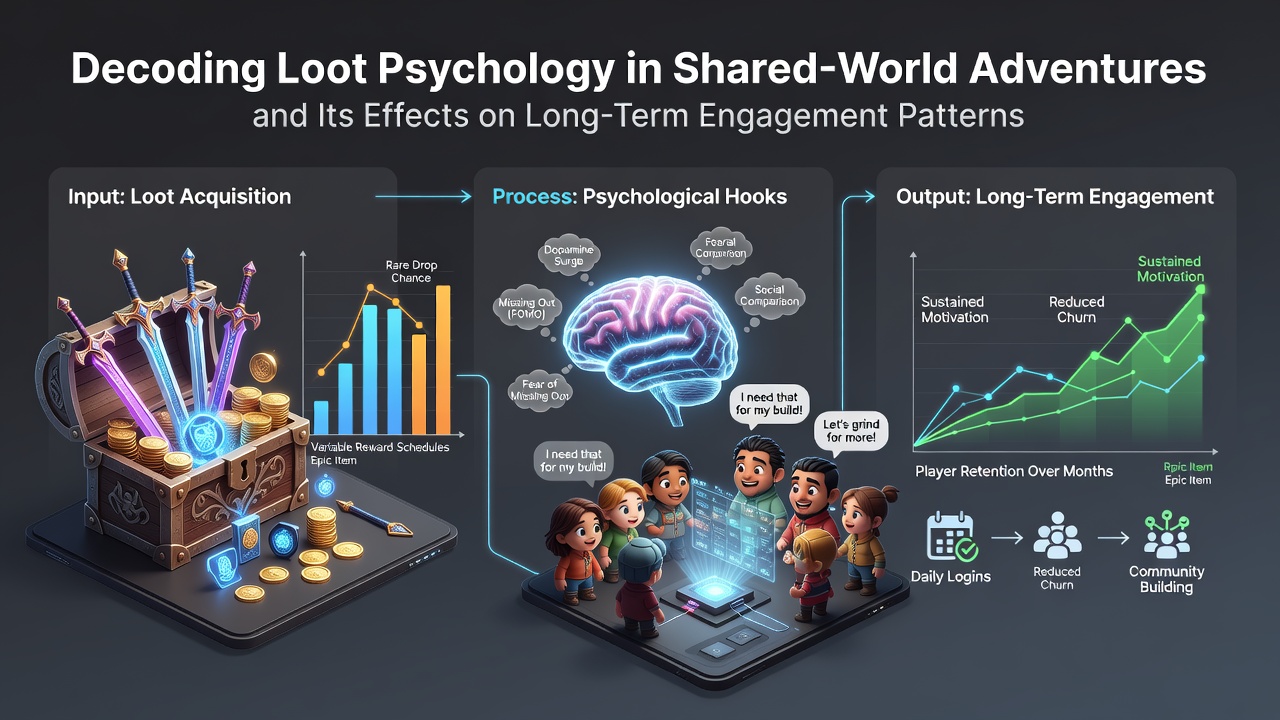
Shared-world adventures such as Destiny 2 and Warframe build their core loops around loot distribution systems that trigger variable reward schedules, and researchers have tracked how these mechanics shape player behavior over extended periods. Data collected across multiple titles shows that random item drops activate dopamine responses similar to those observed in controlled behavioral studies, yet the same systems produce measurable shifts in session length and return rates after six months of regular play.
Core Components of Loot Distribution
Developers implement rarity tiers, stat rolls, and acquisition methods that range from direct quest rewards to randomized enemy drops, and these layers combine to create anticipation cycles. Studies released by the Entertainment Software Association in early 2026 indicate that players in shared environments spend an average of 42 percent more time in sessions when loot tables include both guaranteed progression items and rare chase pieces. The balance between predictable advancement and unpredictable upgrades keeps participants returning, while excessive randomness correlates with earlier drop-off points according to aggregated telemetry from console and PC platforms.
Psychological Mechanisms Behind Player Responses
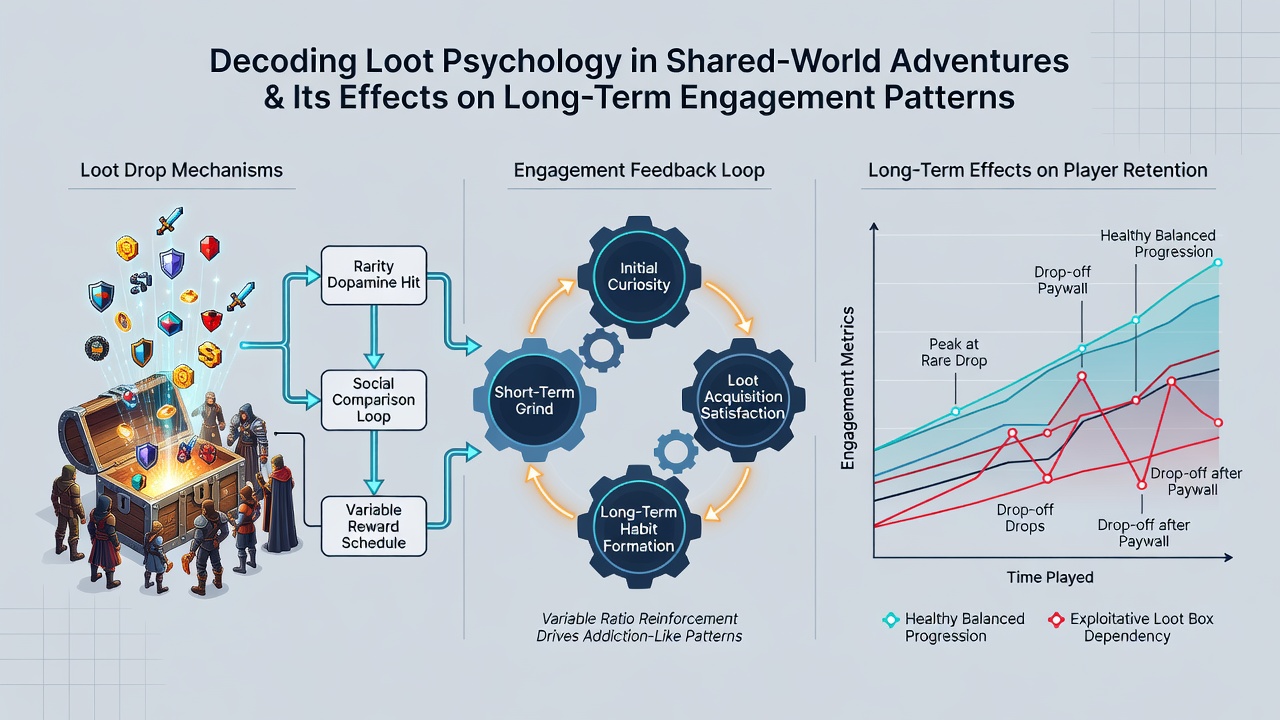
Variable ratio reinforcement schedules form the foundation of most loot systems, and psychologists note that this approach mirrors patterns first documented in laboratory settings decades ago. When a player defeats an enemy or completes an activity, the uncertain outcome generates heightened attention until the result appears on screen. Longitudinal data gathered through June 2026 reveals that titles maintaining a 1-in-50 chance for high-value items sustain higher daily active user counts compared with those offering fixed reward structures, although the advantage diminishes once players accumulate several hundred hours.
Measured Effects on Retention Over Time
Initial engagement spikes appear within the first four weeks for most shared-world titles, yet retention curves flatten or decline when loot acquisition begins to feel repetitive. Analysts at research institutions in Canada have documented that players who receive at least one meaningful upgrade every seven to ten hours maintain consistent login patterns through month three, whereas those facing longer dry spells show a 28 percent reduction in weekly playtime. Seasonal events introduced in titles during 2025 and 2026 further modulate these patterns by temporarily increasing drop rates, which produces short-term surges followed by steeper declines once the events conclude.
Community Dynamics and Social Reinforcement
Shared-world environments add layers of social comparison because players observe each other's equipment and accomplishments in real time. Trade systems, group activities, and public leaderboards amplify the visibility of rare loot, and this visibility strengthens motivation for some participants while creating frustration for others who fall behind. Reports compiled by teh Interactive Games and Entertainment Association in Australia highlight that guilds and clans experience higher stability when loot rules distribute rewards fairly across members rather than concentrating high-value items with a small subset of players.
Long-Term Engagement Patterns and Burnout Indicators
Extended play sessions reveal distinct phases where initial excitement gives way to optimization behavior and eventual fatigue. Players often shift from chasing any upgrade to targeting specific rolls or cosmetic variants, and this transition typically occurs between months four and eight according to telemetry reviews. When developers adjust loot tables to reduce chase-item frequency, engagement metrics drop within two weeks, while targeted increases in quality-of-life rewards can extend average account lifespan by several months. Observers note that these adjustments interact with external factors such as new content releases and platform updates, creating complex retention graphs that resist simple linear predictions.
Conclusion
Loot psychology in shared-world adventures operates through established reinforcement principles that influence both immediate session behavior and multi-month retention statistics. Evidence from industry reports and academic tracking shows clear correlations between reward structure design and player continuation rates, with the strongest effects appearing when systems balance predictability against surprise. As titles continue to evolve through mid-2026, ongoing data collection will clarify how adjustments to these systems affect engagement across different player cohorts and platform types.