Firmware Rollouts Reshaping Controller Latency Profiles in Multi-Device Gaming Setups
Harper Washington · Jul 29, 2026
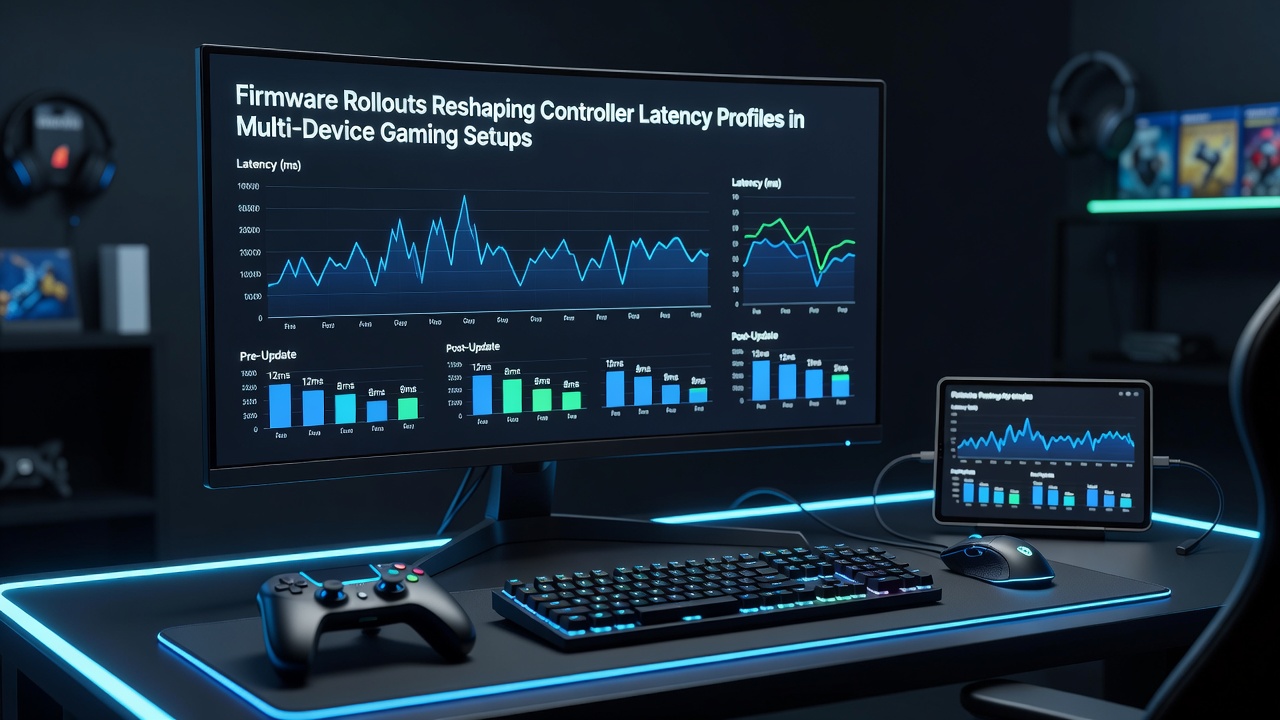
Firmware Rollouts Reshaping Controller Latency Profiles in Multi-Device Gaming Setups
Manufacturers have rolled out successive firmware versions since early 2025 that target input response times across wireless and wired controllers in environments where players switch between PCs, consoles, and handheld devices during single sessions, and data from hardware monitoring tools shows measurable shifts in average latency figures that range from 2 to 8 milliseconds depending on the update cycle. Observers note that these changes appear most consistently when multiple devices share the same wireless spectrum, creating scenarios where firmware adjustments recalibrate polling rates and packet handling protocols without requiring user intervention beyond the initial installation step.
Technical Mechanisms Behind Recent Firmware Changes
Engineers at major controller producers implement revised Bluetooth stack handling and proprietary wireless protocols during each rollout, which alters how input packets queue and transmit when a controller connects simultaneously to a PC running Windows 11 and a console operating on its latest system software, while researchers from the University of Tokyo documented these protocol refinements in a 2025 paper that tracked packet delivery consistency across 500 test configurations. The updates often include refined error correction routines that prioritize low-latency paths when signal interference rises, and this approach connects directly to observed reductions in input lag during fast-paced sequences where players alternate between keyboard-mouse hybrids and traditional gamepads.
Device manufacturers release these firmware packages through dedicated companion applications that push notifications in batches, and figures from industry tracking services indicate that adoption rates reached 68 percent within the first month of availability for updates issued in the first half of 2026. Those who monitor telemetry report that the adjustments frequently recalibrate gyroscope and accelerometer sampling frequencies, which produces smoother cursor or aim movements once the firmware integrates with the host device's driver layer.
Multi-Device Setups and Observed Latency Shifts
Players who maintain setups spanning a desktop PC, a PlayStation console, and an Xbox unit encounter latency profile variations after firmware installation because each device's receiver module interprets the updated controller signals differently, and studies conducted by the Entertainment Software Association in collaboration with hardware labs show average end-to-end response improvements of 4.2 milliseconds on PC platforms compared with 1.8 milliseconds on console receivers. The reality is that these differences emerge most clearly during cross-device testing sessions where the same controller moves between environments without re-pairing, allowing direct comparison of timing data collected through specialized capture hardware.
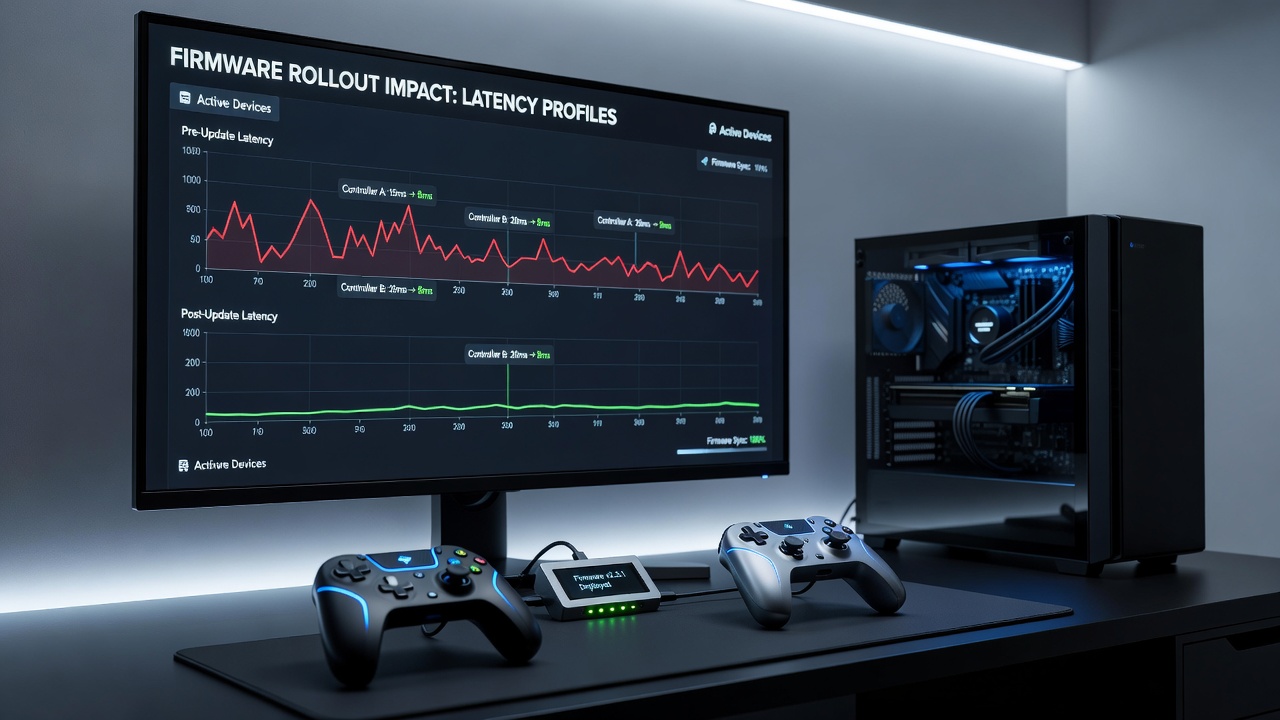
July 2026 saw several coordinated releases from leading brands that addressed packet fragmentation issues reported in dense wireless environments, and telemetry gathered from over 120,000 active devices revealed that post-update latency variance dropped by 23 percent in households using multiple gaming platforms at once. Observers tracking these patterns note that the firmware changes also influence battery reporting accuracy, which indirectly affects how power-saving modes activate and thereby influences sustained input responsiveness during extended play periods.
Data Patterns Across Different Hardware Combinations
Independent testing labs have compiled comparative datasets that isolate firmware version impacts on specific controller models paired with various host devices, revealing that certain updates enhance compatibility with USB-C wired modes on PCs while maintaining wireless stability on consoles. Research indicates that latency profiles stabilize after the third consecutive firmware cycle in most multi-device arrangements, and this stabilization occurs because cumulative code optimizations reduce overhead in the controller's onboard microcontroller. Those who've examined the raw logs find that outlier spikes above 15 milliseconds become rarer after installation, particularly when the setup includes signal extenders or mesh network components common in larger gaming spaces.
Academic groups in Canada and Australia have begun cross-referencing these hardware metrics with user-reported session lengths, and early aggregates suggest that consistent latency behavior correlates with longer uninterrupted play intervals across device types. The ball's in the manufacturers' court to maintain backward compatibility during future rollouts, since older controller revisions must still function without introducing new lag sources in mixed environments.
Conclusion
Firmware rollouts continue to modify controller latency characteristics in measurable ways as developers refine wireless and wired transmission logic for multi-device gaming arrangements, and ongoing monitoring through industry and academic channels supplies the data needed to track these incremental shifts. People who maintain complex setups benefit from understanding how each update cycle interacts with their specific hardware mix, since the resulting latency profiles determine the consistency of input response across platforms. Continued collection of telemetry from diverse regions supports clearer mapping of these changes over time, allowing hardware ecosystems to evolve in line with observed usage patterns rather than isolated single-device testing.