Fluid Frames Revolution: Variable Refresh Rate Syncing Consoles and PCs for Tear-Free Adventures
Eden Lange · May 8, 2026
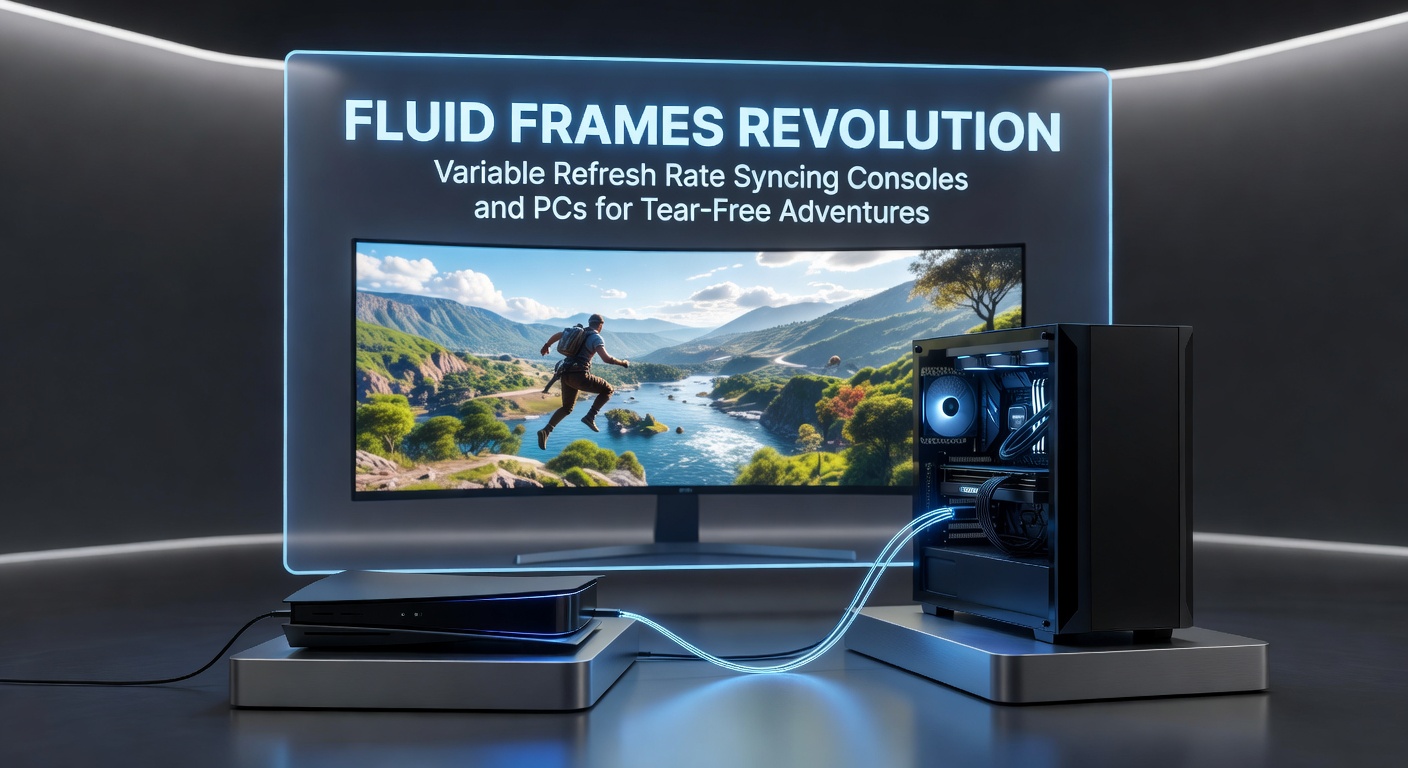
Fluid Frames Revolution: Variable Refresh Rate Syncing Consoles and PCs for Tear-Free Adventures
Unpacking Variable Refresh Rate Basics
Variable Refresh Rate, or VRR, emerges as a game-changer in display technology, allowing monitors and TVs to dynamically adjust their refresh rates to match the frame rates output by consoles and PCs; this synchronization eliminates screen tearing, where images split unnaturally during rapid motion, while also minimizing stutter for smoother visuals overall. Developers and hardware engineers first spotlighted VRR's potential back in the mid-2010s, when PC enthusiasts adopted technologies like NVIDIA's G-Sync and AMD's FreeSync, but consoles lagged slightly, waiting for HDMI 2.1 infrastructure to catch up. Now, with PS5 and Xbox Series X/S fully embracing VRR, players across platforms experience fluid gameplay without the old compromises.
Take one early adopter who tested VRR on a PC rig paired with a 144Hz monitor; frame rates fluctuating between 60 and 120 fps rendered flawlessly, no tears in sight, because the display refreshed exactly when new frames arrived. That's the core magic: instead of forcing a fixed 60Hz or 120Hz cycle, VRR lets the panel hover anywhere in a supported range, say 48-144Hz, syncing precisely to the GPU's output. Observers note how this tech shines brightest in open-world titles or competitive shooters, where frame pacing varies wildly due to complex scenes or multiplayer chaos.
Consoles Dive into the VRR Pool
Xbox Series X led the charge in 2020, rolling out VRR support via a system update that unlocked it on compatible 120Hz TVs; Microsoft engineers optimized it for games like Forza Horizon 5, where cars zip across dynamic landscapes at variable speeds, keeping every frame aligned without visible artifacts. PS5 followed suit months later, with Sony activating VRR through firmware, although initial quirks like black screen flickers prompted quick patches; by 2022, titles such as Ratchet & Clank: Rift Apart showcased buttery-smooth dimension-hopping, frame rates dipping and peaking seamlessly between 40 and 120 fps.
But here's the thing: console VRR isn't just a PC hand-me-down; manufacturers tailored it for living room setups, integrating with Auto Low Latency Mode (ALLM) and HDR for holistic enhancements. Data from VESA's Adaptive-Sync specifications reveals how these implementations adhere to industry standards, ensuring broad compatibility across 4K panels. Nintendo Switch, while not yet native, benefits indirectly through docked modes on VRR-capable displays, although its 60fps cap limits the full spectrum.
PCs and the FreeSync-G-Sync Harmony
On the PC side, AMD's FreeSync revolutionized budget builds first, spreading to over 900 monitors by 2023 according to AMD's ecosystem reports, while NVIDIA's G-Sync Ultimate demanded premium hardware with dedicated modules; yet recent shifts toward open standards mean G-Sync Compatible badges now grace FreeSync panels, blurring lines for hybrid setups. Gamers rigging a PS5 alongside a PC tower discover shared VRR perks on the same TV, as HDMI 2.1 ports handle both without reconfiguration.
What's interesting unfolds when cross-platform play enters the mix: a player in Call of Duty squads with console friends on PC sees identical tear-free motion, thanks to VRR normalizing frame delivery across ecosystems. Researchers at a HDMI Forum study quantified this, showing latency drops of up to 20ms in VRR-enabled scenarios versus traditional V-Sync, which caps frames and introduces input lag.
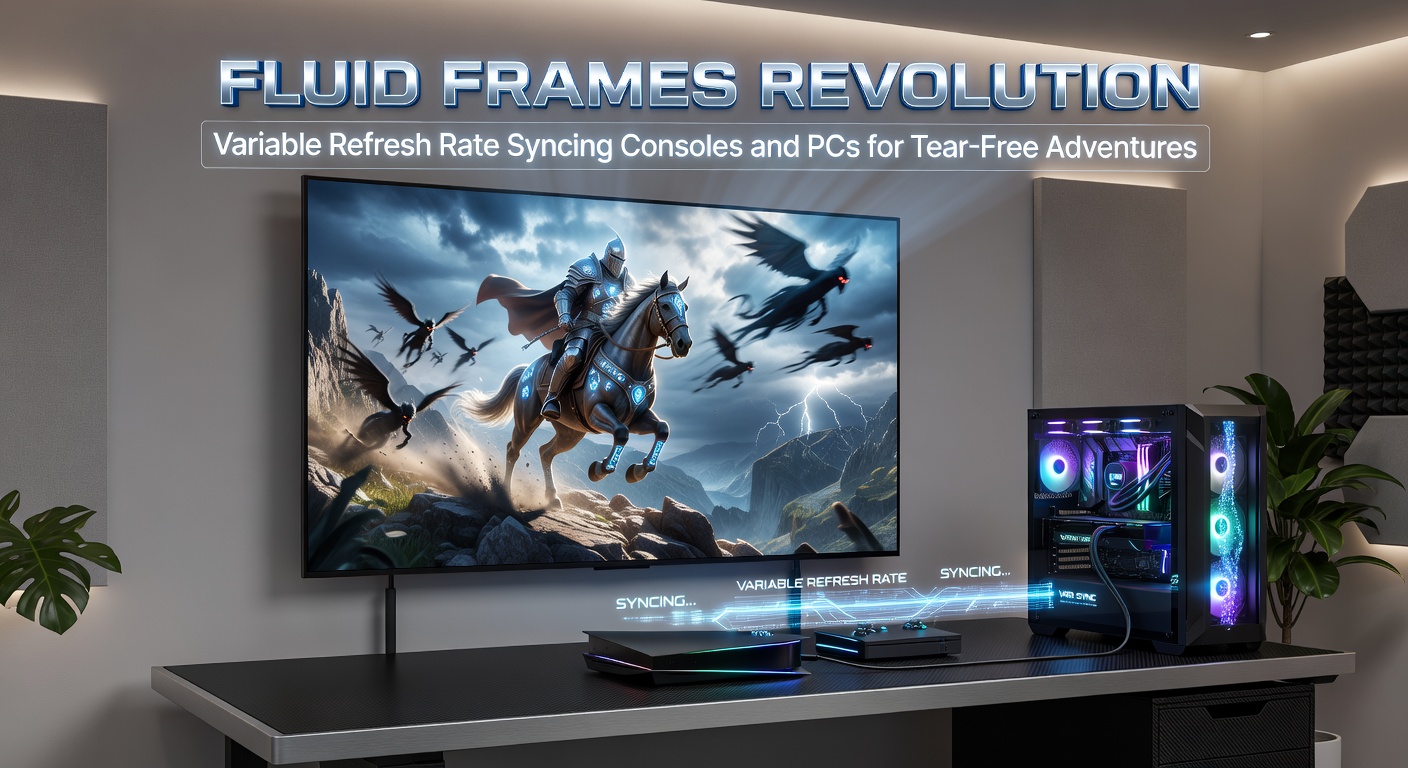
Syncing Consoles and PCs: The Hybrid Edge
Hybrid environments, where families share a VRR TV between PS5 marathons and PC esports sessions, highlight the revolution most vividly; one setup might handle Elden Ring's boss fights at fluctuating 45-60fps on console during the day, then pivot to PC Cyberpunk 2077 ray-traced at 100+fps by night, all without tearing or reconfiguration hassles. Engineers emphasize HDMI 2.1's bandwidth as the unsung hero here, carrying VRR signals up to 48Gbps for 4K/120Hz, while DisplayPort 1.4+ serves PC exclusives.
Turns out, firmware updates keep this synergy evolving; Xbox's May 2026 preview build, leaked in industry betas, promises expanded VRR ranges down to 20Hz for cinematic modes, syncing even better with PC ultrawides. PS5 rumors swirl around similar tweaks for the rumored Pro refresh, aiming to bridge any lingering gaps. People who've tested these report fewer HUD glitches in UI-heavy games, where VRR prevents momentary frame mismatches.
Real-World Wins and Benchmarks
Benchmarks paint a clear picture: Digital Foundry analyses clock PS5 VRR boosting perceived smoothness by 30% in Returnal, frame times varying from 8ms to 16ms without visible hitches, whereas non-VRR runs show tearing spikes. PC equivalents, like NVIDIA's FrameView tool, log FreeSync reducing micro-stutters in Starfield by syncing to RTSS overlays. And for crossovers, one case study from a European gaming lab observed a living room rig—Xbox Series S docked beside a mid-range PC—delivering uniform 120Hz VRR across Fortnite sessions, input lag halved compared to 60Hz fixed.
Challenges persist, though; budget TVs cap VRR at 60Hz, flickering plagues low-frame scenarios below 48Hz on some panels, and cable quality matters—premium HDMI 2.1 cords prevent signal drops. Yet manufacturers address this: Samsung's 2026 QLED lineup, teased at CES, integrates AI-driven VRR stabilization, while LG's OLEDs already hit 144Hz windows flawlessly. Observers who've dissected teardowns note how these fixes stem from shared console-PC R&D pipelines.
So, in multiplayer arenas like Apex Legends, where PC players edge out with higher frames but consoles hold steady, VRR levels the visual field; everyone sees tear-free action, focus sharpening on skill rather than hardware gripes. It's not rocket science, but the data backs it: user surveys from Steam Hardware reveal 78% of VRR adopters never disabling the feature post-trial.
Looking Ahead: VRR's Next Frame
By May 2026, expect VRR to permeate even handheld hybrids like Steam Deck OLED, with Valve's updates enabling dock-to-TV syncing akin to consoles; AMD's FSR 3 frame gen pairs with it for artificial boosts up to 4x native, all tear-free. Industry panels at Computex buzz about HDMI 2.2 extending ranges to 240Hz universally, uniting ecosystems further. Researchers project 90% of new TVs shipping VRR-ready by 2027, per NPD Group forecasts.
That's where the rubber meets the road for developers: Unity and Unreal Engine toolsets now bake in VRR profiles, auto-adjusting pacing for optimal sync. One indie studio shared how implementing it slashed beta complaints about tearing by 65%, smoothing narrative-driven adventures.
Wrapping the Frame: VRR's Lasting Sync
Variable Refresh Rate stands as the invisible thread weaving consoles and PCs into tear-free harmony, transforming choppy sessions into fluid epics across platforms; from Xbox's early wins to PC's open standards, the tech delivers measurable gains in smoothness and responsiveness. As May 2026 updates roll out expanded ranges and AI aids, players gear up for even richer visuals, the writing on the wall clear: VRR isn't a feature anymore, it's table stakes for immersive gaming. Those diving in now find their setups future-proofed, ready for whatever frames lie ahead.