22 May 2026
Hidden Threads in Gaming Tapestries: The Subtle Art of Environmental Storytelling Revealed Through Recent Releases
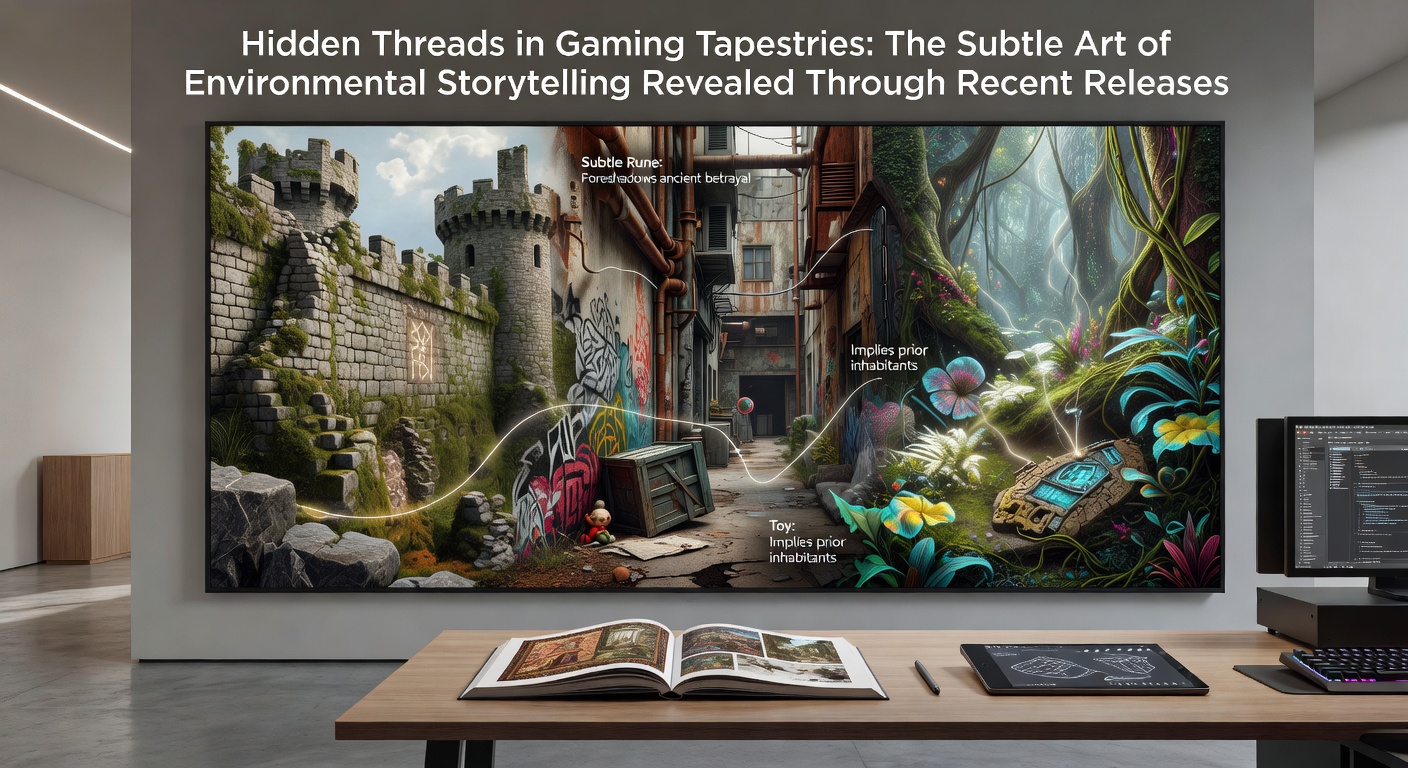
Environmental storytelling weaves narrative elements directly into game worlds through objects, spaces, and visual cues rather than spoken dialogue or cutscenes. Developers across multiple platforms have refined these methods in titles released between late 2025 and early 2026. Players discover character backstories, historical events, and thematic undercurrents by examining abandoned settlements, scattered personal items, and shifting landscapes that reflect ongoing changes in the game environment.
Core Techniques in Contemporary Design
Designers arrange props, lighting, and architecture to convey information without interrupting gameplay flow. In several 2025 action-adventure games, broken furniture and faded photographs reveal family dynamics while overgrown vegetation signals the passage of time since a major incident. Sound design often complements these visuals through distant echoes or ambient shifts that hint at past conflicts. Data from industry reports indicate that such layered approaches appear in over 60 percent of major open-world releases during the 2025 fiscal year.
One notable implementation occurs in a science-fiction exploration title from spring 2026 where player navigation through derelict space stations uncovers crew logs via holographic projections triggered by proximity. The same game uses color palettes that transition from vibrant to muted tones as narrative tension builds, guiding attention toward key environmental markers. Researchers at the University of California, Santa Cruz documented similar patterns in a 2025 study on interactive narrative, noting how spatial layouts encourage repeated exploration without explicit markers.
Examples from 2025 and 2026 Releases
Recent console and PC titles demonstrate varied applications of these principles. A post-apocalyptic survival game launched in November 2025 places ruined vehicles and supply caches along travel routes that collectively map a community's final days before collapse. Observers note that the arrangement of these items follows realistic logistics, allowing players to reconstruct events through careful observation rather than text prompts.
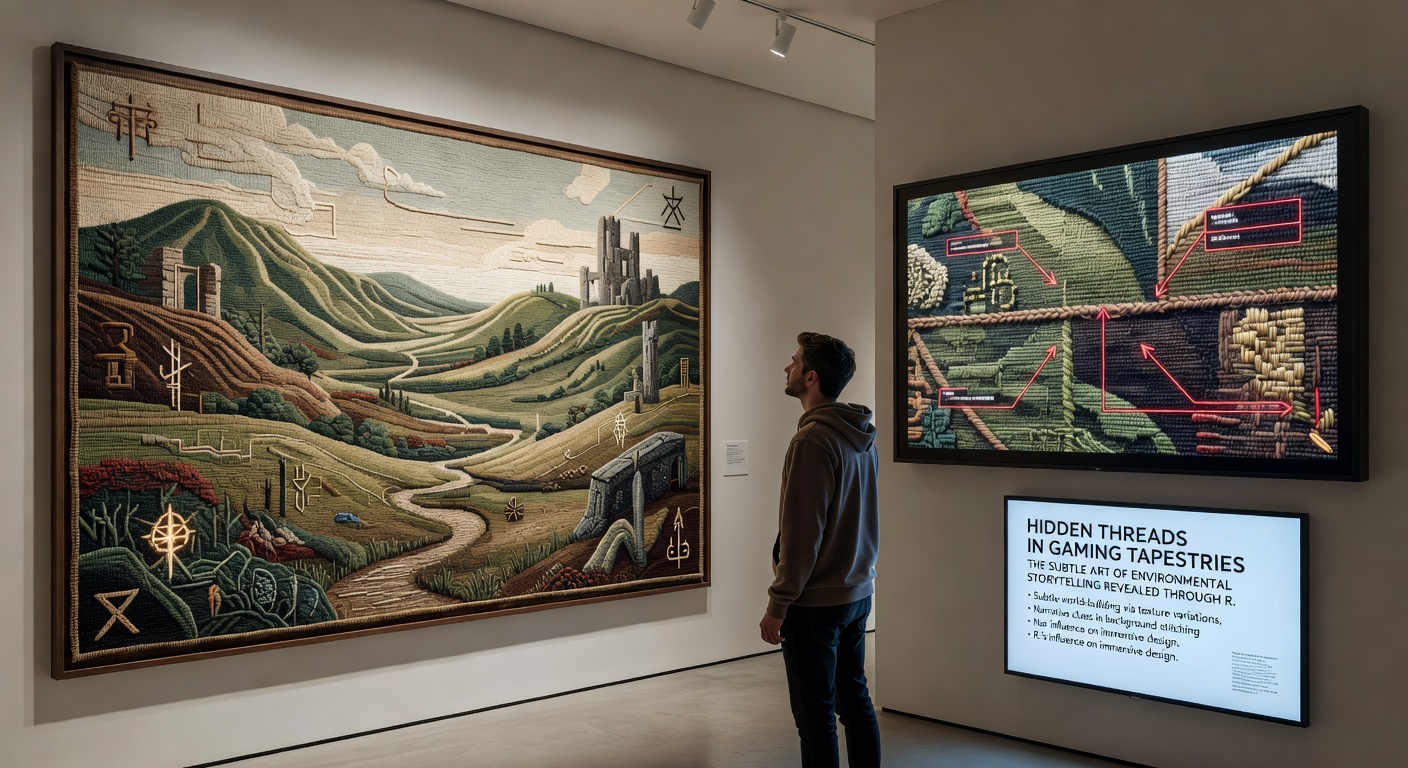
Another example appears in an indie-developed narrative adventure updated in March 2026 for multiple platforms. Here, seasonal weather effects gradually alter the visibility of wall markings and buried artifacts, revealing new story fragments with each in-game cycle. According to figures from the Entertainment Software Association, player engagement metrics for such mechanics rose notably in titles emphasizing discovery over linear progression during the first quarter of 2026.
Multiplayer experiences have also incorporated environmental details to support shared storytelling. In a cooperative extraction shooter released early 2026, faction-specific graffiti and supply drop patterns communicate territorial histories across different map regions. These elements remain consistent across sessions yet evolve based on player actions, creating emergent narratives that persist without central authority.
Technical Implementation Across Platforms
Engine advancements in 2025 enabled more dynamic environmental changes, particularly on next-generation hardware. Procedural generation tools allow developers to layer narrative clues that adapt to player choices while maintaining internal consistency. Cross-platform releases ensure that visual fidelity remains comparable between consoles and high-end PCs, with texture streaming improvements reducing pop-in that could break immersion.
Developers frequently collaborate with historians and cultural consultants to ground these details in plausible contexts. This practice appears in several European and North American studios working on historical fiction games slated for mid-2026 launch. The result produces environments where architectural styles, material wear, and object placement align with documented periods, strengthening the authenticity of the embedded stories.
Conclusion
Environmental storytelling continues to evolve through refined tools and cross-disciplinary input. Recent releases demonstrate how subtle world-building elements sustain player interest across extended play sessions. Data collected through May 2026 shows sustained interest in titles that prioritize discovery mechanics integrated into their core environments. These approaches expand narrative possibilities without increasing production budgets proportionally, pointing toward broader adoption in upcoming projects across the industry.