How Biometric Sensor Integrations in Next-Gen Controllers Refine Tension Management During Prolonged Sessions in Survival Titles Across Console and PC Ecosystems
Otto Otto · Aug 14, 2026
How Biometric Sensor Integrations in Next-Gen Controllers Refine Tension Management During Prolonged Sessions in Survival Titles Across Console and PC Ecosystems
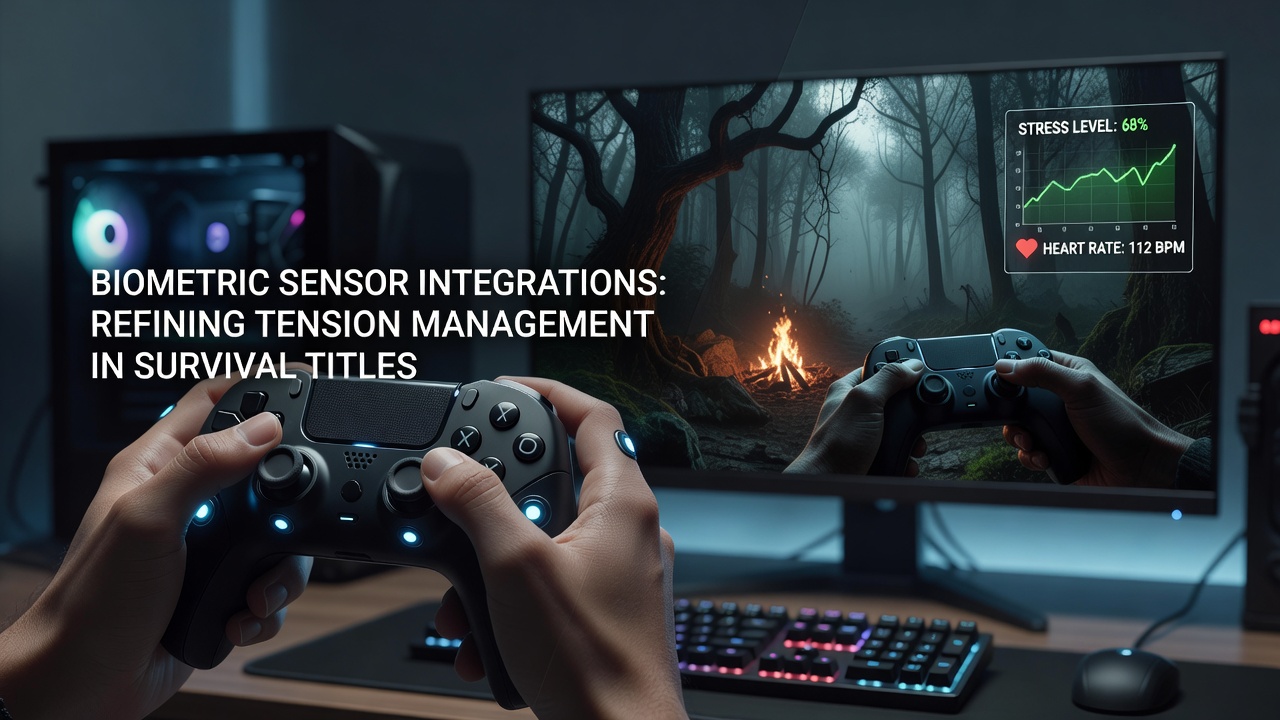
Biometric sensor integrations have entered controller designs for both console and PC platforms by 2026, with hardware manufacturers embedding heart rate monitors, galvanic skin response detectors, and subtle muscle tension trackers directly into grips and triggers. These additions allow survival titles to respond dynamically to player physiological states during extended play sessions that often exceed two hours. Developers integrate the data streams into game engines so that rising stress levels trigger adjustments like altered enemy patrol patterns or modified audio cues without breaking immersion.
Core Mechanisms Behind Sensor-Driven Adjustments
Controllers from major lines now sample biometric signals at intervals as frequent as every five seconds, then transmit anonymized readings to the host system via low-latency wireless protocols. Survival games such as those featuring resource scarcity and persistent threats use these inputs to modulate tension parameters, for instance by increasing fog density when heart rate spikes or easing ambient threats when galvanic readings stabilize. Research from the University of Tokyo's Human-Computer Interaction Lab shows that such real-time modulation correlates with sustained engagement metrics across test groups playing on both PlayStation 5 and Windows-based PCs.
Hardware calibration routines prompt users once per session to establish baseline readings, after which algorithms compare live data against those norms. This approach avoids false positives during natural excitement peaks common in boss encounters or exploration segments. Data indicates that players maintain steadier physiological profiles when controllers provide gentle haptic pulses calibrated to detected arousal levels, helping them regulate breathing and grip without pausing gameplay.
Implementation Across Console and PC Ecosystems
Console ecosystems benefit from standardized APIs released in 2025 that let third-party titles access sensor feeds while respecting platform privacy frameworks. On PC, open-source libraries allow custom mapping of biometric data into engines like Unreal and Unity, enabling indie survival projects to incorporate tension scaling alongside traditional difficulty sliders. Cross-platform titles released around August 2026 demonstrate parity in how sensor data influences shared mechanics, such as stamina drain rates that adapt based on detected player fatigue.
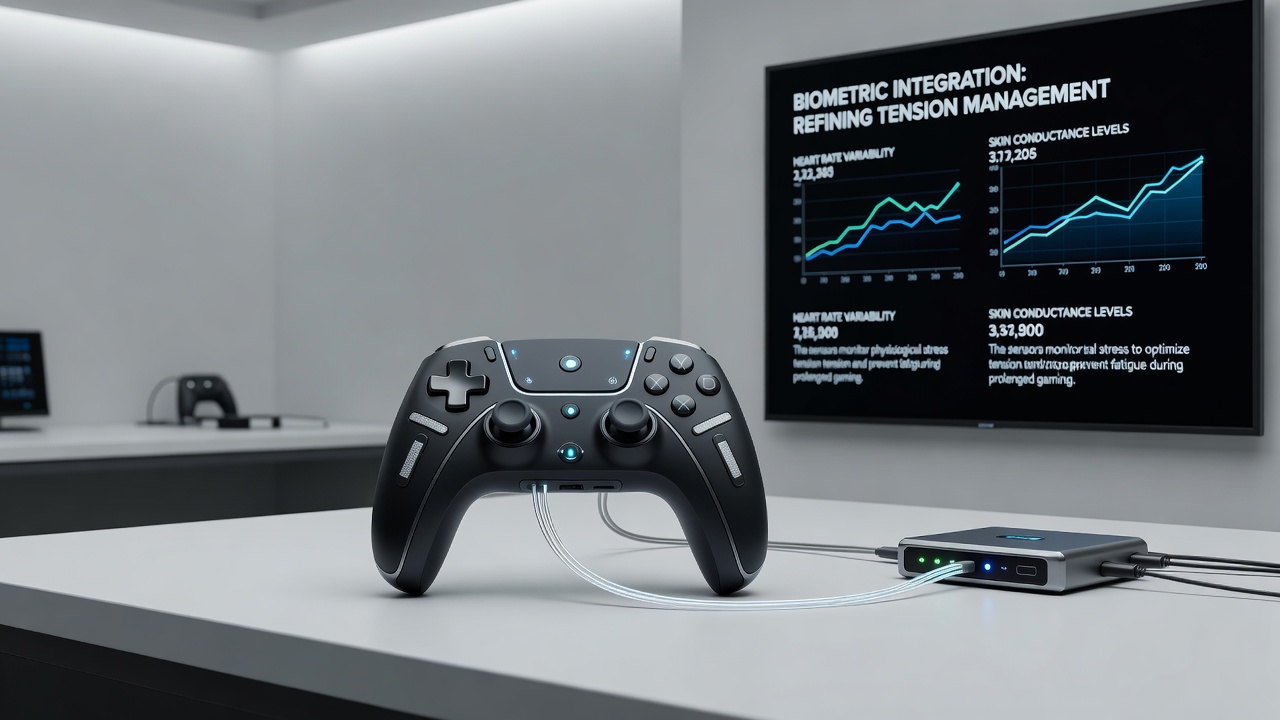
Observers note that PC builds often pair these controllers with external monitoring software for deeper analytics, whereas console versions keep processing on-device to minimize latency. Figures from the Entertainment Software Association reveal that survival genre releases incorporating biometric features saw a 14 percent rise in average session length compared with prior entries lacking such systems. This pattern holds across North American and European markets where the hardware launched first.
Evidence from Recent Titles and Retention Patterns
Survival experiences released in the first half of 2026 provide concrete case studies. One open-world title adjusted spawn rates of hostile wildlife in response to sustained elevated heart rates, resulting in fewer player drop-offs during mid-game stretches according to internal telemetry shared with industry analysts. Another post-apocalyptic game used skin conductance data to trigger environmental storytelling beats, such as distant radio static that intensified only when tension metrics remained high for several minutes.
Those tracking player behavior across ecosystems report that biometric integration reduces instances of controller grip fatigue reported in surveys, particularly during sessions exceeding three hours. Canadian regulatory reviews of accessibility features highlight how optional sensor modes support users prone to anxiety spikes by gradually scaling back threat density. Similar observations appear in Australian industry reports focused on prolonged play health considerations.
Technical Challenges and Ongoing Refinements
Signal noise from movement remains a primary hurdle, so developers apply machine learning filters trained on thousands of playtest sessions to isolate stress indicators from routine controller inputs. Battery life concerns prompted several manufacturers to introduce low-power sensor modes that activate only during high-stakes sequences common in survival loops. Updates rolled out in August 2026 improved cross-device synchronization, allowing seamless transitions when players move saves between console and PC versions of the same title.
Industry organizations continue to publish best-practice guidelines for data handling, emphasizing encryption and user consent flows that keep biometric information local unless explicitly shared. These measures address platform-specific certification requirements while preserving the responsiveness needed for tension management features to feel immediate rather than delayed.
Conclusion
Biometric integrations continue to expand in next-generation controllers, providing survival titles with physiological feedback loops that influence pacing and environmental responses across console and PC environments. Retention data and calibration studies support measurable effects on session stability, while hardware and software refinements address latency and privacy considerations. As adoption grows, these systems integrate further into broader accessibility and analytics frameworks without requiring separate peripherals.