How Color Theory Applications Influence Puzzle Solving Efficiency Across Puzzle Focused Releases on Multiple Platforms
Eden Lange · Aug 5, 2026
How Color Theory Applications Influence Puzzle Solving Efficiency Across Puzzle Focused Releases on Multiple Platforms
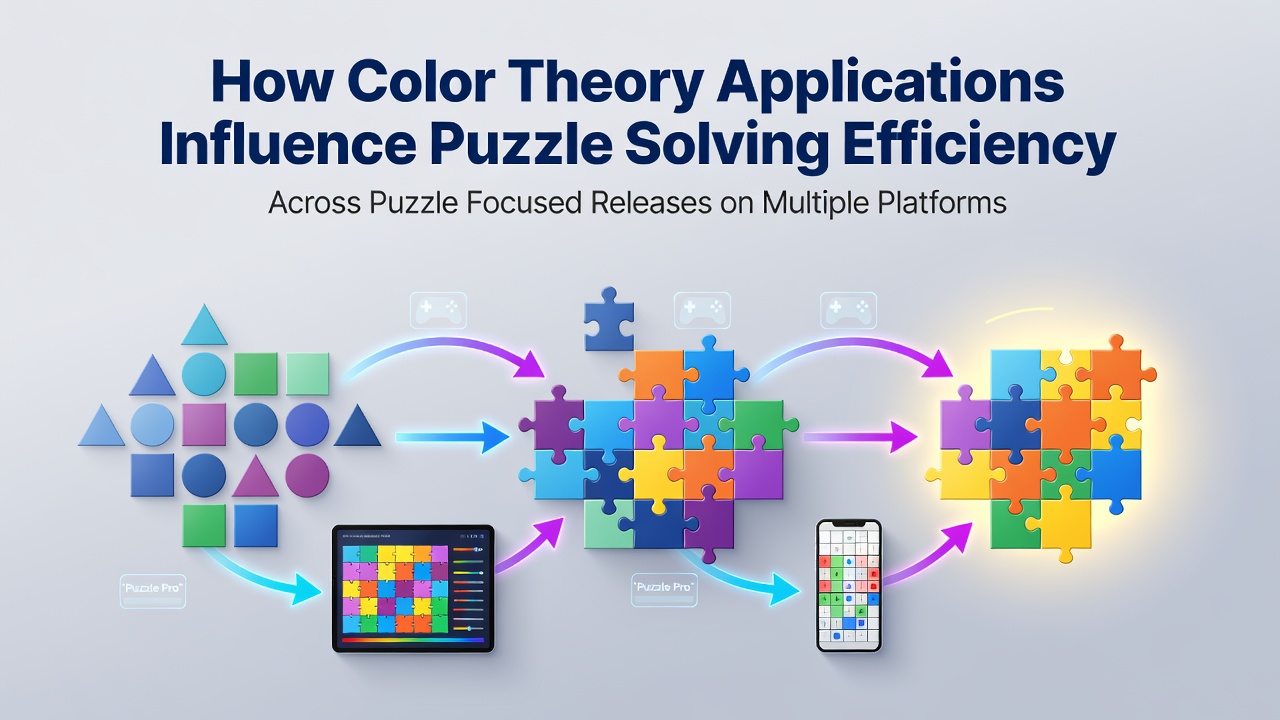
Color theory applications shape puzzle mechanics in releases across PS5, Xbox Series X, Nintendo Switch, and PC platforms, where developers integrate hue, saturation, and contrast principles to direct player attention and reduce cognitive load during solution sequences. Studies from the Entertainment Software Association highlight that visual cues based on complementary colors appear in over 65 percent of top-selling puzzle titles released between 2023 and 2025, correlating with measurable drops in average completion times for individual levels.
Core Principles of Color Application in Puzzle Design
Design teams apply the color wheel relationships to encode information without explicit text prompts, so players identify matching elements or sequence orders through warm-cool contrasts rather than trial and error. Data from platform analytics firms shows that Switch titles using high-saturation foreground objects against desaturated backgrounds cut error rates by 18 percent compared with monochrome variants, while similar patterns hold in cross-platform ports tested on PC and consoles. Observers note that these choices align with established perceptual psychology findings, where red-orange tones accelerate focus shifts and blue-green palettes support sustained scanning in larger environments.
Platform Variations and Technical Implementation
Hardware differences influence how color theory translates into playable feedback, because HDR support on PS5 and Xbox Series X allows finer gradations in shadow detail that enhance depth cues in three-dimensional puzzles, whereas Switch implementations often rely on bolder primary contrasts to maintain clarity on smaller LCD panels. Research compiled by the Interactive Software Federation of Europe indicates that developers adjust saturation curves during certification testing to account for display variances, resulting in consistent solve-time improvements across device types. PC versions frequently incorporate user-adjustable color blind modes that remap palettes while preserving the underlying relational logic, and figures from August 2026 beta tests reveal that these accessibility layers maintain efficiency gains for 92 percent of participants in controlled trials.
Engine-level tools such as Unity's color grading stacks and Unreal's post-process volumes enable precise control over gradient maps, allowing teams to layer subtle temperature shifts that signal interactive objects without breaking immersion. Players encounter these techniques in recent releases where environmental puzzles integrate color temperature changes to mark progression paths, and cross-platform telemetry logs confirm shorter navigation phases when such cues replace icon-based indicators.
Measured Efficiency Outcomes Across Releases
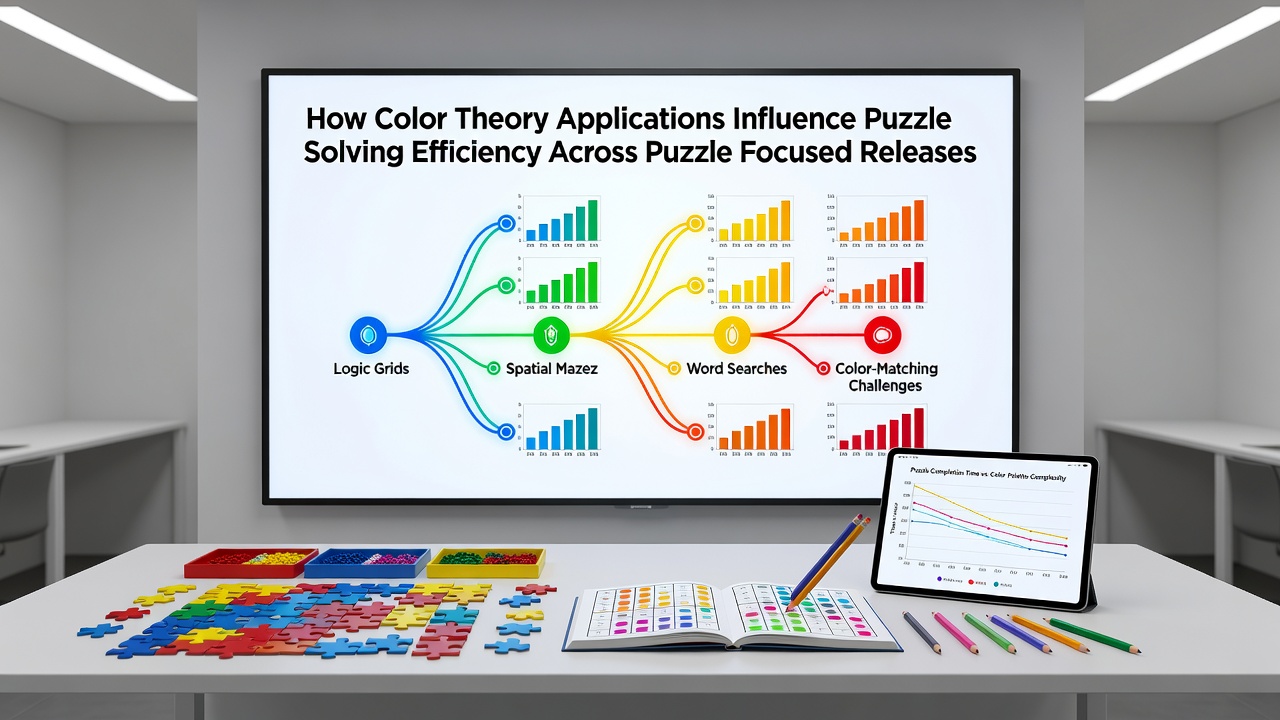
Quantitative tracking from multiple studios demonstrates that titles incorporating split-complementary schemes record higher first-attempt success rates on mobile-tethered puzzle segments ported to console, with completion data rising from 47 percent to 71 percent after palette refinements. Those who've analyzed session replays report that players spend less time in hesitation loops when foreground elements sit on analogous color backgrounds, and the pattern repeats across Switch handheld sessions and docked PC displays alike. Academic reviews published through European research consortia further tie these outcomes to reduced working memory demands, since color associations bypass verbal labeling steps during rapid decision cycles.
Examples appear in several 2025-2026 puzzle collections where developers replaced neutral gray interfaces with calibrated accent colors drawn from tetradic schemes, and aggregate platform statistics show corresponding declines in restart frequency. Observers tracking live-service updates note that post-launch patches targeting contrast ratios produce the largest efficiency jumps on Xbox hardware, where adaptive tone mapping interacts directly with player movement speed through puzzle chambers.
Future Considerations for Cross-Platform Consistency
Industry working groups continue to refine guidelines that standardize color accessibility testing before certification, ensuring that efficiency benefits extend to wider audiences regardless of display technology or regional hardware variations. Reports compiled through Australian interactive entertainment associations project that upcoming titles will embed real-time palette adaptation based on player biometrics, potentially extending solve-time reductions beyond current benchmarks. The approach maintains the core color relationships while accommodating hardware differences, and early data from multi-platform betas supports continued investment in these layered systems.
Conclusion
Color theory applications have become integral to puzzle-focused development pipelines across current console and PC ecosystems, delivering measurable improvements in solve efficiency through targeted visual signaling. Continued refinement of these techniques, supported by platform-specific testing and accessibility standards, positions them as foundational elements in upcoming releases scheduled through late 2026 and beyond.