How Haptic Feedback Patterns in Controller Designs Influence Emotional Pacing During Narrative Sequences on Hybrid Portable and Home Systems
Otto Otto · Jun 29, 2026
How Haptic Feedback Patterns in Controller Designs Influence Emotional Pacing During Narrative Sequences on Hybrid Portable and Home Systems
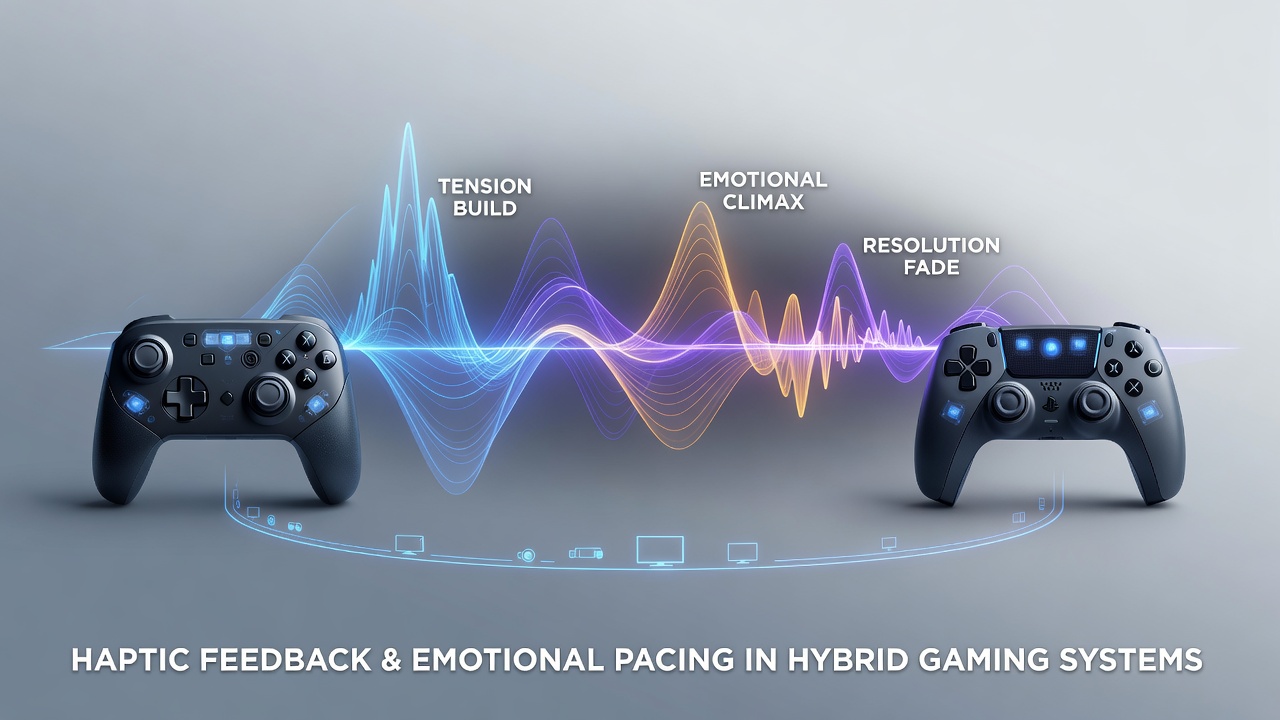
Controllers equipped with advanced haptic systems now deliver precise tactile cues that align with story beats across both portable hybrids and stationary home setups, and researchers continue to document how these patterns shape the rhythm of player emotions during key narrative moments. Data from multiple platform analyses indicate that subtle variations in vibration intensity, frequency, and duration create measurable shifts in tension and release when integrated with dialogue, music, and visual pacing.
Core Mechanisms in Modern Controller Hardware
Hybrid portable systems combine compact actuators with adaptive triggers while home consoles employ larger motors and multiple feedback layers, yet both approaches rely on similar principles of timed pulses that mirror emotional arcs. Engineers design low-frequency rumbles to underscore moments of dread and higher-frequency pulses to signal relief or revelation, and studies from institutions like the University of Melbourne have tracked these patterns across titles released through early 2026. Players experience these cues without visual prompts, which allows narrative sequences to maintain momentum while the controller reinforces pacing through physical sensation alone.
Pattern Variations and Emotional Synchronization
Short, staccato bursts often coincide with sudden revelations or conflicts, whereas sustained oscillations accompany extended periods of uncertainty or grief, and developers calibrate these sequences based on telemetry gathered from thousands of sessions on both device types. In June 2026, industry reports highlighted how cross-platform titles adjust haptic strength dynamically when switching between portable and docked modes to preserve consistent emotional flow. Those who analyze player retention data note that sequences featuring synchronized haptics show longer average engagement times compared to sequences relying solely on audio-visual elements.
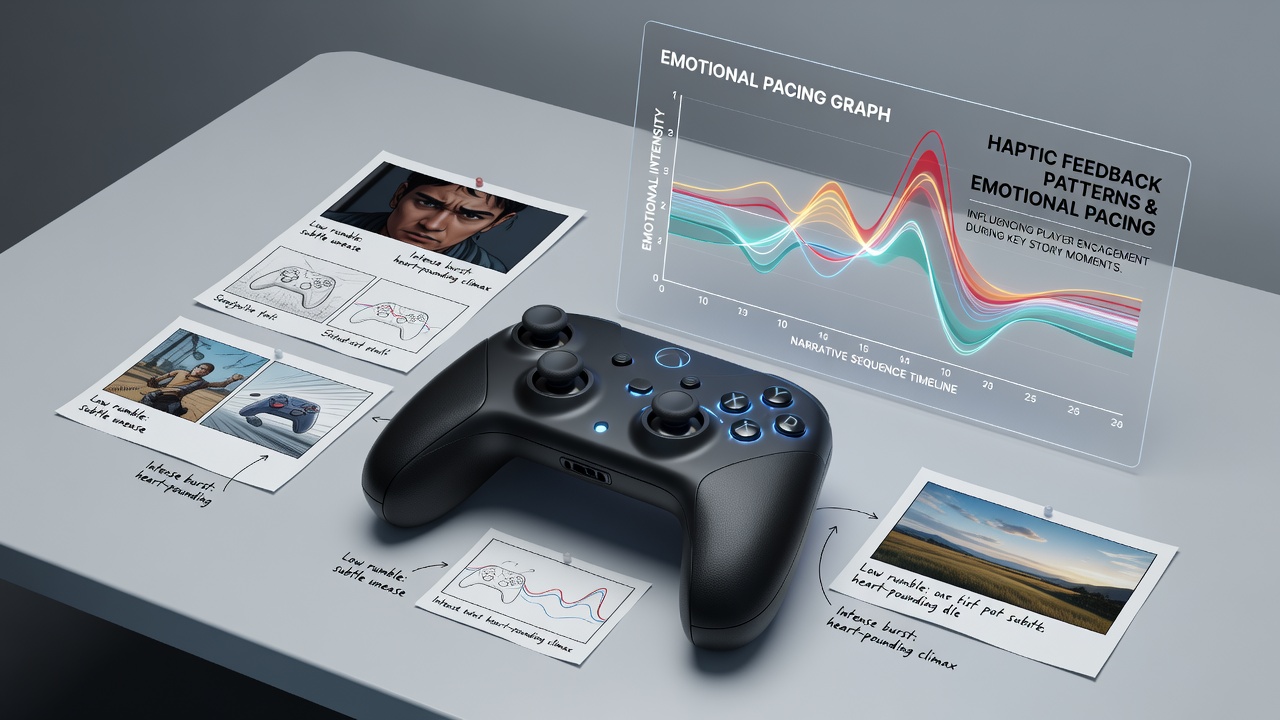
Adaptive algorithms further refine these effects by scaling feedback according to session length and detected heart-rate proxies through controller grip sensors, and this layering helps maintain emotional pacing even during repeated playthroughs of the same story segment. Observers note that certain patterns, such as asymmetric left-right motor activation, effectively convey internal character conflict without interrupting dialogue delivery.
Cross-Platform Implementation and Data Trends
Hybrid devices must balance battery constraints with feedback richness while home systems prioritize maximum amplitude, yet both ecosystems now share standardized APIs that allow developers to author once and deploy across environments. Figures released by the Entertainment Software Association of Canada reveal that narrative-driven games incorporating refined haptic timing achieved higher completion rates on hybrid hardware during the first half of 2026. Those patterns transfer effectively because core timing libraries remain consistent even when actuator specifications differ between portable and stationary controllers.
Take one development team that mapped heartbeat-like pulses to moments of character vulnerability, and the resulting data showed players lingered longer on those scenes whether using a docked console or a portable unit. Research conducted at the Technical University of Denmark further examined how frequency modulation influences perceived emotional intensity, and their findings indicate optimal ranges fall between 40 Hz and 120 Hz for most narrative contexts.
Future Calibration Methods
Teams continue refining calibration tools that let writers and designers preview haptic timelines alongside script pages, and this integration reduces iteration cycles while preserving intended pacing. As of June 2026, several major releases demonstrated real-time haptic scripting that responds to player choice branches, ensuring emotional beats land regardless of narrative path taken. Such systems rely on predefined libraries of pulse sequences that can be recombined without requiring new hardware testing on every platform combination.
Conclusion
Haptic feedback patterns have become integral timing instruments that support emotional pacing across hybrid and home ecosystems, and ongoing measurements continue to quantify their contribution to narrative engagement. Continued refinement of actuator control and cross-device synchronization promises even tighter alignment between tactile cues and story rhythm in subsequent releases.