Layered Narrative Delivery Methods Enhancing Player Agency in Choice-Driven Adventures Across Console Generations and PC
Katja Krause · Jun 17, 2026
Layered Narrative Delivery Methods Enhancing Player Agency in Choice-Driven Adventures Across Console Generations and PC
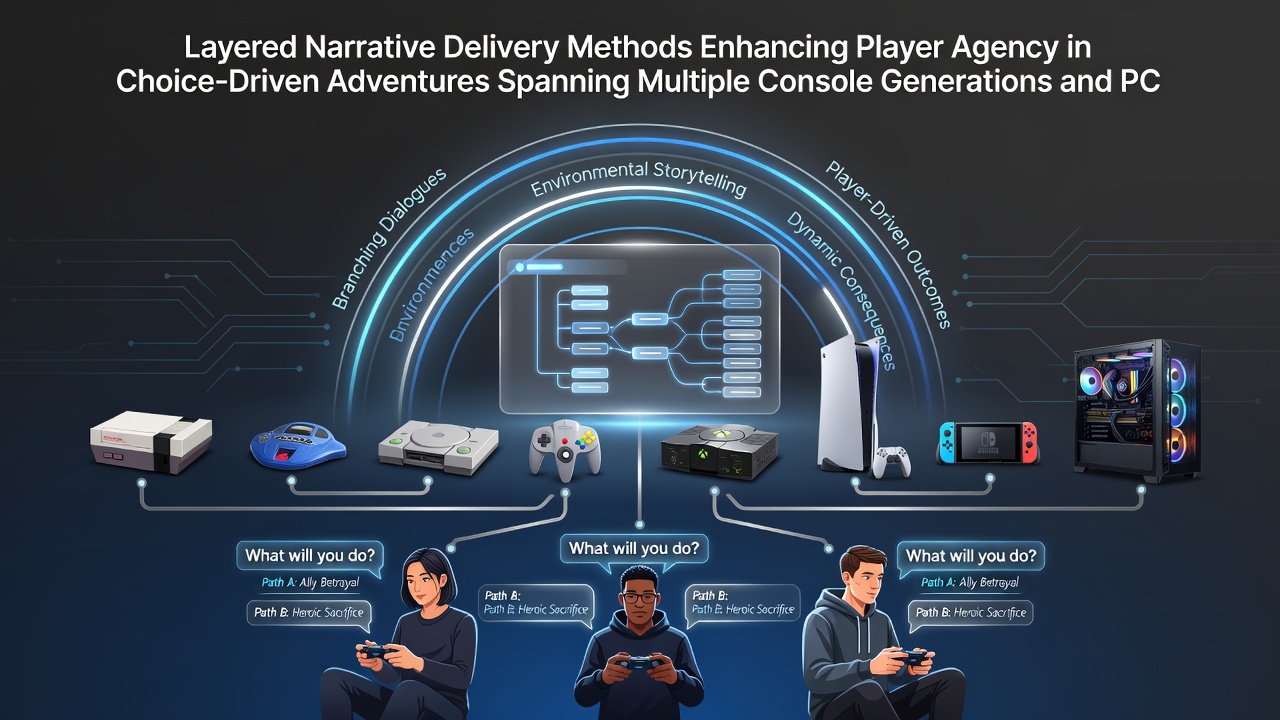
Layered narrative delivery methods have shaped player agency in choice-driven adventures since the early days of console gaming, and these techniques continue to evolve on modern platforms including PC. Developers deliver stories through multiple overlapping systems such as dialogue trees, environmental details, and long-term consequence tracking that allow players to influence outcomes without relying on a single linear path. Research from industry reports shows that games incorporating these layers often maintain higher engagement rates across hardware generations from the PlayStation 2 era through current PlayStation 5, Xbox Series X, and PC titles.
Early implementations appeared in role-playing games on sixth-generation consoles where limited memory forced designers to reuse assets while varying text and cutscene triggers based on prior decisions. Titles from that period established foundations for agency by tracking simple flags for character relationships or quest resolutions that carried forward into later chapters. As hardware advanced into the seventh generation, increased storage enabled more complex branching structures, and studios began layering audio logs alongside spoken dialogue to reinforce player choices without interrupting flow.
Evolution of Branching Systems Over Generations
Console transitions brought measurable changes in how narratives unfolded. Data from sales analyses indicate that seventh-generation releases with consequence tracking saw extended play sessions compared to strictly linear predecessors, because players revisited sections to explore alternate outcomes. PC versions often included mod support that extended these layers further, allowing communities to add new decision points years after initial launch. Eighth-generation hardware refined memory management for seamless integration of real-time reactions, while ninth-generation consoles and high-end PCs now handle simultaneous tracking of dozens of variables including hidden reputation scores and world-state alterations.
One notable approach involves environmental storytelling layered atop explicit choices, where players notice changes in NPC behavior or level layouts that reflect earlier actions. Studies conducted by European research institutions have documented how these subtle cues strengthen perceived agency, since participants reported feeling greater ownership over story developments when visual feedback confirmed their decisions. Cross-platform releases demonstrate consistent implementation, with PC editions sometimes offering additional text logs that expand on console-presented information.
Technical Approaches to Maintaining Consistency
Engine advancements support these delivery methods through improved save-state systems and dynamic asset loading. Developers use conditional scripting that activates specific narrative threads based on accumulated player data, and this technique spans from older DirectX titles on PC to unified engines running on current consoles. As of June 2026, updated analytics platforms reveal that choice-driven adventures utilizing multi-layered tracking retain users longer during initial playthroughs across all major devices.
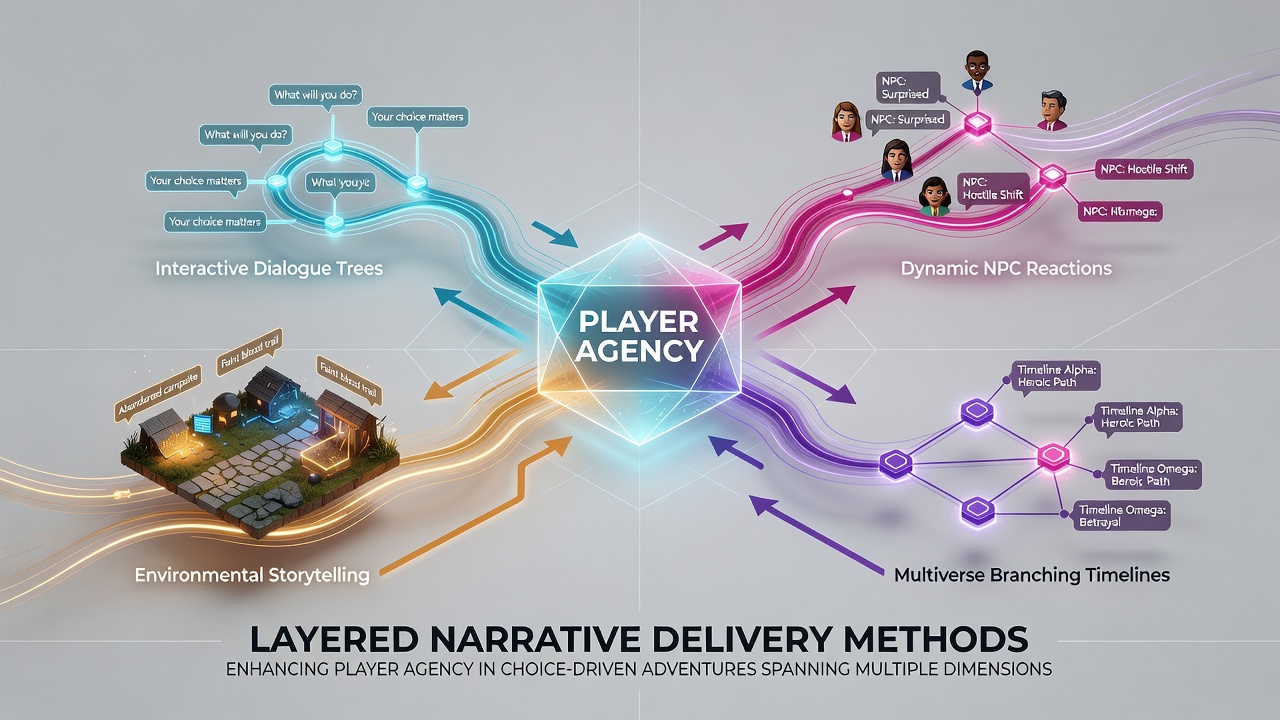
Audio integration adds another dimension, with voice lines and background scores shifting according to accumulated decisions. Industry organizations tracking accessibility note that these layered audio cues help players with varying experience levels recognize the results of their agency without requiring repeated menu checks. PC players frequently access detailed choice histories through in-game journals, whereas console versions streamline the same data into quick-recall overlays developed for controller navigation.
Impact on Player Retention and Exploration
Figures from global gaming associations demonstrate that titles employing layered narratives maintain higher completion percentages when players can observe direct connections between choices and world evolution. Multiple console generations have benefited from iterative improvements in this area, with each hardware cycle enabling denser information delivery without performance loss. Researchers examining cross-platform data find that PC communities often discuss optimal decision combinations in detail, whereas console players focus more on immediate emotional outcomes visible during gameplay.
Examples include series that carry character states across multiple entries released years apart, preserving agency established on earlier hardware. These continuations require careful data migration tools that function equally on legacy consoles and contemporary PC builds, ensuring narrative threads remain intact regardless of platform migration.
Conclusion
Layered narrative methods continue to expand player agency by distributing story control across dialogue, environment, and persistent systems that function reliably from early console generations to present-day PC and console releases. Ongoing technical refinements support denser information layers while preserving accessibility, and platform-specific adaptations ensure consistent experiences whether players engage through controller or keyboard setups. These approaches remain central to choice-driven adventures as hardware capabilities advance.