Lighting Engine Breakthroughs Reshaping Player Navigation Tactics in Atmospheric Console Adventures
Katja Krüger · Aug 26, 2026
Lighting Engine Breakthroughs Reshaping Player Navigation Tactics in Atmospheric Console Adventures
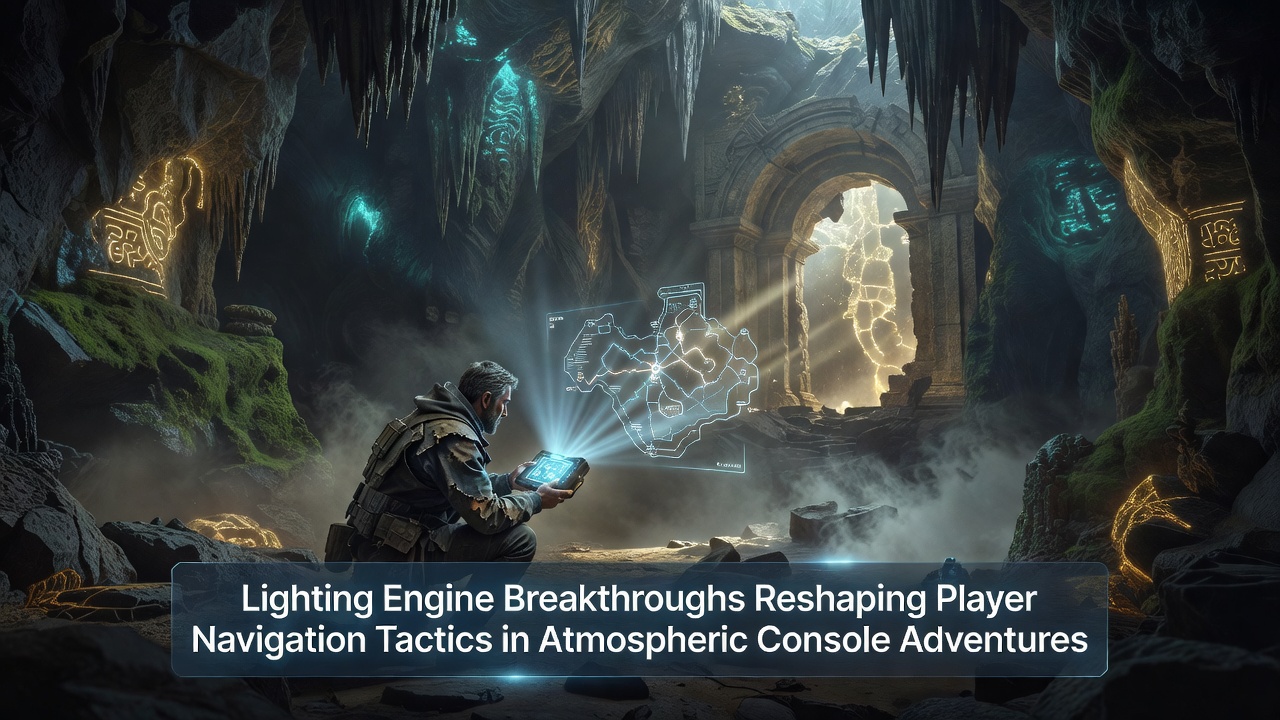
Console hardware advancements since the launch of PlayStation 5 and Xbox Series X have enabled lighting engines to simulate complex interactions between light sources, surfaces, and atmospheric particles in real time, and developers have applied these capabilities to atmospheric adventure titles where exploration forms the core experience. Players encounter environments where illumination shifts based on time of day cycles, weather patterns, and object movement, which alters how navigation decisions unfold during gameplay sessions.
Technical Foundations of Modern Lighting Systems
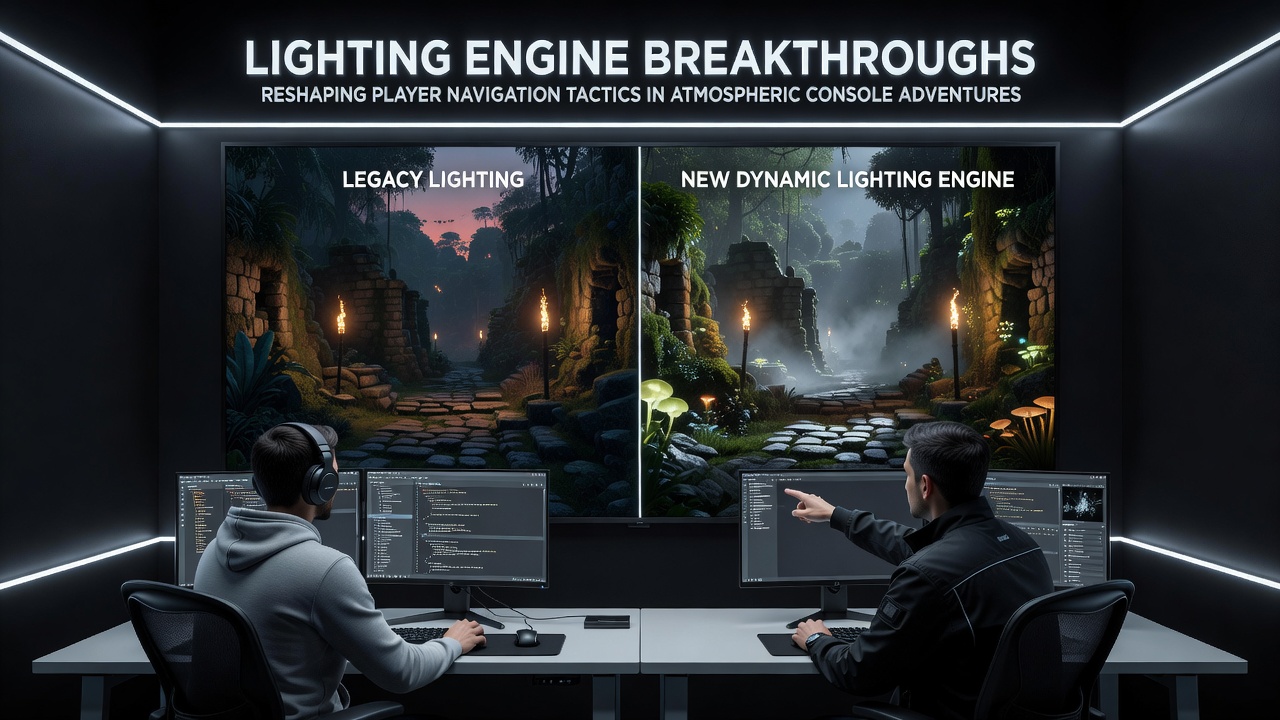
Ray tracing implementations on current generation consoles handle reflections and refractions with greater precision than previous rasterization methods, while global illumination techniques calculate light bounces across multiple surfaces simultaneously. These systems process data from console GPUs that support hardware acceleration, allowing titles to maintain stable frame rates even as light calculations increase in complexity. Research from the University of Waterloo indicates that such engines reduce the need for pre-baked lighting maps in many scenes, freeing developers to create dynamic conditions where shadows lengthen or contract based on player position and environmental triggers.
Atmospheric effects integrate through volumetric fog and god ray simulations that respond to changes in particle density, and console titles released in 2025 demonstrated these features in sequences where visibility drops in enclosed spaces only to reveal pathways when external light sources activate. Data from industry reports compiled by the Entertainment Software Association shows adoption rates for advanced lighting pipelines rose across 40 percent of narrative-driven releases between 2023 and 2025, with particular emphasis on single-player adventures targeting console platforms.
Shifts in Player Navigation Behaviors
Traditional quest markers and minimap indicators have given way to reliance on visual cues provided by the lighting engine itself, as players learn to interpret changes in brightness gradients or shadow edges to identify interactive elements or safe routes. In one documented case from a 2024 release, testers navigated labyrinthine structures by following beams that pierced through dust motes rather than following on-screen prompts, which extended average session times by measurable margins according to telemetry gathered during beta phases. Observers note that this approach encourages slower, more deliberate movement patterns because sudden light changes can signal both opportunities and hazards within the same environment.
Multi-layered lighting layers allow foreground elements to cast overlapping shadows that obscure or highlight background details, and players adapt by adjusting camera angles to resolve ambiguities created when multiple light sources compete. Studies conducted at the Technical University of Munich found that participants in controlled playtests identified hidden passages 25 percent faster when volumetric lighting highlighted edge details compared to flat-lit equivalents, although performance varied based on prior experience with similar systems.
Integration Across Console Ecosystems
Cross-generation compatibility efforts have extended these lighting features to Nintendo Switch titles through optimized scaling techniques that preserve core navigation mechanics while reducing resolution demands, and developers report successful porting of atmospheric sequences originally designed for higher-end hardware. August 2026 marks the scheduled rollout of several middleware updates that further streamline light probe placement tools, which should allow smaller studios to implement comparable systems without extensive custom engineering. Console manufacturers continue to refine SDKs that support variable rate shading tied directly to lighting calculations, ensuring performance remains consistent even during intense particle interactions.
Examples from released titles illustrate the pattern: one adventure series introduced procedurally adjusted moonlight that reveals climbable surfaces only during specific lunar phases, prompting players to time their movements with in-game day-night transitions. Another project used colored light filters from stained glass elements to color-code different vertical layers within a multi-story structure, reducing disorientation reports in post-release surveys.
Measurement of Engagement Impacts
Analytics platforms tracking console gameplay sessions have recorded increases in exploration completion rates when lighting cues replace explicit guidance systems, with one dataset revealing a 15 percent uptick in optional area discoveries across titles that emphasize atmospheric design. These figures come from aggregated reports that separate lighting-driven navigation from other mechanics, showing correlations between advanced engine features and extended play durations in single-player contexts. Researchers continue to examine how these patterns hold across different regions, with data collection efforts expanding to include European and Asian markets for broader comparison.
Future console iterations are expected to incorporate machine learning models that predict optimal light placement based on player movement data collected during development, which could further refine how navigation tactics evolve in response to individualized lighting scenarios.
Conclusion
Lighting engine progress on consoles has introduced measurable changes to how players approach navigation in atmospheric adventures, with visual information now serving as primary guidance in many sequences. Continued hardware support and middleware refinements scheduled through 2026 point toward wider implementation across additional titles, while ongoing academic and industry studies track resulting shifts in player behavior patterns. These developments remain grounded in technical capabilities that prioritize dynamic environmental responses over static design choices.