18 May 2026
Mapping the Influence of Arcade Roots on Contemporary Fighting Game Mechanics Across Console Generations
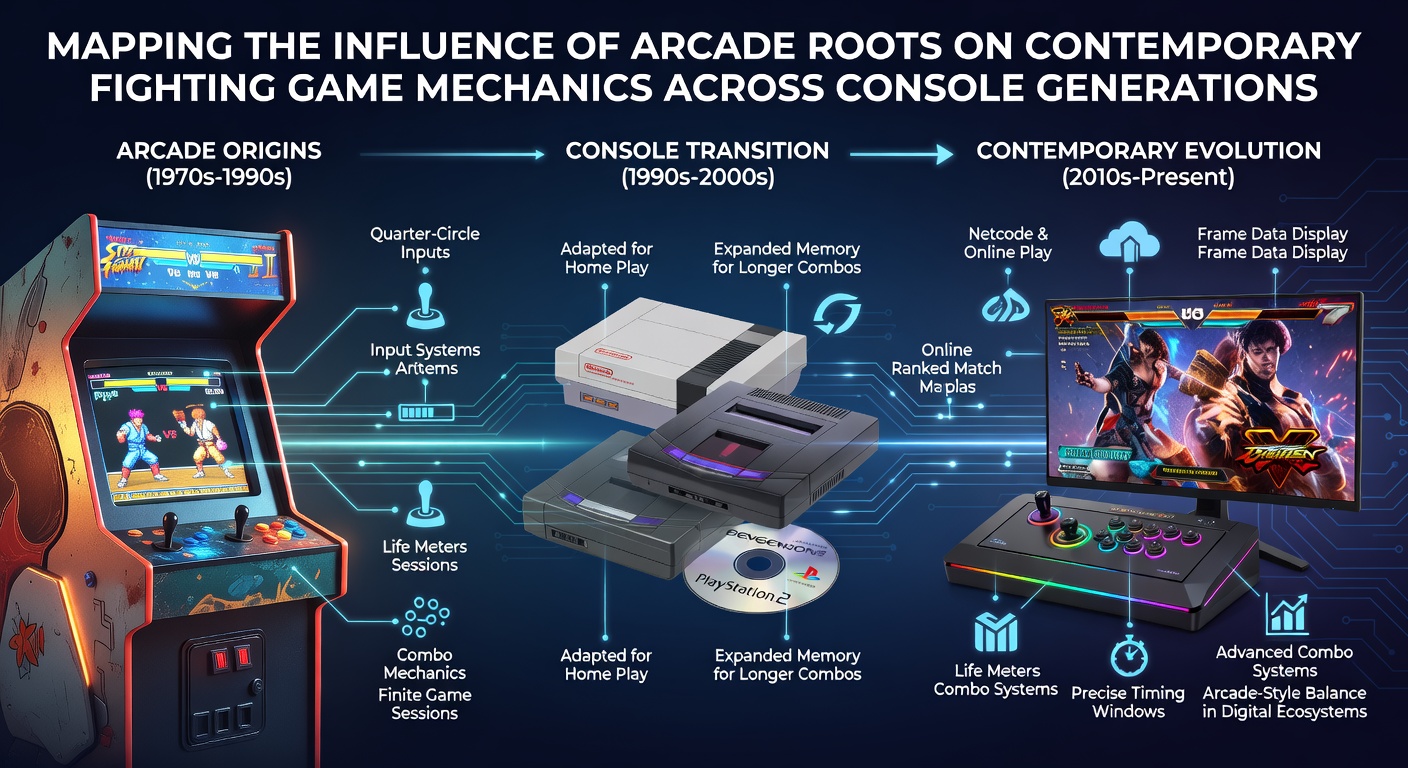
Arcade fighting games established core mechanics that still shape titles today, and developers carried those foundations through each console generation with deliberate adaptations for home hardware. Street Fighter II launched in Japanese arcades during 1991, introducing six-button layouts and special move inputs that required precise timing, while home versions on the Super Nintendo Entertainment System arrived in 1992 with compromises on frame rates and button mapping to fit cartridge limitations.
Early Console Adaptations and Input Precision
Researchers at institutions like the University of Tokyo documented how arcade cabinets used dedicated PCBs that delivered consistent 60 frames per second performance, and console ports in the mid-1990s often reduced animation frames or simplified collision detection to maintain playability on weaker processors. Tekken debuted in arcades in 1994 with 3D movement that relied on analog stick emulation through button combinations, yet the PlayStation version in 1995 preserved most of those mechanics because Sony's hardware supported texture mapping closer to arcade standards than rival systems at the time.
Observers note that Mortal Kombat's digitised sprites and fatality system originated from Midway's arcade machines in 1992, and subsequent console releases across Sega Genesis and Super NES versions retained the core combo timing windows while adjusting for different controller shapes. Data from industry reports compiled by the Japan Amusement Machine and Marketing Association shows arcade revenue peaks in the early 1990s drove rapid iteration cycles that console developers later adopted for annual updates.
Transition to 3D and Online Play
Capcom and Namco refined guard systems and juggle mechanics in arcades before exporting them to Dreamcast and PlayStation 2 hardware around 1999 to 2005, where developers added training modes that mirrored arcade location test feedback loops. The Dreamcast's built-in modem supported early online matches for games like Marvel vs. Capcom 2, preserving the same input lag tolerances that arcade players demanded in physical cabinets.
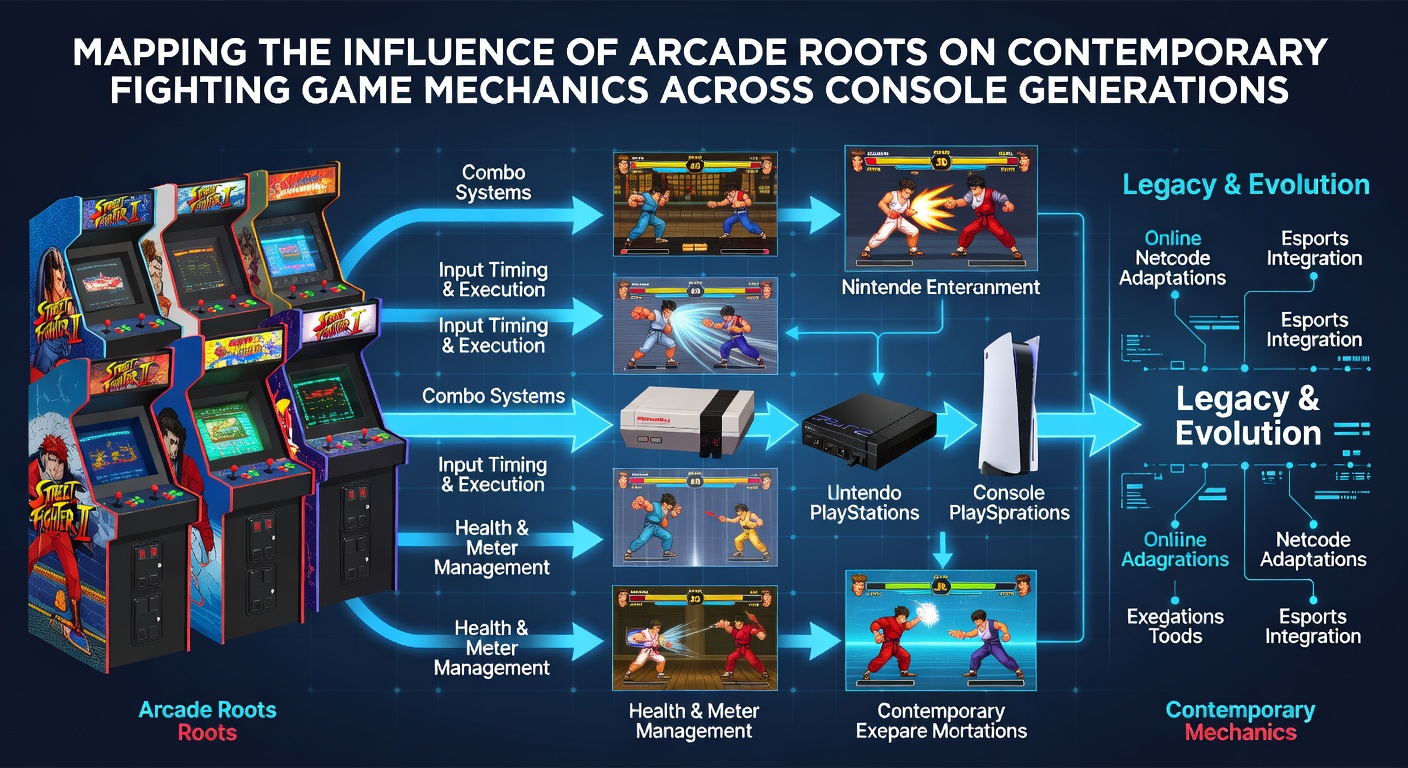
According to figures released by the Entertainment Software Association in North America, fighting game sales on home consoles grew steadily after 2000 partly because rollback netcode implementations began addressing the strict timing windows inherited from arcade origins. Guilty Gear and BlazBlue series carried over anime-style sprite work and Roman Cancel techniques from arcade roots into Xbox 360 and PlayStation 3 releases, while adding downloadable content that arcade operators could never provide.
Modern Mechanics and 2026 Developments
Contemporary titles such as Street Fighter 6 and Tekken 8, released on PlayStation 5 and Xbox Series X, integrate drive systems and heat mechanics that trace directly to the resource management loops first tested in 1990s arcade cabinets. Developers now use frame data displays in training modes that replicate the diagnostic tools arcade technicians once employed, allowing players to analyse hitboxes with precision previously limited to location tests.
What's interesting is how cross-platform play in 2026 continues to prioritise the low-latency standards set by Japanese arcade networks. In May 2026, major tournaments including the Evolution Championship Series scheduled for Las Vegas feature qualifiers streamed from both arcade venues and home console setups, demonstrating that rollback netcode has become standard across regions to maintain the original input reading expectations. Academic papers from European gaming research groups highlight that controller polling rates on current-generation hardware now exceed 1000 Hz, closing the gap between arcade sticks and wireless pads that earlier generations could not achieve.
People who've studied these transitions find that character balance patches released digitally in 2026 often reference arcade-era data logs from the 1990s to preserve matchup integrity. Australian trade analyses from the Interactive Games and Entertainment Association further indicate that fighting game communities grew through console accessibility while retaining tournament rules derived from arcade scoring systems.
Conclusion
Arcade foundations continue to dictate input buffers, combo structures, and competitive rulesets that console generations refined rather than replaced. Evidence from multiple hardware cycles shows developers preserved core timing windows while expanding accessibility through updated netcode and training tools. As platforms evolve into 2026 and beyond, the influence remains visible in every new release that carries forward the precision demands first established in physical cabinets decades ago.