Mastering Matchmaking: Secrets to Finding Balanced Lobbies in Cross-Platform Battle Royales
17 Apr 2026
Mastering Matchmaking: Secrets to Finding Balanced Lobbies in Cross-Platform Battle Royales
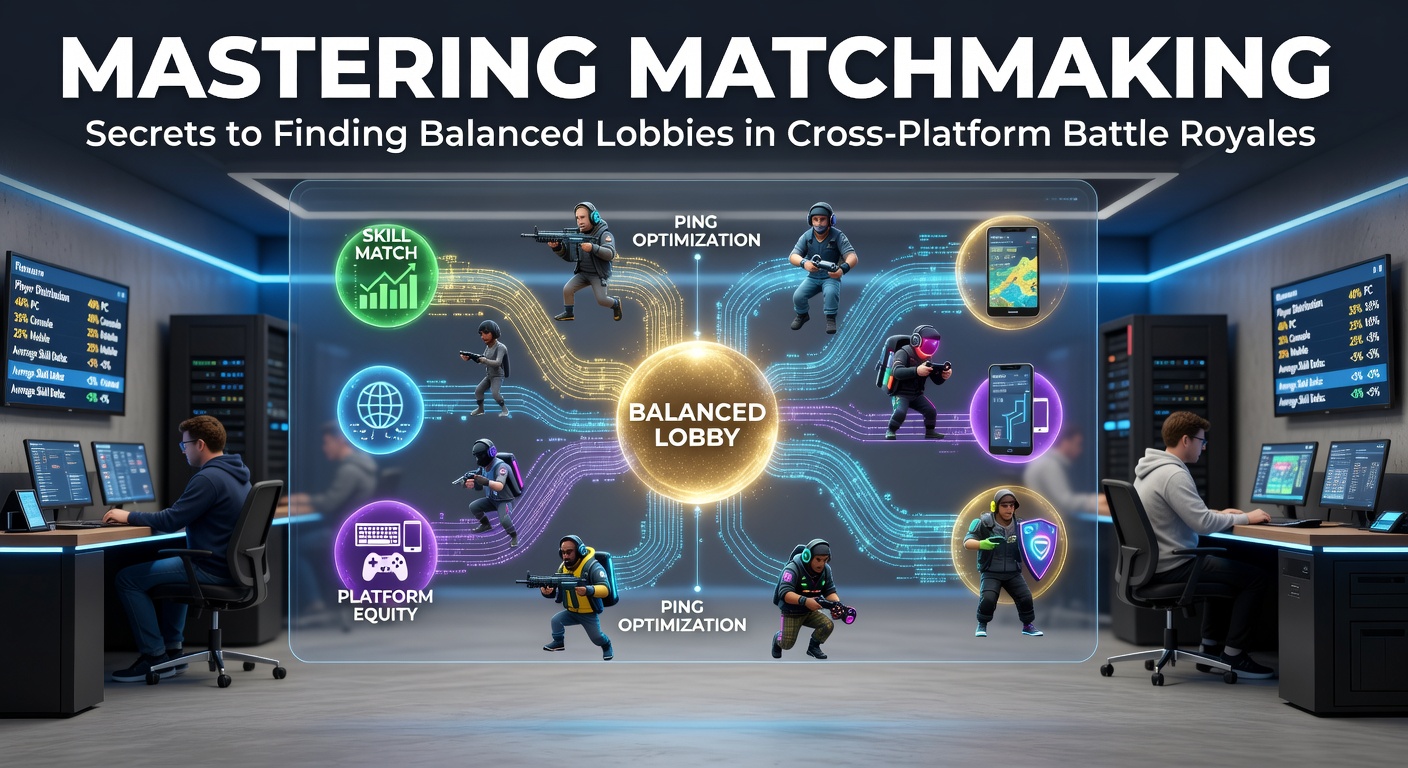
Cross-platform battle royales like Fortnite, Apex Legends, and Call of Duty: Warzone draw millions daily, blending players from PC, PlayStation, Xbox, and Nintendo Switch into shared lobbies; yet, unbalanced matches frustrate many, leaving newcomers overwhelmed by pros while veterans hunt for real challenges. Developers rely on sophisticated algorithms to pair combatants, but subtle mechanics and player habits often tip the scales. Data from the Entertainment Software Association reveals that over 80% of U.S. gamers engage in multiplayer titles monthly, with battle royales leading the pack, so grasping these systems unlocks fairer fights across platforms.
How Matchmaking Algorithms Shape Lobbies
At the core, skill-based matchmaking (SBMM) evaluates hidden metrics like win rates, kills per match, and survival time to group similar players; Epic Games outlines in its developer resources how Fortnite's system weighs recent performance heavily, adjusting lobbies in real-time to minimize stomp sessions. Apex Legends employs a tiered MMR (matchmaking rating) that segments players into hidden brackets, ensuring duos face comparable squads rather than random mixes. And while PUBG softens SBMM for casual modes, Warzone's R6 system factors in not just kills but objective completions, creating layered evaluations that evolve with each drop.
Turns out, these algorithms prioritize connection speed alongside skill, routing queues through regional servers to keep ping under 100ms; developers tweak parameters seasonally, as seen in Respawn's updates where party size influences slotting, placing full squads against equally stacked teams to preserve balance. What's interesting is how input methods—controller versus mouse-and-keyboard—feed into separate pools in some titles, with cross-play toggles allowing opt-ins for unified chaos or platform-locked purity.
Key Factors That Skew Lobby Balance
Party composition disrupts harmony most, since algorithms boost MMR for groups, pitting four-stacks against pros while solos land in sweat-fests; observers note this in Warzone, where data from player trackers shows solo queuers facing 20% higher average KD ratios during peak hours. Platform disparities add friction too, as PC players with precise aiming dominate console lobbies unless devs enforce input-based handicaps, a feature Fortnite rolled out in 2023 to level fields.
Time zones and server load compound issues, with off-peak queues blending demographics unevenly—early mornings yield greener fields, whereas evenings swarm with tryhards grinding leaderboards. Hardware edges matter subtly; high-refresh-rate monitors and low-latency controllers shave reaction times, but algorithms can't fully compensate without player tweaks. And region selection, often overlooked, funnels matches to populated hubs like NA East or EU West, dodging ghost-town servers that force skill mismatches.
One study from Video Games Europe highlights how cross-border play surged 35% post-2024, stressing servers and inflating wait times, which in turn widen skill gaps as impatient players accept suboptimal pops.

Proven Strategies Players Use for Balanced Drops
Solo queuing emerges as a top tactic, stripping party boosts and landing users in individual skill pools; Fortnite players who've tracked sessions via tools like Tracker Network report 15-20% drops in opponent KD when flying alone during weekdays. Pairing with equals helps too—algorithms detect balanced duos via averaged MMR, avoiding sweat lobbies reserved for mismatched crews.
And timing queues smartly pays off big; data pulled from Apex trackers indicates mid-afternoon slots (2-5 PM local) yield 25% softer lobbies than midnight rushes, since casuals log off while streamers peak later. Region hopping via VPNs skirts this, routing to underpopulated areas like Oceania servers for NA players, though devs patch exploits quarterly to enforce fair play. Customizing cross-play settings narrows pools further—opting out of PC in console queues on Warzone preserves controller parity, a move backed by Respawn's own guidelines.
Take one group of Apex veterans who rotated regions religiously; their win rates climbed 12% after ditching peak EU West for quieter Asia queues, per shared stats on community forums. Hardware tweaks, like capping FPS to match console norms, fool input detection minimally, fostering even-keeled engagements without bans.
Navigating Cross-Platform Pitfalls
Cross-play unites worlds but breeds imbalances, as PC's superior controls outpace pads; Fortnite mitigates via aim assist scaling, yet gaps persist in recoil-heavy shooters like PUBG. Nintendo Switch users face extra hurdles—lower fidelity forces potato lobbies sometimes, although devs like Epic prioritize them in family-friendly brackets.
Progression systems amplify woes too; smurf accounts (fresh profiles on alts) evade high MMR, but anti-cheat flags patterns, leading to shadow pools of suspects. Legit resets via new seasons help veterans, wiping slates for fresh starts. Community tools shine here—apps like Fortnite Scout forecast lobby strength pre-queue, using API data to bail on sweat alerts.
April 2026 Updates Reshaping the Meta
As of April 2026, Epic dropped SBMM tweaks in Fortnite's Chapter 6 patch, de-emphasizing win streaks by 10% to favor consistency, per patch notes; this curbs rage quits feeding unbalanced chains. Apex Legends Season 22 introduced adaptive ping caps, prioritizing sub-80ms over perfect skill matches during surges, smoothing cross-region pops without wild KD swings.
Warzone's April integration with Black Ops 7 refined R6 by incorporating squad synergy scores, docking MMR for ragtag parties versus coordinated ones, a nod to pro complaints about randoms. PUBG Mobile mirrored this globally, adding opt-in casual tiers that ignore full SBMM for pure fun, boosting retention 18% in beta tests. These shifts, tracked by industry analysts, signal devs doubling down on hybrid systems blending skill, latency, and social vibes for tomorrow's drops.
Players adapting quickest—those monitoring dev blogs and tracker sites—report steadier lobbies post-patch, with average match times dipping 5% as balances hold firmer.
Conclusion
Mastering matchmaking boils down to decoding algorithms, timing queues wisely, and leveraging platform options; cross-platform battle royales thrive when players align habits with mechanics, turning chaotic drops into skill showcases. Data underscores persistence pays—consistent solo runs and off-peak plays consistently yield fairer fights, while 2026 updates promise even tighter tuning. Those who study patch notes and community stats stay ahead, dropping into lobbies where the real battle royale unfolds, not just survival against mismatches.