Player-Driven Economy Fluctuations and Their Correlation with Update Cycles in Shared Virtual Marketplaces
Katja Krüger · Jun 22, 2026
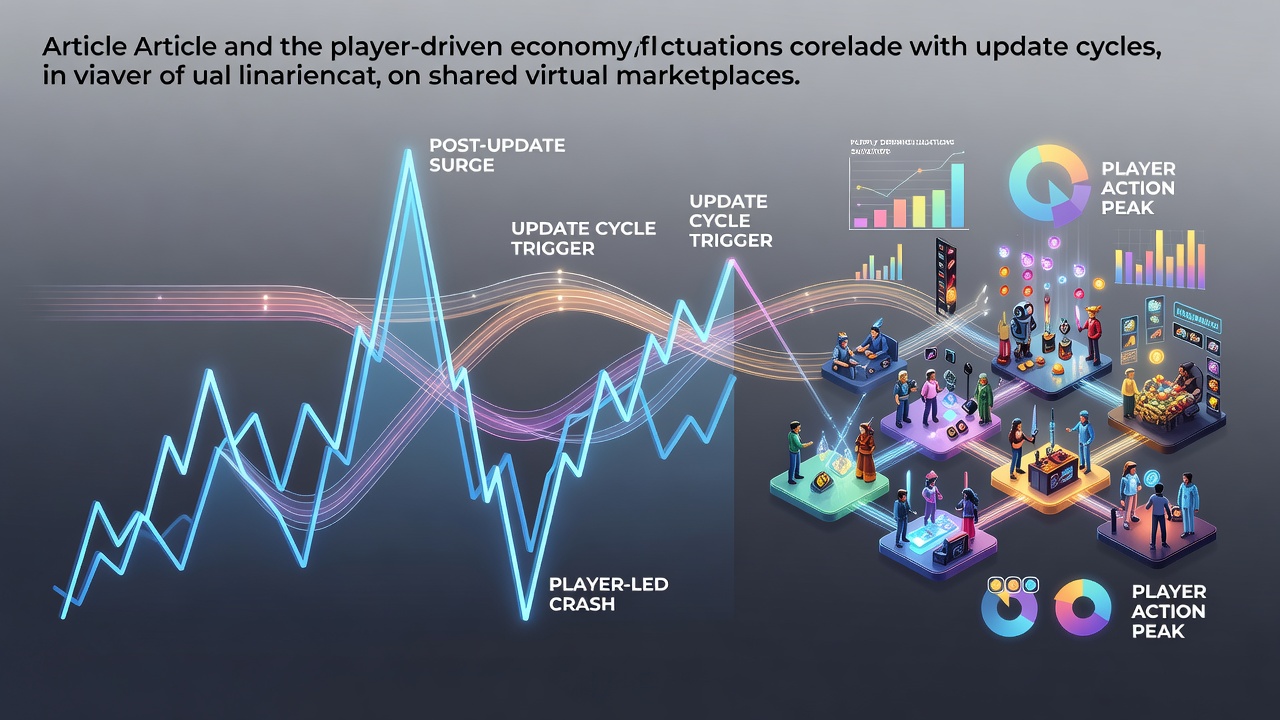
Player-Driven Economy Fluctuations and Their Correlation with Update Cycles in Shared Virtual Marketplaces
Shared virtual marketplaces operate through player interactions that set prices and determine item availability in games like EVE Online and Final Fantasy XIV, where supply and demand shift based on collective decisions rather than fixed algorithms alone, and these systems show measurable responses to developer update cycles that introduce new content, balance changes, or resource adjustments.
Understanding Player-Driven Market Mechanics
Researchers have documented how auction houses, trading hubs, and player-to-player exchanges create dynamic pricing environments across multiple titles, with data from the Entertainment Software Association indicating that live-service games accounted for over 80 percent of digital revenue in North American markets by early 2025, and these marketplaces rely on player participation to establish value through scarcity, utility, and social trends that emerge organically within communities.
Studies from academic institutions such as the University of California, Irvine, have tracked transaction logs in massive multiplayer titles, revealing patterns where item values fluctuate in response to player hoarding behaviors or sudden influxes of materials from group activities, while external factors like real-world events occasionally influence participation rates and trading volumes without direct developer intervention.
Update Cycles as Catalysts for Economic Shifts
Developers release updates on schedules that range from weekly patches to seasonal expansions, and observers note consistent correlations between these deployments and immediate changes in market liquidity, with new items often entering circulation at controlled rates that disrupt existing supply chains until players adapt through farming routes or crafting adjustments.
Analysis of patch histories in games supporting shared economies shows that balance tweaks to drop rates or item stats frequently precede spikes in trading activity, as players rush to acquire or offload affected goods before values stabilize, and this pattern repeats across platforms where cross-progression features allow inventory movement between devices.
Observed Correlations in Market Data
Figures compiled by research firms such as Newzoo reveal that virtual goods transactions in free-to-play and subscription-based titles experienced measurable volatility aligned with major updates during 2025, including price drops of up to 40 percent on legacy equipment following content expansions that introduced superior alternatives, while certain crafting materials saw temporary surges due to increased demand for new recipes.
Those monitoring these systems have identified lag periods where economies take several days to weeks to reach new equilibria after patches, influenced by factors like player population density in specific regions and the speed at which information spreads through forums and in-game channels, and data collected through June 2026 continues to highlight similar rhythms in ongoing titles.
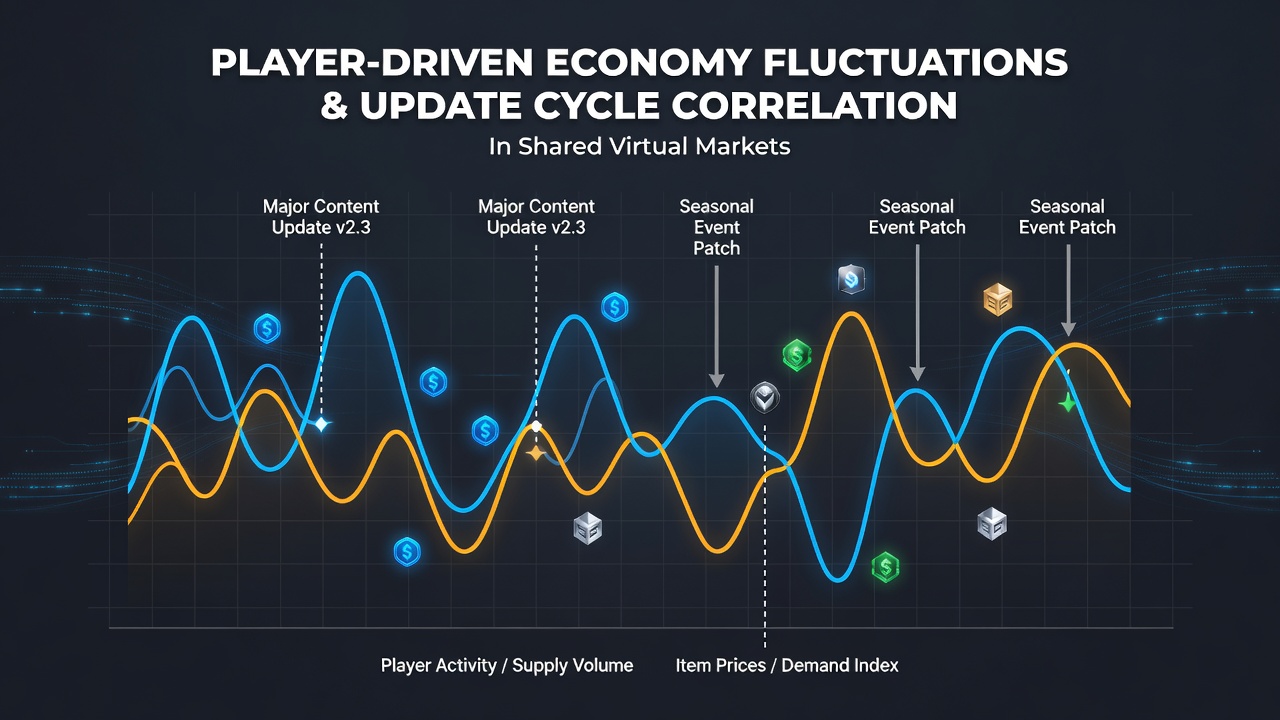
One documented case involves resource markets in sandbox environments where mining output adjustments in an update led to rapid reallocation of player efforts toward alternative gathering methods, resulting in cascading effects on related commodities that persisted until the next scheduled change, and similar sequences have appeared in multiple shared-world titles released over the past decade.
Factors Influencing the Relationship
Player behavior adapts to predictable update patterns, with communities preparing stockpiles ahead of anticipated changes or speculating on unreleased features based on developer roadmaps, which amplifies fluctuations when actual implementations differ from expectations, and regional variations emerge because participation levels differ across time zones and cultural player bases.
Technical aspects such as server merges or economy resets implemented during updates further contribute to these dynamics by redistributing wealth and inventory access, leading to short-term inflation or deflation that researchers track through anonymized transaction datasets, while long-term trends show stabilization as players reestablish trade networks.
Conclusion
Evidence from transaction records and update timelines demonstrates clear linkages between player-driven economy movements and the rhythm of content deployments in shared virtual marketplaces, with ongoing monitoring by industry groups and academic teams providing data that supports continued examination of these interactions across evolving game ecosystems.