20 May 2026
Quest Markers and Their Evolution: Balancing Guidance with Discovery in Open-World Titles for Modern Consoles and PCs
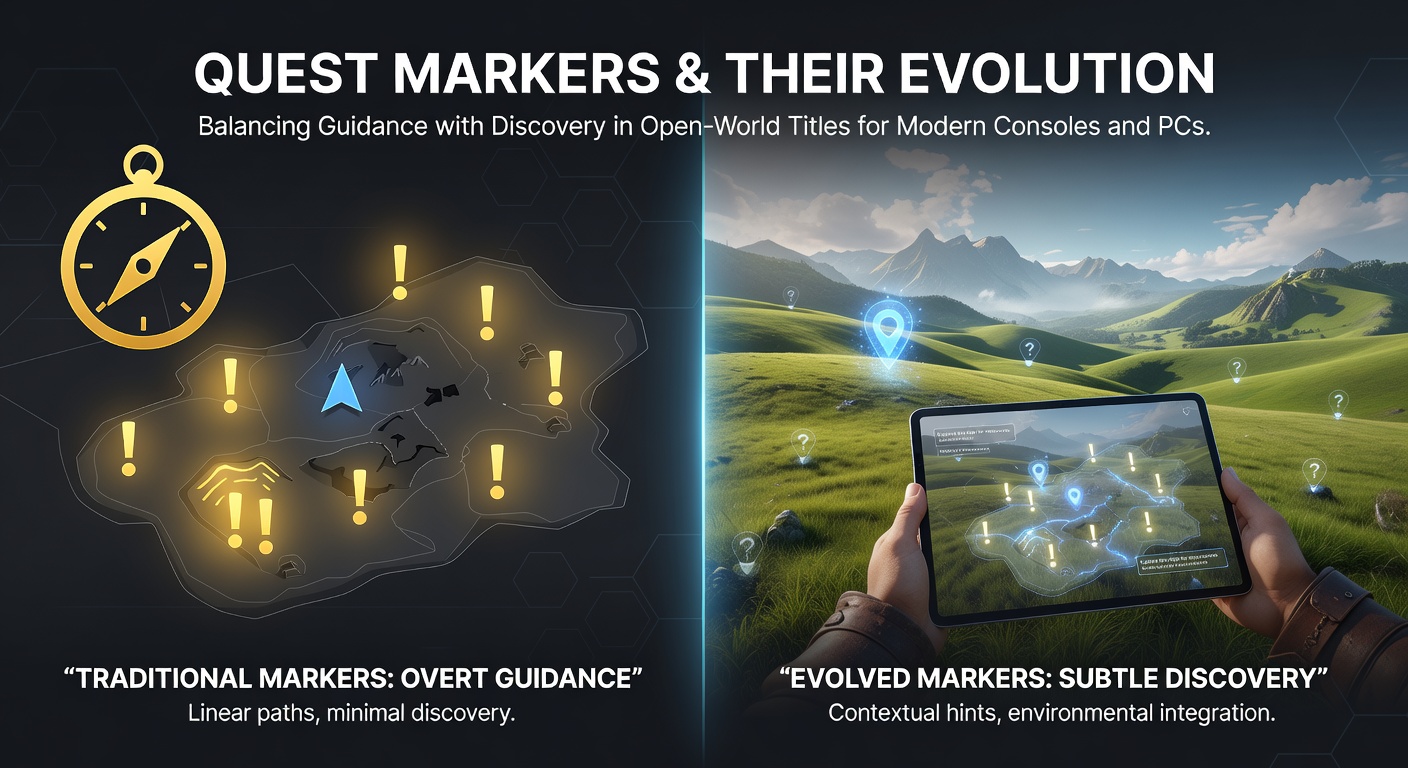 Developers have refined quest markers over decades to help players navigate expansive environments while preserving opportunities for organic discovery, and this ongoing process reflects shifts in hardware capabilities along with player expectations on modern consoles and PCs. Early open-world titles relied on minimal visual cues such as distant landmarks or subtle environmental hints that encouraged players to interpret the world on their own terms.
Early Approaches to Player Guidance
Games from the 1990s and early 2000s often presented vast maps without any on-screen indicators, forcing individuals to rely on memory, journal entries, or trial-and-error exploration to advance objectives. Those who've studied this era note how titles like the original Grand Theft Auto series used radio communications and physical signposts within the game world to direct attention toward key locations. Researchers at institutions including the University of Alberta have documented how these methods fostered stronger spatial awareness among players yet sometimes led to frustration when objectives remained unclear after extended periods.
Hardware limitations played a major role in those designs since consoles and PCs lacked the processing power to render dynamic markers without performance drops, and designers compensated by embedding narrative clues directly into dialogue or environmental storytelling. Data from industry reports shows that player retention improved when games balanced sparse guidance with rewarding finds, establishing patterns that later titles would build upon or deliberately subvert.
Transition to Modern Marker Systems
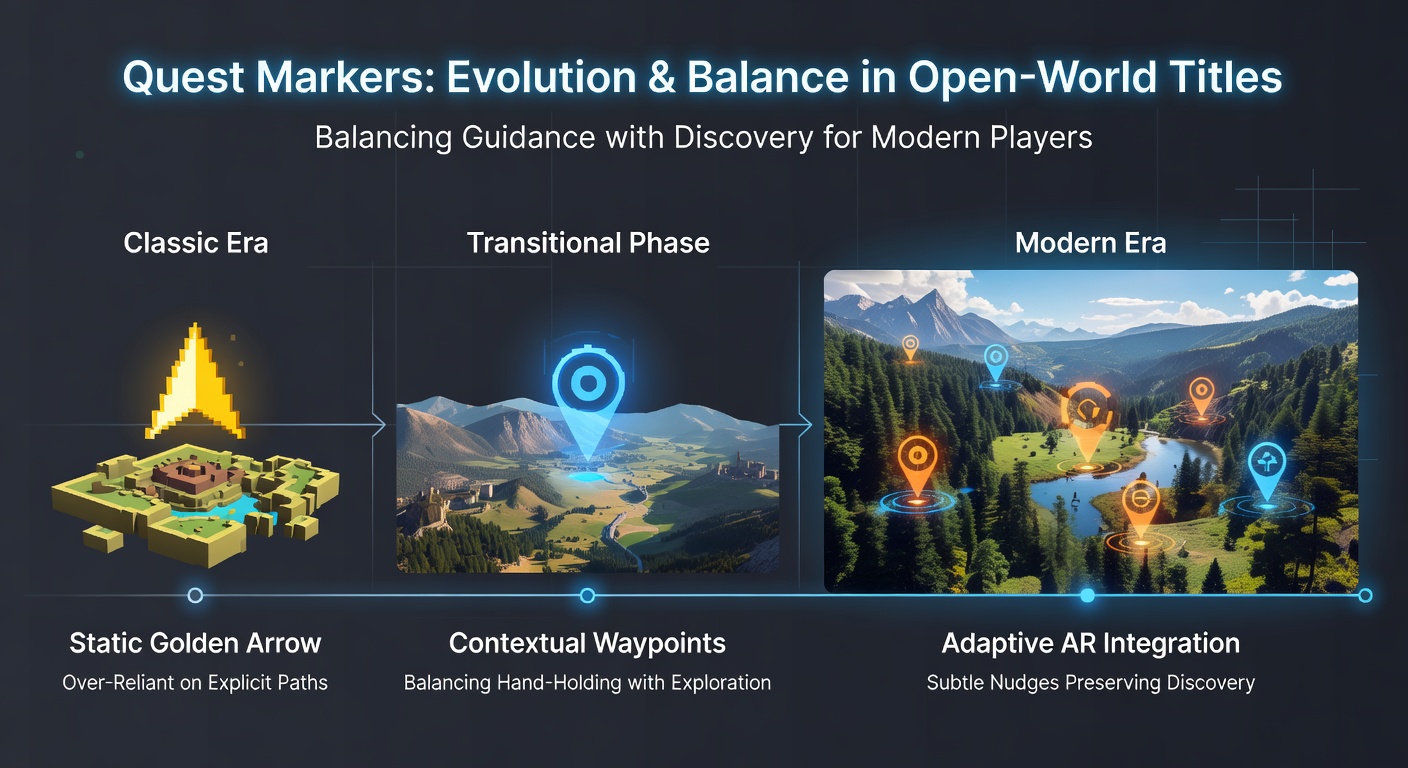
By the mid-2000s, titles such as The Elder Scrolls IV: Oblivion introduced persistent on-screen markers that updated in real time as players moved through the environment, and this change coincided with more powerful consoles capable of handling layered UI elements. The system allowed individuals to toggle markers on or off in many cases, giving users control over how much assistance they received during a play session. Observers note that such flexibility addressed complaints about both excessive hand-holding and complete lack of direction that had appeared in prior generations.
Contemporary open-world experiences on PlayStation 5, Xbox Series X, and high-end PCs have expanded these mechanics further through integration with fast-travel networks, dynamic quest logs, and even companion AI that reacts to player proximity. Studies conducted by European research groups indicate that adaptive marker visibility can increase completion rates for main storylines while still leaving side content open to chance encounters. In May 2026 several major releases are incorporating machine-learning techniques to adjust marker prominence based on detected play patterns, creating individualized experiences without manual configuration.
Striking the Balance Between Assistance and Exploration
Design teams now face pressure to accommodate diverse audiences ranging from casual players who prefer clear waypoints to dedicated explorers who seek unfiltered discovery, and successful titles address this spectrum through layered options. One approach involves contextual markers that appear only when players linger near relevant areas or activate scanning tools, as seen in several recent action-adventures developed for cross-platform release. Those who've analyzed telemetry data from live-service titles report that optional guidance systems correlate with longer average session times because players feel agency over their path through the world.
Yet the implementation remains technically demanding since consoles must maintain stable frame rates while rendering both high-fidelity environments and responsive UI overlays, whereas PCs benefit from customizable settings that let users scale marker density according to preference. Industry analyses from the Entertainment Software Association highlight how these technical considerations influence development timelines and testing protocols across different hardware configurations. What's interesting is how minimal-marker designs like those featured in certain FromSoftware titles have gained critical attention for encouraging community-driven mapping and shared discovery outside the game itself.
Current Trends and Future Directions
Recent advancements in spatial audio and haptic feedback on modern controllers allow designers to supplement or even replace traditional visual markers with directional sound cues and vibration patterns that guide players without cluttering the screen. This multimodal approach has appeared in several 2025 and 2026 releases, and it aligns with accessibility guidelines promoted by organizations focused on inclusive game design. Figures from academic surveys reveal that players using such alternative cues often report higher immersion levels compared to those relying solely on visual waypoints.
Cross-platform development further complicates marker systems because interface elements must adapt fluidly between controller-based navigation on consoles and mouse-and-keyboard precision on PCs. Developers have responded by implementing unified backends that support seamless transitions when users switch devices mid-session, preserving quest progress and marker states across ecosystems. Research indicates that these unified systems reduce player drop-off during platform migrations, particularly in live-service environments where ongoing content updates depend on consistent user engagement.
Conclusion
Quest marker evolution continues to reflect broader changes in hardware power, player demographics, and design philosophies across consoles and PCs, and the most effective implementations maintain flexibility that respects both guidance needs and discovery incentives. As new technologies emerge in 2026 and beyond, the core challenge remains unchanged: supporting player progress without diminishing the satisfaction that comes from uncovering a world at one's own pace.