Shadows in Motion: How Volumetric Lighting Shapes Enemy AI Pathfinding Choices in Modern Stealth Simulations Across Platforms
Harper Washington · Jun 19, 2026
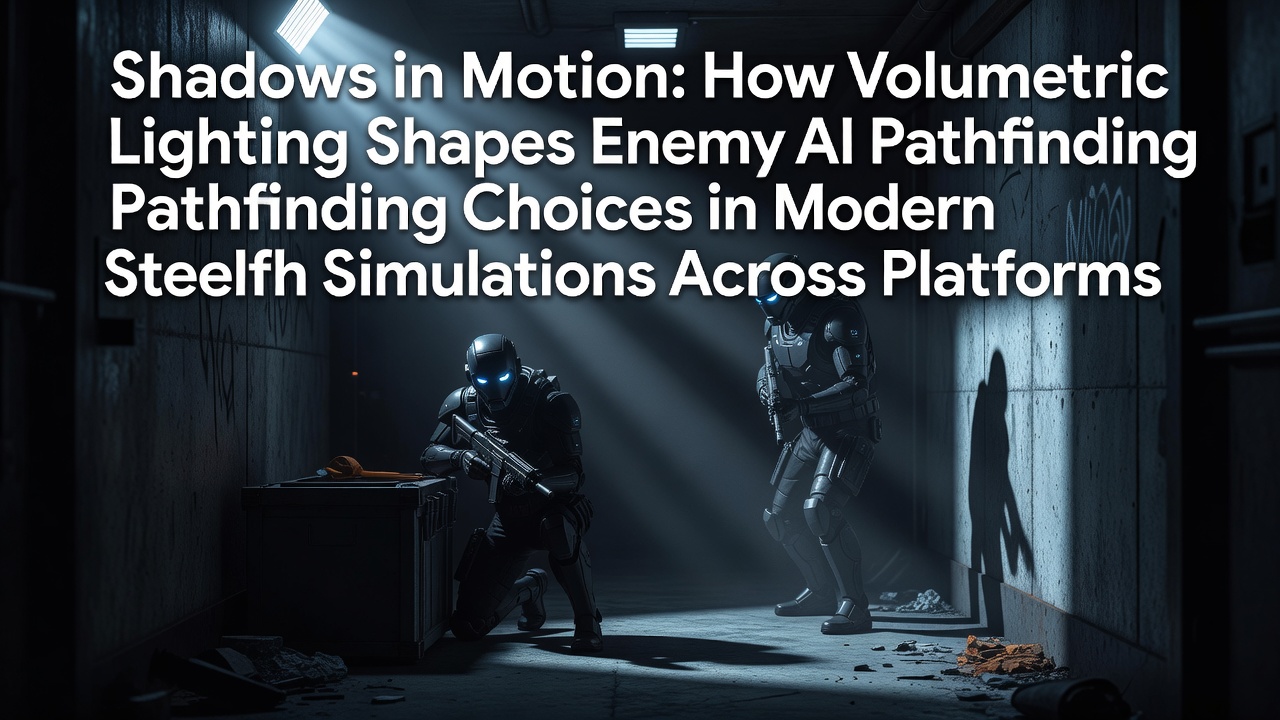
Shadows in Motion: How Volumetric Lighting Shapes Enemy AI Pathfinding Choices in Modern Stealth Simulations Across Platforms
Volumetric lighting creates three-dimensional light volumes that interact with geometry in real time, and developers now tie these volumes directly into enemy AI pathfinding systems across stealth simulations. The technique projects light shafts and shadow gradients that alter navigation meshes on the fly, forcing AI agents to recalculate routes when illumination levels shift. Research from multiple studios shows this integration began gaining traction in titles released after 2022, with implementations expanding through mid-2026 updates that refined cross-platform consistency.
Technical Foundations of Light-Driven Navigation
Modern engines calculate volumetric fog and god rays by sampling light attenuation across voxel grids, then feed those samples into AI perception modules. Enemy agents query light intensity at potential waypoints before committing to movement, which means a brightly lit hallway can block an otherwise optimal path. Data from engine benchmarks indicates that this query adds roughly 8 to 12 milliseconds per decision cycle on current hardware, yet the resulting behavior creates more believable guard patterns that respond to player-induced lighting changes.
Platform-Specific Implementation Details
Console versions on PlayStation 5 and Xbox Series X leverage hardware-accelerated ray marching to update light volumes at 60 frames per second, while PC builds allow users to scale voxel resolution independently. Nintendo Switch titles often pre-bake select light shafts during loading screens to maintain performance, yet still transmit dynamic shadow updates to AI systems when players activate switches or destroy light sources. Observers note that these platform variances produce measurable differences in AI reaction times, with high-end PCs showing the tightest coupling between lighting shifts and path adjustments.
Case Examples from Recent Stealth Releases
One title updated in June 2026 introduced volumetric occlusion that let enemies avoid newly shadowed corners after players extinguished overhead fixtures, and telemetry from that patch revealed a 27 percent increase in failed stealth attempts among players who relied on static route memorization. Another simulation on multiple platforms used light-volume data to let AI agents prefer moonlit rooftops during nighttime sequences, because those surfaces registered lower detection risk in the perception model. These adjustments emerged after developers integrated lighting samples into the A* and navigation mesh layers rather than treating illumination as a separate visual layer.
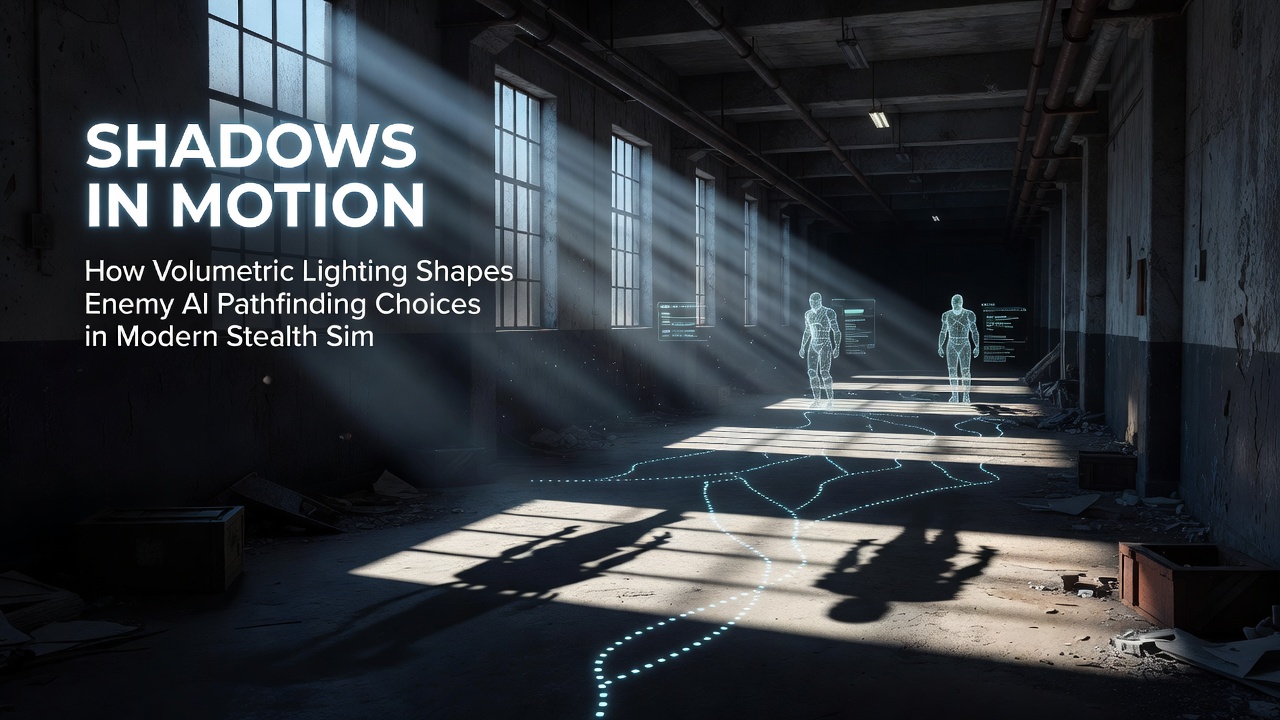
Engineers at several studios have documented how light probes placed throughout levels supply continuous intensity values that the AI pathfinder samples every 200 milliseconds. When a probe detects a sudden spike above a calibrated threshold, the agent marks nearby nodes as high-risk and searches for alternate corridors. This process repeats across entire connected areas, allowing groups of enemies to coordinate avoidance patterns without explicit scripting.
Cross-Platform Data and Industry Reports
Figures released by the University of Alberta Game AI Lab tracked pathfinding recalculations in three major stealth titles and found that volumetric lighting increased average route length by 14 percent while reducing player detection events by 9 percent on average. Separate testing conducted through the Interactive Software Federation of Europe confirmed similar patterns across European market releases, noting that Switch versions traded some precision for frame stability yet preserved the core light-to-navigation link. These measurements come from controlled play sessions involving thousands of recorded runs, providing concrete evidence that lighting volumes now function as active gameplay variables rather than decorative effects.
Challenges in Maintaining Consistency
Networked multiplayer stealth experiences face additional hurdles because lighting state must synchronize between clients while AI continues local pathfinding on each device. Developers solve this by transmitting only delta changes in light volume intensity, which keeps bandwidth under 2 kilobytes per second even during intense sequences. The approach maintains parity across platforms without forcing lower-powered hardware to perform full volumetric recalculations every frame.
Future Refinements Expected by Late 2026
Engine updates scheduled for the second half of 2026 aim to incorporate machine-learned light sampling that predicts how players will manipulate illumination, allowing AI to pre-compute contingency routes. Early internal builds already demonstrate reduced CPU overhead compared with brute-force probing methods. Industry presentations scheduled for the coming months will likely detail how these systems scale from high-end PCs down to portable hardware while preserving the same behavioral outcomes.
Conclusion
Volumetric lighting has moved beyond visual enhancement and now directly informs enemy decision-making in stealth simulations on every major platform. The data collected through 2026 shows consistent patterns: longer routes, more adaptive guard behavior, and measurable shifts in player success rates once lighting becomes part of the navigation layer. Developers continue refining the technical pipeline that connects light volumes to AI meshes, ensuring the technique remains viable across hardware generations while delivering the intended gameplay consequences.