Shifting Player Behaviors from Persistent Online Worlds to Episodic Single-Player Campaigns on Multiple Platforms
Eden Lange · Jul 17, 2026
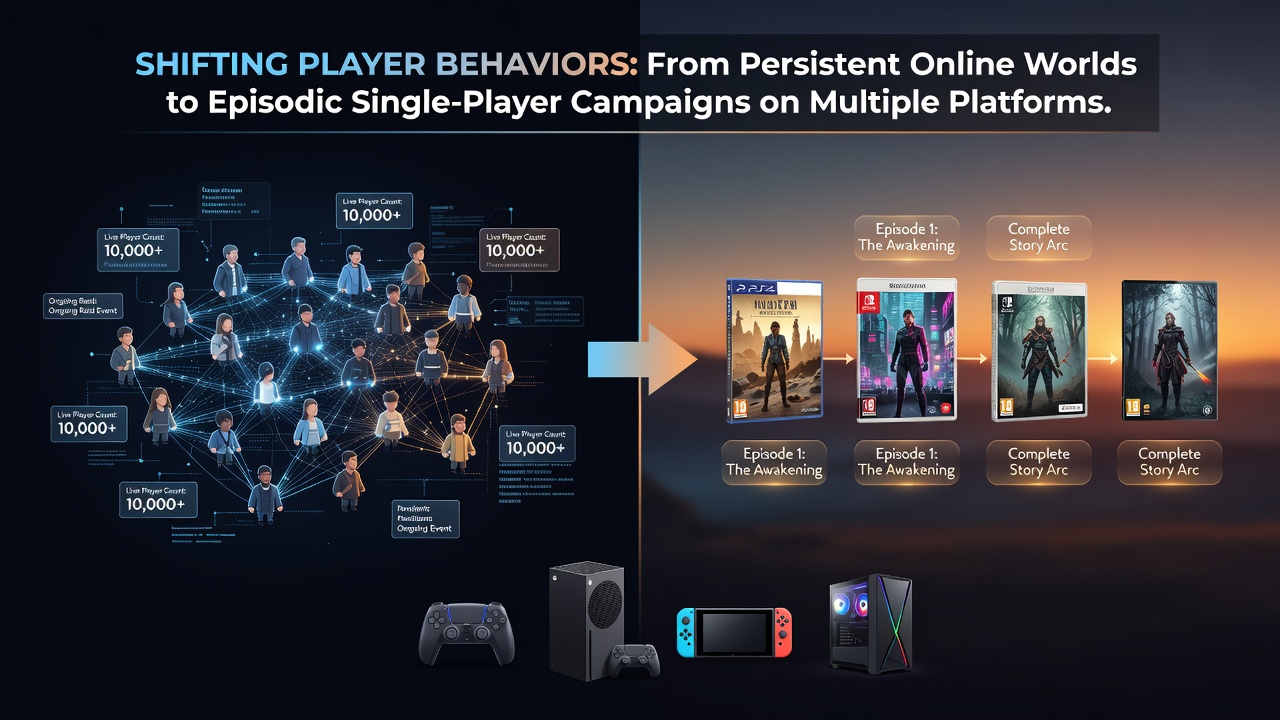
Shifting Player Behaviors from Persistent Online Worlds to Episodic Single-Player Campaigns on Multiple Platforms
Data from multiple platform analytics services indicate that player engagement patterns have moved away from always-on persistent worlds toward structured episodic single-player experiences that span consoles, PCs, and handheld devices since the mid-2020s. Industry trackers recorded a measurable drop in average daily hours spent in live-service titles while session lengths for narrative-driven campaigns increased across the same period.
Platform Data and Engagement Patterns
Console manufacturers and digital storefronts reported distinct shifts in download and playtime metrics during the first half of 2026. Episodic releases on PlayStation 5, Xbox Series X/S, Nintendo Switch, and Windows PC platforms captured larger shares of total playtime compared with earlier years when persistent multiplayer servers dominated activity logs. Researchers tracking cross-platform telemetry noted that users who previously maintained long-term characters in shared worlds began completing discrete story arcs in shorter, self-contained campaigns.
Figures released by the Entertainment Software Association show that single-player narrative titles accounted for a growing percentage of top-downloaded games on major digital marketplaces through July 2026. The same datasets reveal that retention curves for episodic campaigns stayed steeper in the opening weeks than those observed in many ongoing online services, where player drop-off accelerated after initial seasonal events concluded.
Factors Influencing the Transition
Developers cite several technical and design elements that support this behavioral change. Episodic structures allow teams to deliver complete narrative segments on fixed schedules, which aligns with players managing limited leisure time across multiple devices. Save-file synchronization features built into modern console operating systems and PC clients enable seamless continuation whether someone starts a chapter on a television-connected console or finishes it later on a portable system.
Hardware improvements have also played a role. Faster storage solutions and improved suspend/resume functions on current-generation machines reduce friction when switching between short play sessions. Observers tracking user-interface telemetry report that players increasingly launch individual episodes rather than logging into persistent servers that require extended setup or social coordination.
Regional and Demographic Variations
Market research conducted across North America, Europe, and Asia-Pacific regions shows consistent directional movement even when absolute numbers differ. A study coordinated by the Interactive Games and Entertainment Association in Australia documented rising completion rates for story-focused campaigns on both home consoles and portable devices. Similar patterns appear in European Union digital sales reports, where episodic releases maintained steadier revenue streams through mid-2026 compared with many multiplayer titles that relied on repeated seasonal purchases.
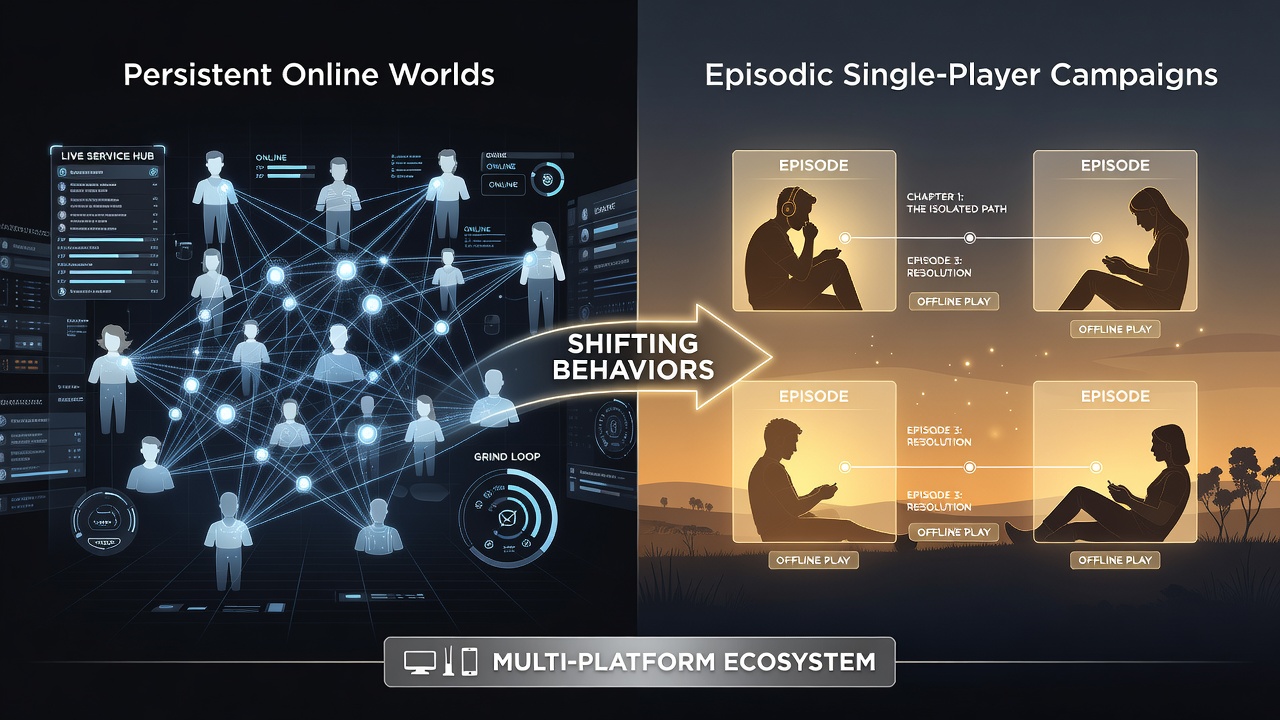
Demographic breakdowns indicate that working adults with irregular schedules represent a growing segment of this audience. These players often prefer campaigns that pause cleanly at chapter breaks, allowing them to resume progress without needing to coordinate with other participants or maintain ongoing character progression systems.
Developer Responses and Design Adjustments
Studios have adapted development pipelines to accommodate the observed preferences. Several publishers now structure release calendars around quarterly or semi-annual episode drops that function independently yet contribute to larger story arcs. This approach reduces server maintenance costs associated with persistent worlds while still encouraging players to return for subsequent installments.
Technical documentation from middleware providers shows increased adoption of cloud-based save systems that operate consistently across operating systems. These tools allow narrative state to transfer without requiring players to manage multiple local files or restart progress when moving between devices.
Conclusion
Platform telemetry, sales figures, and regional research reports together document a measurable redistribution of player attention from persistent online environments to episodic single-player campaigns. The pattern appears across hardware generations and geographic markets, supported by synchronization features, storage improvements, and scheduling flexibility that match varied user routines. Continued data collection through the remainder of 2026 will clarify whether this distribution stabilizes or evolves further as new titles launch on the same range of platforms.