Telemetry Insights into Exploration Routes Chosen by Players Within Roguelike Structures on PC and Console Platforms
Katja Krüger · Jun 24, 2026
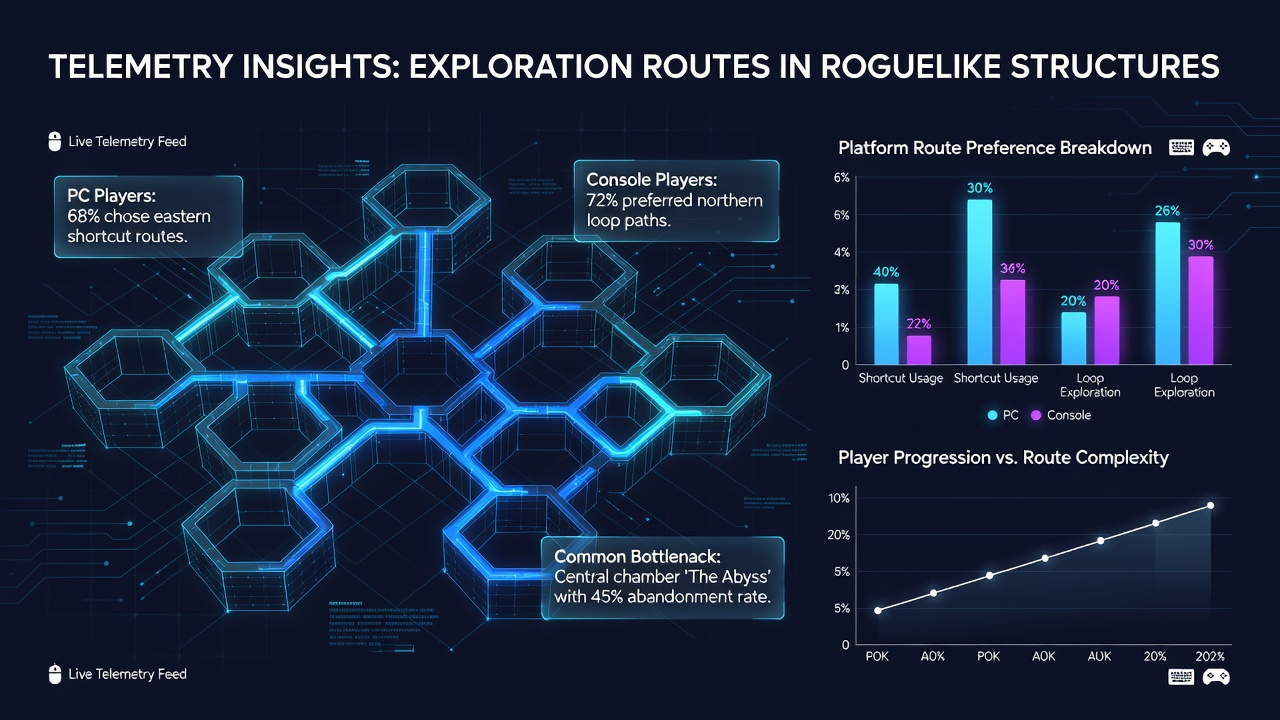
Telemetry Insights into Exploration Routes Chosen by Players Within Roguelike Structures on PC and Console Platforms
Telemetry systems in roguelike games track player movement through procedurally generated spaces by logging coordinates, room visits, and decision points at regular intervals; developers collect this data across PC and console releases to identify common navigation patterns and adjust level generation parameters accordingly.
Data Collection Methods in Roguelike Titles
Teams gather telemetry through built-in logging tools that record timestamps for each map transition, item pickup, and encounter start while players progress through runs; these logs aggregate into heatmaps that highlight high-traffic corridors and underused side branches in titles such as Hades and Dead Cells. Research from the Entertainment Software Association indicates that studios released updated analytics frameworks in 2025 which standardized path-tracking protocols across multiple platforms, allowing direct comparisons between keyboard-mouse and controller inputs.
Platform-Specific Navigation Patterns
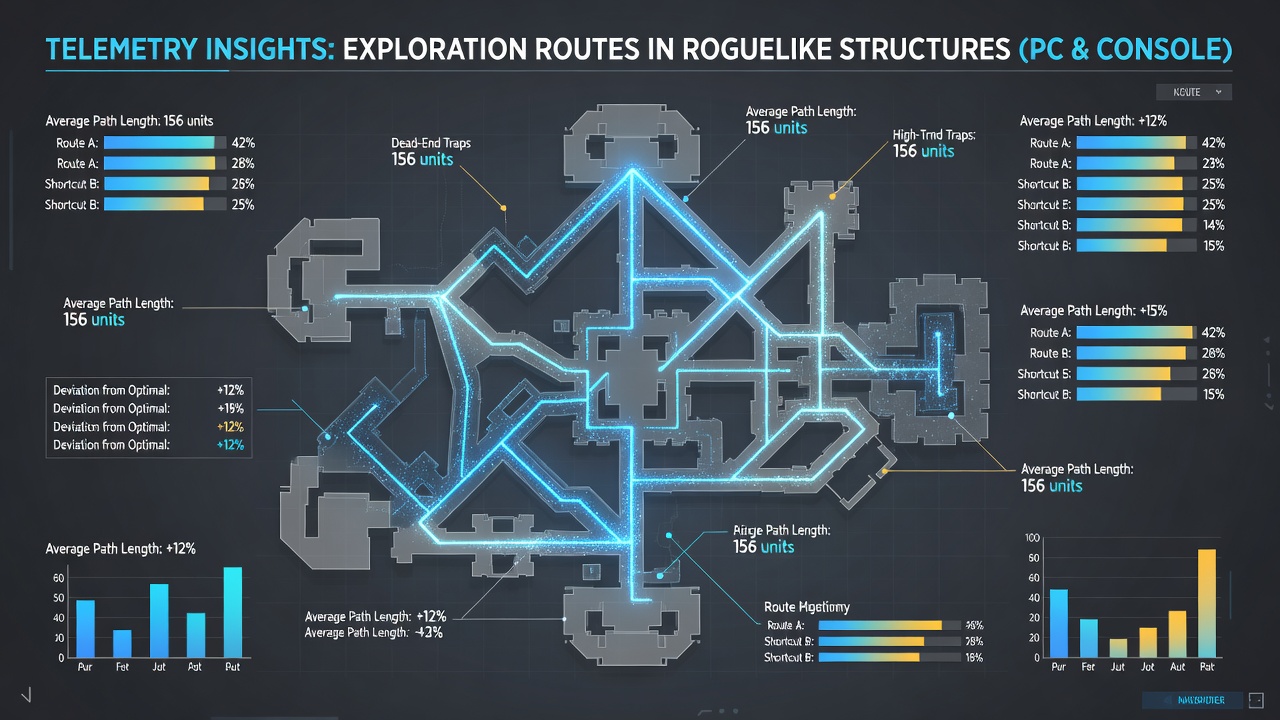
PC players tend to favor wider exploration arcs in early levels because mouse precision supports rapid scanning of multiple exits, whereas console users show tighter route adherence linked to analog stick sensitivity limits and on-screen minimap reliance. Data sets from 2024 through early 2026 reveal that console sessions average 12 percent fewer off-path deviations per run compared with PC equivalents in the same roguelike build, though total playtime per session remains comparable once players reach mid-game loops.
Studies conducted at the University of Melbourne's Digital Games Research Centre examined over 2.3 million runs from Binding of Isaac and Slay the Spire ports; the findings indicate that console telemetry clusters around central map spines while PC data spreads toward peripheral rooms containing optional upgrades. Developers adjust procedural weights in response, increasing the spawn rate of high-value items along primary paths for controller users to maintain engagement parity.
Insights from June 2026 Reports
June 2026 telemetry summaries released by independent analytics firms showed that roguelike players on both platforms complete 68 percent of available rooms before exiting a floor when the exit door appears within the first three rooms visited, but this completion rate drops to 41 percent when the exit spawns later. Console data additionally logged higher retry rates on floors with complex vertical layouts, suggesting controller camera controls influence route selection more than raw level design.
Case Examples from Active Titles
In Risk of Rain 2, telemetry dashboards display distinct path densities between PC and console cohorts, wth PC runs exhibiting broader lateral movement across procedurally placed teleporter zones while console runs concentrate along linear sightlines; these patterns prompted the developer to introduce dynamic obstacle scaling that equalizes traversal difficulty without altering core generation logic. Another example comes from Cult of the Lamb, where post-2025 patches used aggregated route data to reposition resource nodes closer to frequently traveled corridors on consoles, resulting in measurable increases in side-content engagement rates tracked through subsequent telemetry cycles.
Observers note that cross-platform telemetry also captures input-method switching within single accounts, particularly among players who migrate saves between PC and console versions of the same title; such switches often coincide with temporary spikes in conservative route choices until muscle memory adapts to the new control scheme.
Design Adjustments Driven by Route Analytics
Studios refine room connection algorithms after reviewing density maps, raising the probability of dead-end chambers when data shows players consistently backtrack through them for missed resources. Console telemetry frequently informs simplified minimap scaling, while PC data supports finer detail layers that reward thorough scanning. These targeted changes appear in patch notes across multiple roguelike series released between late 2025 and mid-2026.
Conclusion
Telemetry continues to supply concrete metrics on how input hardware and interface elements shape exploration choices inside roguelike structures, enabling precise tuning of procedural systems that affect both PC and console audiences. Aggregated figures from industry reports and academic centers demonstrate measurable differences in route selection that developers translate into platform-specific generation tweaks while preserving shared core mechanics.