The Invisible Balancer: Dynamic Difficulty Algorithms Crafting Perfect Pacing in Single-Player Adventures
24 Apr 2026
The Invisible Balancer: Dynamic Difficulty Algorithms Crafting Perfect Pacing in Single-Player Adventures

Unseen Hands at Work: What Dynamic Difficulty Really Means
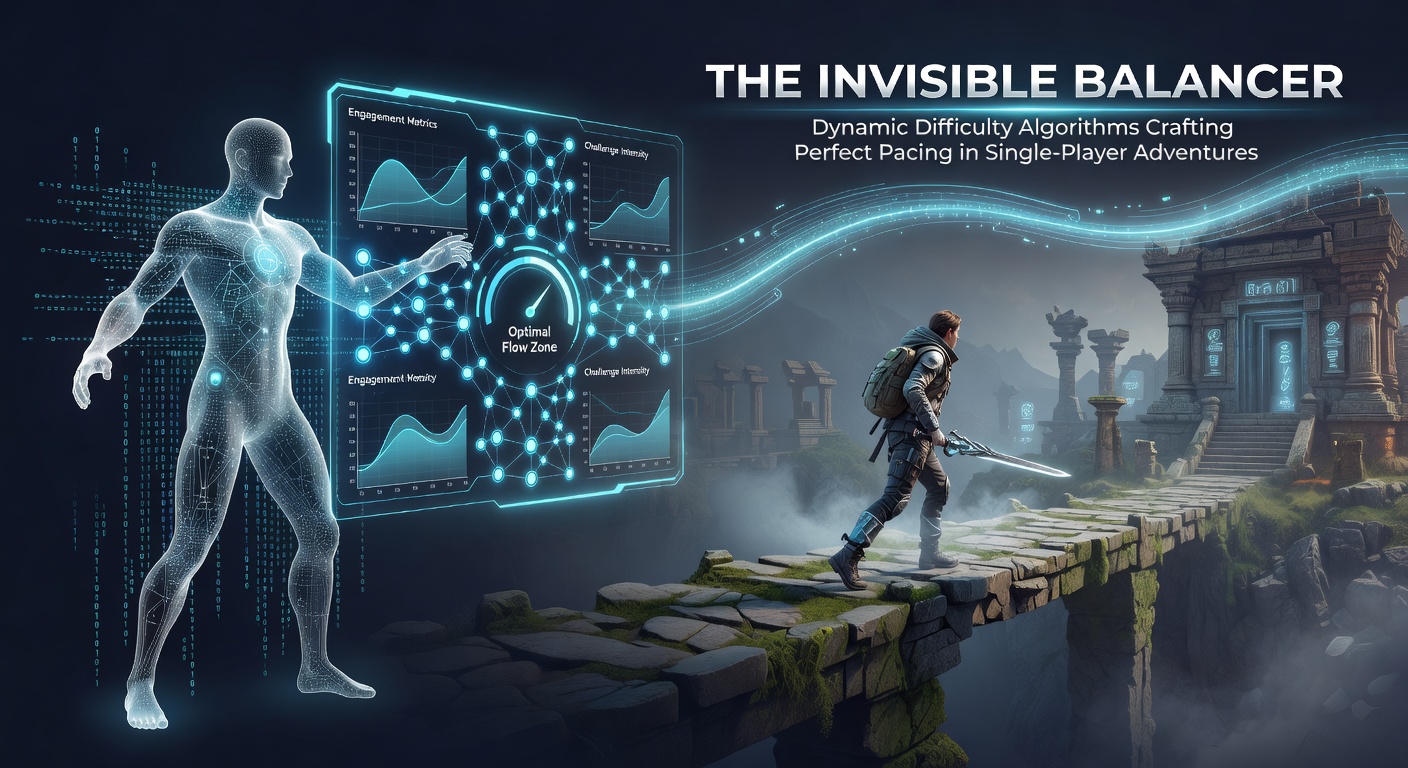
Dynamic Difficulty Adjustment, or DDA, operates quietly behind the scenes in many single-player games, tweaking challenge levels on the fly to match a player's skill and maintain engagement; developers deploy these algorithms to prevent frustration from overly tough sections or boredom from sections too easy, ensuring pacing feels just right without players ever noticing the intervention. Experts trace DDA's roots back to the early 2000s, when titles like Left 4 Dead introduced the AI Director, a system that monitored player progress and adjusted enemy spawns, resource availability, and event intensity in real time, keeping tension high yet achievable.
But here's the thing: modern implementations go far beyond simple scaling. Data from industry reports shows DDA now analyzes dozens of metrics—everything from death frequency and completion times to input precision and exploration patterns—allowing games to craft personalized experiences that evolve with each session. Take one developer team at Valve, who revealed in a GDC presentation how their system balanced horror pacing by ramping up threats when players moved too swiftly, or easing off during prolonged struggles, a technique that's influenced countless single-player adventures since.
How the Magic Happens: Algorithms and Techniques in Action
At its core, DDA relies on machine learning models and rule-based systems that process player data continuously; fuzzy logic determines when to intervene, while neural networks predict frustration thresholds based on historical playtests, creating seamless shifts that feel organic rather than punitive. Researchers at the University of Ontario Institute of Technology dissected this in a 2018 study, finding that hybrid approaches—combining scripted events with adaptive AI—boost retention by up to 25% in action-adventures, as players hit that sweet spot of flow state more consistently.
And it doesn't stop at enemy strength. Games adjust environmental hazards, puzzle complexity, and even narrative branches dynamically; for instance, if a player breezes through combat, algorithms might introduce more aggressive flanking maneuvers or hidden traps, whereas repeated failures trigger subtle aids like brighter lighting in dark areas or more obvious clues. What's interesting is how these systems layer in psychological factors too—slowing enemy response times after a string of deaths to rebuild confidence, then gradually ramping back up, a pattern observed in titles across PS5, Xbox Series X, PC, and Nintendo Switch platforms.
Key Metrics Developers Track
- Player deaths per level, signaling when to lower enemy health pools or improve auto-aim assistance.
- Time spent in areas, prompting faster enemy waves if lingering suggests boredom.
- Resource usage rates, which trigger more loot drops during scarcity.
- Input patterns, like erratic controller shakes indicating panic, cueing calmer sequences.
Figures from a IGDA whitepaper highlight how tracking these keeps pacing tight; one case study on roguelikes showed DDA reducing quit rates by 18% during early April 2026 playtests for upcoming indie releases.
Real-World Examples: Games That Master the Balance
Dead Space stands out as a pioneer, where the game monitored player vitals like flashlight usage and stasis pack deployment to calibrate necromorph encounters; struggle too much, and fewer enemies swarmed while audio cues grew more helpful, but excel, and the hordes thickened with smarter paths—keeping dread palpable without overwhelming newcomers. Similarly, the Batman: Arkham series employed DDA through its counter system, easing gadget prompts and enemy aggression for less skilled players, a mechanic that Arkham Knight refined with detective mode tweaks, ensuring Gotham's nights paced thrillingly for all.
Fast forward to recent hits. God of War (2018) and its 2022 Ragnarök sequel used subtle DDA in combat arenas, adjusting draugr resilience and axe throw recoveries based on Kratos' combo success rates; data indicates this helped maintain epic boss fight momentum, with players reporting sustained hype through 20+ hour campaigns. Horizon Forbidden West took it further by scaling machine herds and trap densities per skill tree progress, blending open-world freedom with paced challenges that escalated naturally as Aloy upgraded.
Yet indies shine here too. Hades weaves DDA into its roguelite loop via boons and heat levels that adapt to run performance, making each descent feel progressively fairer; one Steam analytics dive revealed players averaging 40% more runs before frustration set in, thanks to these invisible tunings. And as of April 2026, upcoming Switch exclusive Echoes of Eternity previews boast neural-net DDA that personalizes lore unlocks alongside difficulty, promising pacing that molds to narrative investment levels.
The Data Backs It: Studies on Pacing Perfection
Research consistently validates DDA's impact. A 2023 paper from Australia's CSIRO gaming lab analyzed 50 single-player titles, discovering that adaptive systems extended average playtime by 32% while curbing rage-quits; participants in controlled tests praised the "just right" feel, even when unaware of adjustments. Observers note how this shines in long-form adventures—think 60-hour epics like The Witcher 3, where optional DDA sliders let players opt into fully dynamic worlds, balancing monster contracts and Gwent matches without grindy plateaus.
But here's where it gets interesting: multiplayer bleed-over. Single-player DDA borrows from co-op balancers, like Deep Rock Galactic's mission scalers, adapting them for solo runs where AI companions fill gaps intelligently. Turns out, this hybrid keeps pacing rubber-meets-road solid, especially on PC builds with modded difficulties that players tweak post-launch.
Challenges Developers Face
Not everything's seamless, though. Over-tuning risks telegraphing changes—players spotting easier foes after deaths—or creating plateaus where challenge never peaks; experts mitigate this with randomization layers and long-term memory, tracking sessions across days to avoid short-sighted tweaks. One study from EU's Digital Games Research Association found 12% of players preferred static modes, citing DDA's occasional "hand-holding" vibe, yet 78% stuck with dynamic defaults for better overall flow.
Looking Ahead: DDA's Evolution in 2026 and Beyond
By April 2026, cloud-saved player profiles enable cross-session DDA, letting PS5 adventures pick up Xbox progress with calibrated pacing; machine learning advances, fueled by tensor processing units in new consoles, predict behaviors preemptively, crafting narratives that branch on predicted skill curves. Indies on Switch experiment with accessibility-first DDA, auto-adjusting for motion controls or handheld play, while PC titles integrate Steam Input data for hyper-personalization.
That's the reality—DDA isn't flashy, but it glues pacing together, turning potential drop-offs into marathon sessions; developers continue refining, drawing from global playtests to ensure single-player worlds captivate universally.
Wrapping Up the Balance
Dynamic Difficulty Algorithms stand as the unsung heroes of single-player pacing, weaving challenge and triumph into cohesive adventures that hold players from start to credits; as tech evolves, their role grows, promising even tighter experiences across platforms. Those who've dissected the code know this much: when done right, the game's difficulty doesn't just adjust—it anticipates, elevates, and endures.