Tracing Animation Rigging Protocols: How Joint Hierarchy Updates Refine Movement Realism in Action Sequences Across Digital Platforms
Katja Krüger · Jun 8, 2026
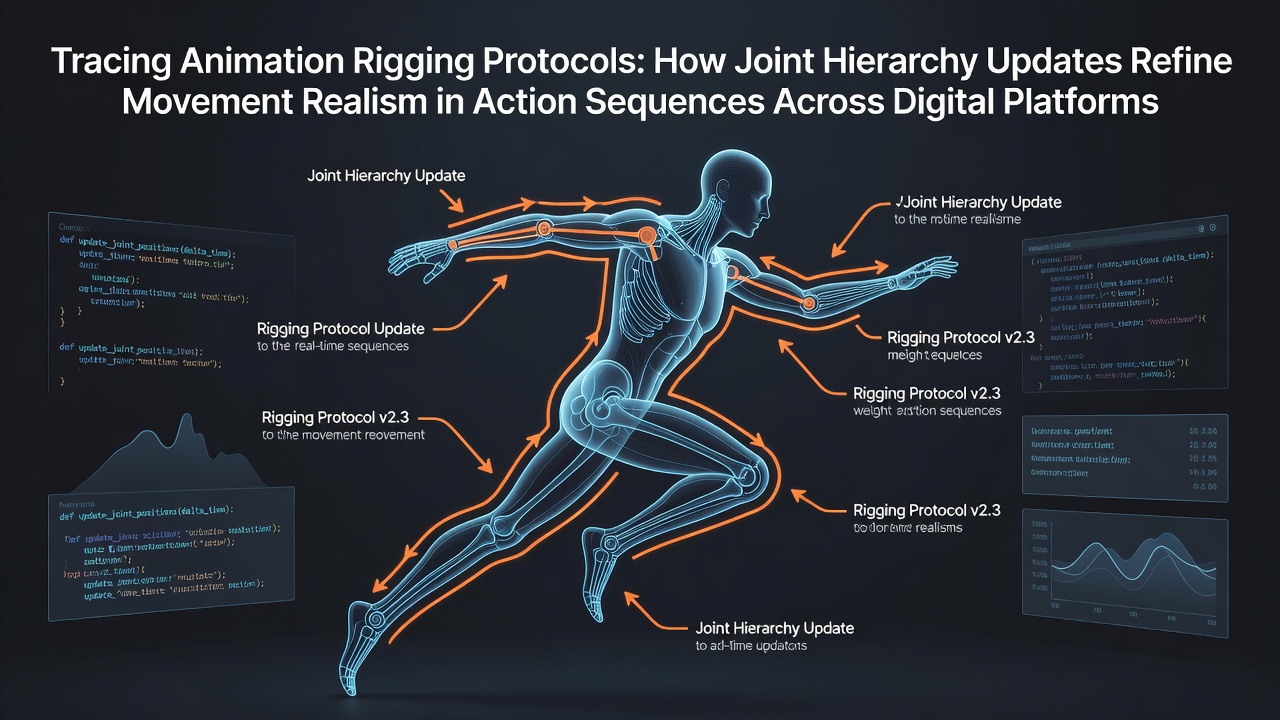
Tracing Animation Rigging Protocols: How Joint Hierarchy Updates Refine Movement Realism in Action Sequences Across Digital Platforms
Animation pipelines rely on precise joint hierarchy structures to translate animator inputs into believable character motion and developers continue to refine these protocols to meet demands for realistic action sequences that perform consistently across consoles, PCs, and handheld devices.
Core Mechanics of Joint Hierarchies in Modern Rigging
Joint hierarchies establish parent-child relationships among skeletal bones which propagate transformations from root nodes down through child elements, and this layered approach enables animators to control complex movements like a character’s torso rotation influencing arm swings without manual adjustment of every element. Researchers at institutions across North America and Europe have documented how updates to these hierarchies incorporate additional constraint nodes that limit unnatural twisting while preserving anatomical range, and data from industry reports released in June 2026 indicate measurable gains in motion fidelity when hierarchies receive iterative refinements during production cycles.
Forward kinematics handles direct rotation of parent joints that cascade to children whereas inverse kinematics solves for joint angles needed to reach target positions, and recent protocol updates blend both systems more fluidly through dynamic weight maps that adjust in real time based on environmental contact data. Observers note that such blending reduces foot sliding artifacts in action sequences where characters sprint across uneven terrain or vault over obstacles on platforms ranging from high-end PCs to Nintendo Switch hardware.
Protocol Updates and Their Propagation Effects
Updates to joint hierarchy protocols typically involve recalibrating bone length scalars and adding secondary control layers for muscle deformation simulation, and these changes allow rigs to respond more accurately to physics simulations without requiring separate cloth or soft-body solvers in every scene. Studies published through the ACM Digital Library show that hierarchy refinements cut vertex deformation errors by measurable percentages when tested against motion capture reference data from professional stunt performers.
Engineers implement these updates through modular scripting that preserves backward compatibility so existing animation assets remain functional while new sequences gain enhanced realism, and this modular design proves especially valuable for cross-platform titles that must scale visual complexity between PlayStation 5, Xbox Series X, and lower-powered mobile devices. The process maintains consistent timing across frame rates because updated solvers recalculate joint angles at fixed intervals regardless of hardware refresh rates.
Impact on Action Sequence Realism Across Platforms
Action sequences benefit directly when joint hierarchies incorporate velocity-based damping that prevents overshoot during rapid direction changes, and developers apply these features in combat systems where characters execute combos or environmental takedowns. Evidence suggests smoother weight shifts and more natural follow-through when hierarchies receive targeted updates that account for momentum conservation across multiple body segments simultaneously.
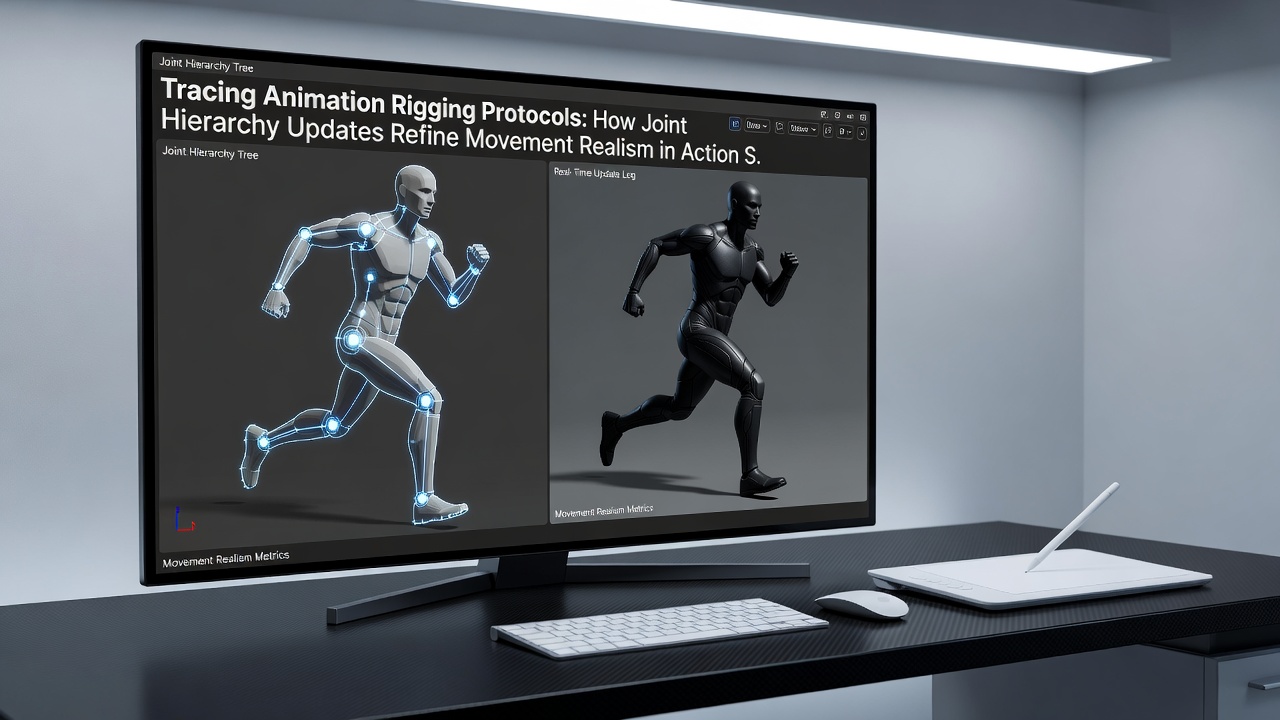
Platform-specific optimizations further refine output because console SDKs expose different levels of GPU acceleration for matrix calculations that drive joint transformations, and PC builds often leverage additional compute shaders to handle denser hierarchies without frame drops. Research compiled by the National Research Council Canada highlights how these adjustments maintain perceptual consistency for players switching between devices during the same live-service title.
Implementation Patterns in Current Development Pipelines
Teams integrate hierarchy updates during mid-production reviews where mocap data gets retargeted onto revised skeletons, and this timing allows animators to validate improvements against real-world reference footage before final asset lock. Automated testing suites compare new outputs against baseline animations using metrics like joint angle deviation and ground penetration rates, and results feed back into further protocol tweaks that address platform-specific rendering variances.
Studios working on fighting games and third-person action titles report that hierarchy refinements improve collision response when characters interact with dynamic objects, and these gains appear most clearly in sequences involving grappling or weapon handling where multiple joint chains must coordinate without visual popping. The refinements also support better LOD transitions because simplified hierarchies retain core movement fidelity when models reduce polygon counts at distance.
Conclusion
Joint hierarchy updates continue to serve as foundational refinements within animation rigging protocols that enhance movement realism throughout action sequences on every major digital platform, and ongoing research plus production data confirm their role in maintaining visual coherence across diverse hardware configurations. Developers apply these changes systematically to meet evolving technical standards while preserving artistic control over character performances.