Tracing Controller Haptics Advancements and Player Response Metrics in Recent Platform Exclusives
Otto Otto · Jul 13, 2026
Tracing Controller Haptics Advancements and Player Response Metrics in Recent Platform Exclusives
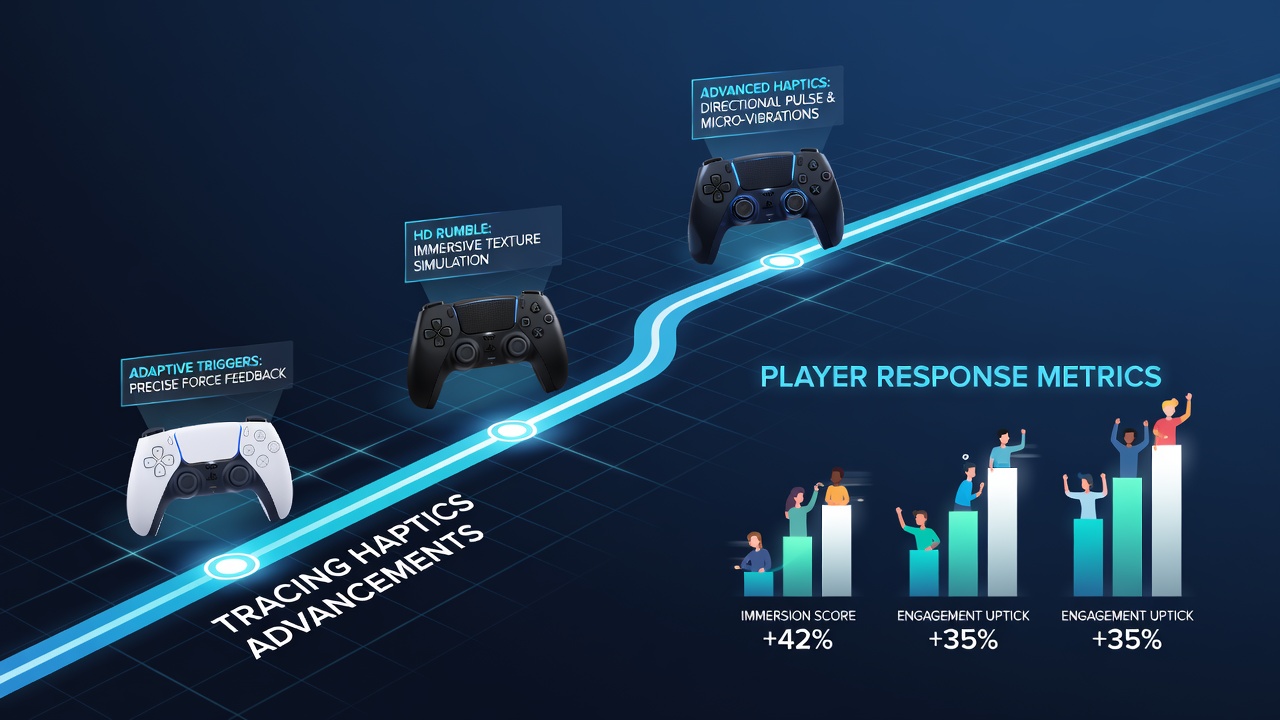
Platform exclusives continue to push controller haptics forward, with developers integrating finer vibration patterns, resistance adjustments, and texture simulations that respond directly to in-game actions. Data from hardware adoption reports shows increased implementation across PlayStation 5 titles released between 2024 and 2026, where adaptive triggers alter tension based on weapon recoil or environmental interactions. Researchers tracking these features note measurable differences in how players engage with mechanics compared to standard rumble feedback systems.
Recent titles exclusive to specific consoles have incorporated layered haptic profiles that combine low-frequency rumbles with high-precision pulses. One such example appears in action-adventure games where terrain changes trigger distinct feedback sequences, allowing players to sense surface variations without visual cues. Studies from academic institutions in Europe indicate that these refinements correlate with extended session durations in controlled testing environments.
Key Technological Shifts in Haptic Systems
Hardware updates have expanded the range of sensations controllers can deliver, moving beyond basic vibration motors toward multi-actuator arrays. Japanese manufacturers refined their HD rumble technology in subsequent iterations, enabling simultaneous feedback channels that distinguish between different object interactions. Data collected from developer conferences reveals that teams allocate additional resources to calibrate these systems during late-stage production cycles.
Adaptive trigger mechanisms now adjust force curves dynamically based on player input speed and context. Engineers working on platform exclusives report that calibration software allows for per-scenario profiles, such as varying resistance when drawing bows versus handling heavy machinery. Figures from industry surveys conducted through 2025 demonstrate consistent adoption rates among first-party studios focusing on immersion layers.
Player Response Data Across Platforms
Metrics gathered from telemetry in recent exclusives highlight shifts in engagement patterns when haptics receive priority during development. Players encounter feedback that aligns with specific actions, leading to adjustments in movement and timing strategies. Observers analyzing retention logs note that titles emphasizing these features often sustain higher average playtimes during initial release windows.
Survey instruments distributed to participants in North American and Australian testing groups captured responses to haptic intensity variations. Results showed preferences for subtle cues during exploration sequences versus pronounced effects in combat scenarios. Academic papers published in 2025 examined how these preferences influence overall completion rates across different demographic segments.
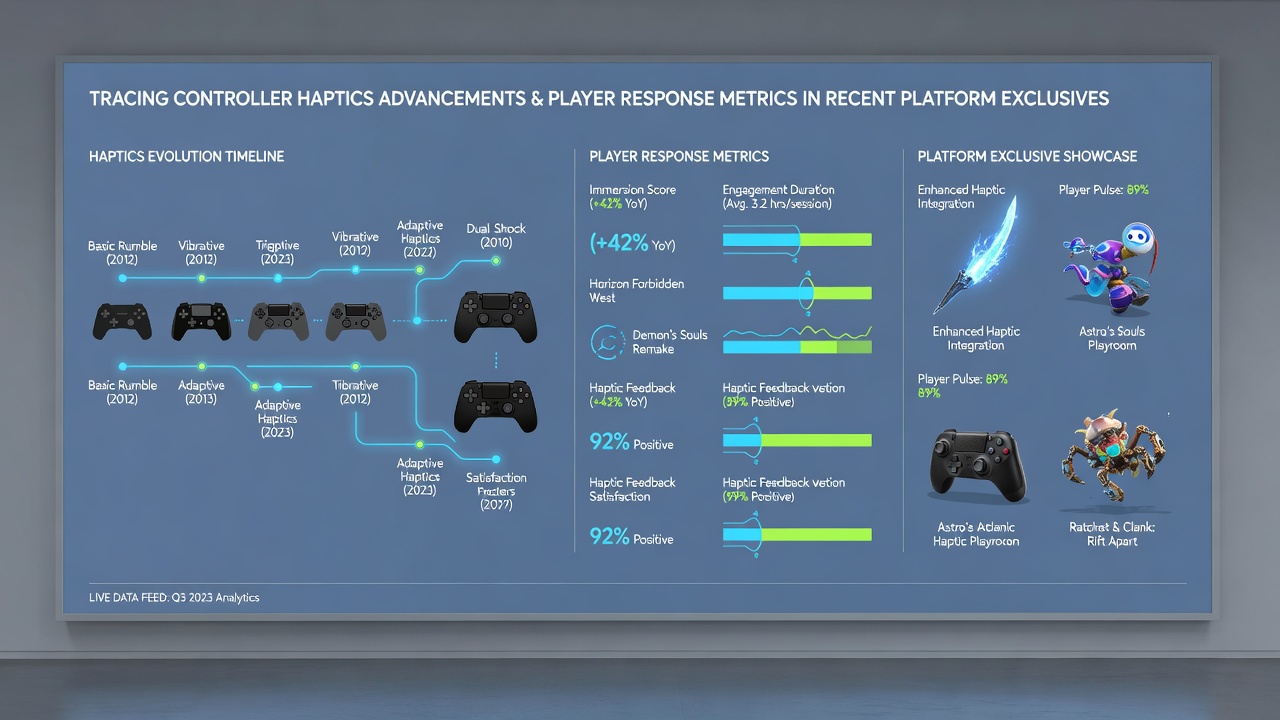
Cross-platform comparisons remain limited due to hardware differences, yet data from shared live-service titles indicates that haptic-equipped controllers contribute to distinct behavioral loops. Players using advanced systems tend to experiment more with control schemes, as evidenced by input variation logs. Research institutions tracking these patterns have documented correlations between haptic complexity and reported satisfaction scores in post-play questionnaires.
Integration Examples in 2025-2026 Releases
Exclusive releases throughout 2025 featured expanded haptic scripting tied to narrative events and environmental storytelling. Developers synchronized feedback with audio layers to reinforce tension during key sequences, creating combined sensory signals that guide attention without on-screen prompts. Telemetry from these titles shows increased interaction with optional mechanics when haptic guidance appears.
By July 2026, several ongoing platform exclusives incorporated iterative updates to haptic profiles based on community feedback channels. These patches adjusted trigger sensitivity ranges and added new texture simulations for existing content. Industry reports from trade associations document how such refinements affected daily active user figures in the months following deployment.
Case analyses of specific mechanics reveal that racing exclusives utilize wheel and pedal resistance to convey surface grip changes, while action titles apply trigger locks during reload animations. Those studying player behavior note measurable differences in error rates when these systems operate at full capacity versus reduced settings.
Measurement Approaches and Emerging Patterns
Developers employ a combination of hardware sensors and software analytics to quantify haptic impact on performance. Eye-tracking integrations paired with controller data streams provide insights into attention allocation during feedback events. University-led projects across multiple regions have compiled datasets linking specific vibration frequencies to response times in timed challenges.
Longitudinal tracking of exclusive titles demonstrates that haptic advancements contribute to replay value through varied sensory experiences on subsequent playthroughs. Metrics from cloud-based reporting tools capture how often players revisit sections after initial exposure to refined feedback. Patterns emerging from these collections suggest sustained interest when systems evolve alongside content updates.
Conclusion
Controller haptics in recent platform exclusives reflect ongoing hardware and software refinements that shape measurable player interactions. Telemetry and survey data continue to inform development decisions, while cross-regional research efforts expand understanding of response patterns. As platforms evolve, these systems maintain a role in defining engagement within exclusive environments through documented technical and behavioral indicators.