Tracing the Development of Accessibility Features in Modern Interactive Entertainment and Their Adoption Rates Among Various User Groups
Eden Lange · Jul 1, 2026
Tracing the Development of Accessibility Features in Modern Interactive Entertainment and Their Adoption Rates Among Various User Groups
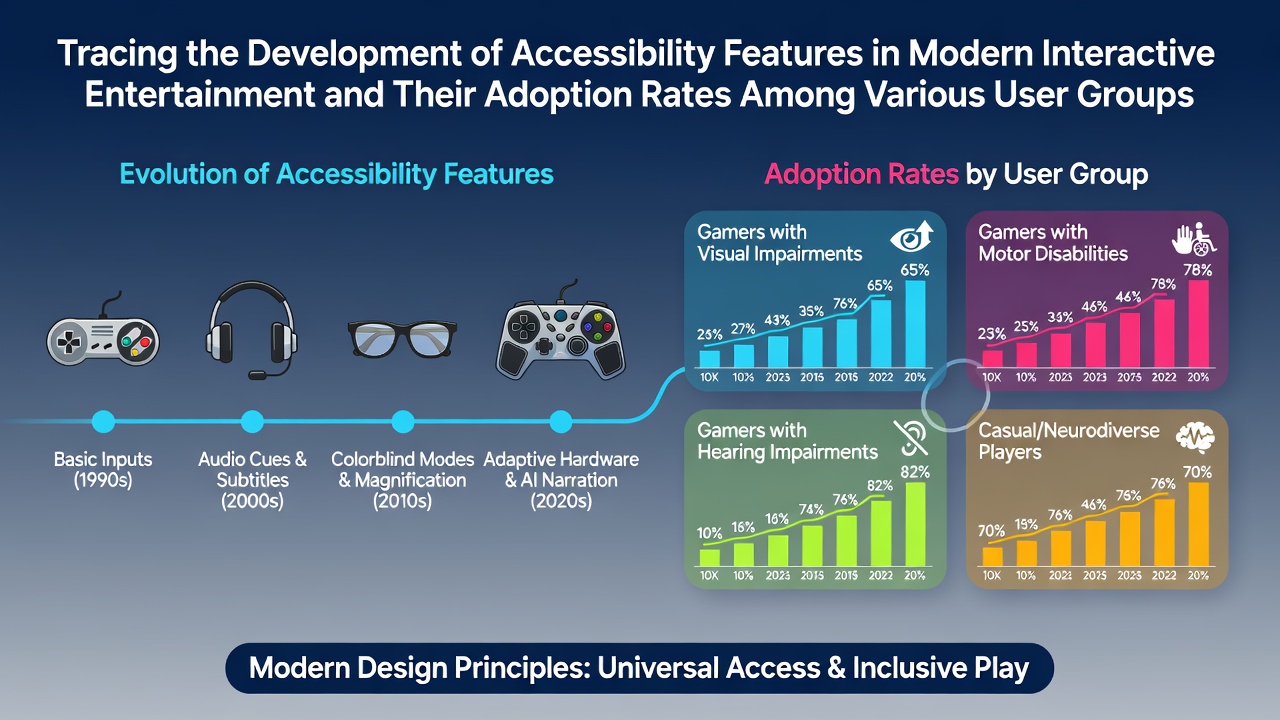
Accessibility features in interactive entertainment began appearing in limited forms during the 1990s when developers added closed captioning to a handful of titles for players with hearing impairments, yet these implementations remained inconsistent across platforms until regulatory attention increased in the early 2000s. Research from industry reports indicates that early efforts focused primarily on visual and auditory accommodations rather than motor or cognitive support, which left many user groups underserved until hardware manufacturers integrated dedicated options into console operating systems.
Key Milestones in Feature Expansion
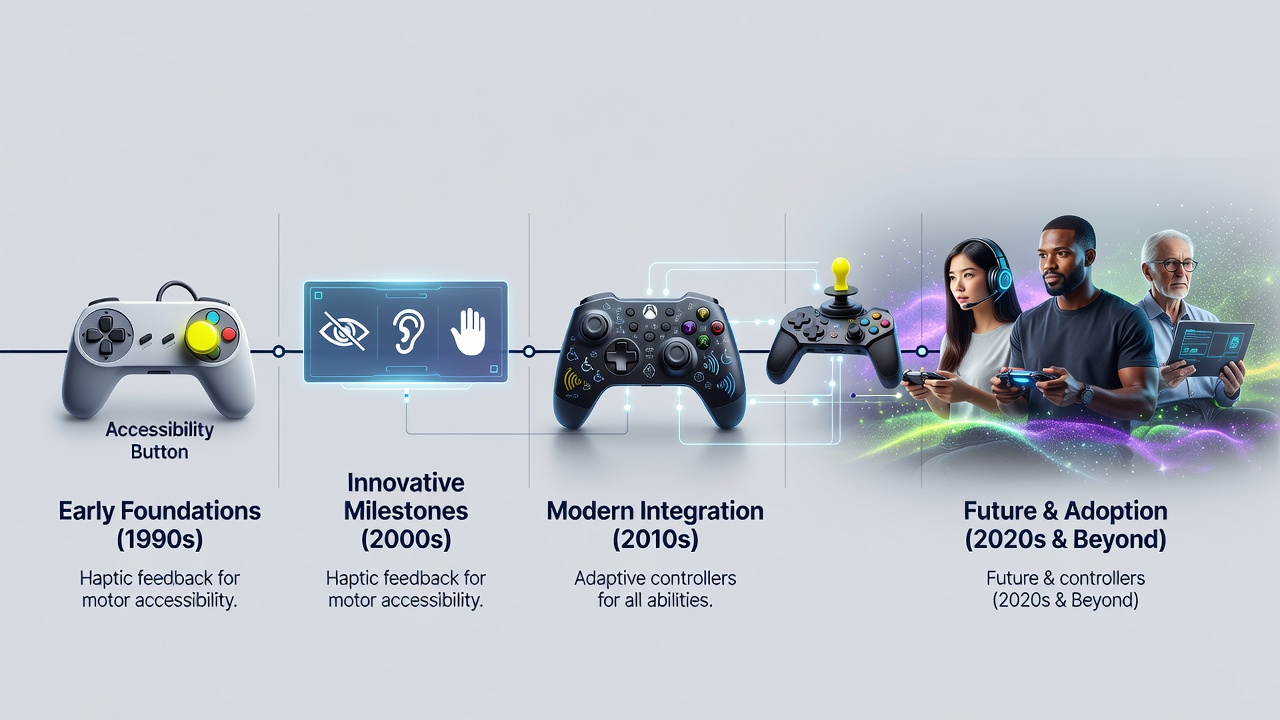
Microsoft introduced customizable controller layouts and text-to-speech functions in the Xbox 360 era around 2006, while Sony followed with similar subtitle scaling and color correction tools in PlayStation updates by 2010, and data from multiple platform analyses shows these additions coincided with rising awareness from disability advocacy groups. Nintendo incorporated motion control alternatives and simplified input schemes in the Wii generation, although broader adoption across its library progressed more gradually than competitors. By the mid-2010s developers started embedding options such as high-contrast modes, remappable button schemes, and adjustable difficulty sliders directly into game code, which allowed features to travel across PC, console, and mobile ecosystems without requiring separate patches in every release.
Studies conducted by academic institutions reveal steady growth in the number of titles supporting screen reader compatibility and haptic feedback alternatives between 2015 and 2020, while the arrival of next-generation hardware accelerated the trend further. The PlayStation 5 and Xbox Series X both launched with system-level accessibility menus in 2020 that included audio cues for navigation and controller vibration patterns for visual events, and subsequent firmware updates through 2025 expanded these capabilities to include eye-tracking integration and voice command mapping on supported peripherals.
Adoption Patterns Across User Demographics
Figures from consumer surveys compiled by trade organizations demonstrate that players reporting motor impairments adopted remappable controls and one-handed input modes at rates exceeding 60 percent in supported titles by 2024, whereas color-blind filters saw usage closer to 25 percent among the broader player base despite wider availability. Data collected from European markets highlights higher engagement with subtitle customization among older adults over age 55, with adoption climbing from 18 percent in 2019 to 47 percent in 2025 according to aggregated platform telemetry. In North American samples, users with cognitive disabilities showed increased retention when games offered pacing adjustments and simplified menu navigation, yet overall uptake remained lower than motor-related features because fewer titles implemented those options comprehensively.
Canadian research published in 2025 tracked longitudinal data across multiple device types and found that mobile platforms achieved faster feature penetration than consoles because touch-screen interfaces allowed quicker prototyping of adaptive touch zones and gesture alternatives. Meanwhile, cross-platform live-service titles released after 2022 began reporting accessibility usage metrics in public patch notes, which revealed that players in Australia and the UK engaged with audio description tracks more frequently than those in other regions.
Developments Through Mid-2026
Industry reports released in July 2026 document continued refinement of AI-assisted tools that automatically generate captions and describe on-screen events in real time, with several major publishers integrating these systems into their development pipelines for simultaneous worldwide launches. Platform holders expanded certification programs that reward titles meeting baseline accessibility criteria, and participation in these programs grew from 12 percent of major releases in 2021 to 38 percent in the first half of 2026. Observers note that adoption rates among users with visual impairments rose noticeably after eye-tracking hardware became available as an optional peripheral on multiple systems, reaching approximately 34 percent in compatible single-player experiences.
Additional data from academic studies shows that younger players without declared disabilities also activate certain accessibility toggles, particularly subtitle enlargement and reduced motion settings, at rates between 15 and 22 percent depending on genre. This overlap suggests features designed for specific groups deliver secondary benefits that broaden their overall reach without requiring separate marketing efforts. Regulatory frameworks in the European Union and select Asian markets introduced voluntary guidelines encouraging standardized accessibility reporting, which encouraged developers to document feature availability more transparently in storefront descriptions.
Conclusion
Patterns observed across two decades illustrate that accessibility implementations moved from peripheral add-ons to core system components, while adoption statistics reveal uneven yet expanding engagement across motor, sensory, and cognitive user groups. Continued hardware advancements and cross-industry collaboration point toward further integration of adaptive technologies in upcoming releases, with platform telemetry expected to provide increasingly granular insights into usage trends through the remainder of 2026 and beyond.